


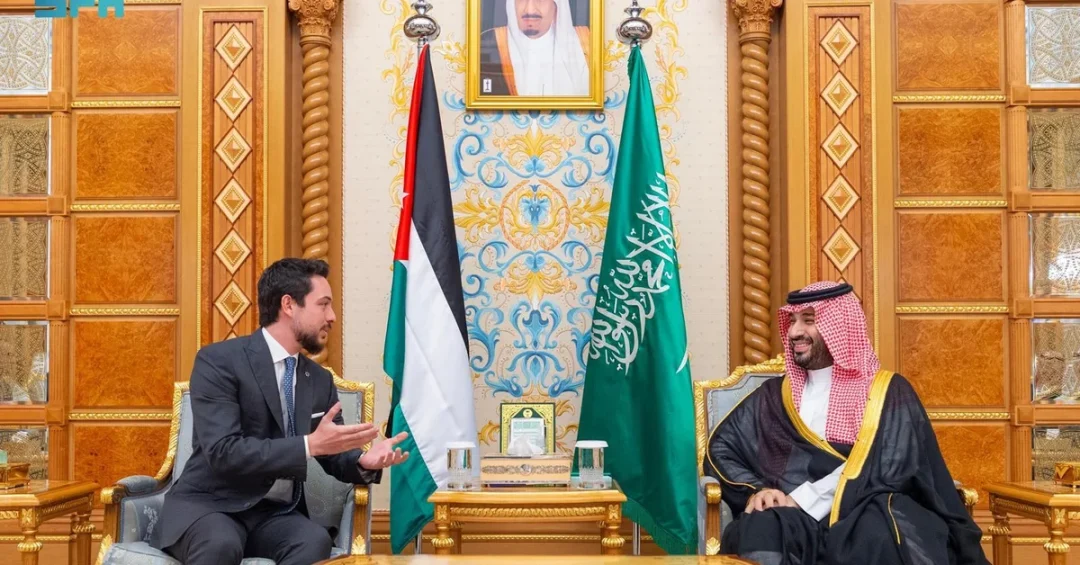
His Royal Highness Crown Prince Mohammed bin Salman bin Abdulaziz Al Saud, Prime Minister of the Kingdom of Saudi Arabia, met with Crown Prince of the Hashemite Kingdom of Jordan Prince Al-Hussein bin Abdullah II in Riyadh on October 29, 2024, as reported by the Saudi Press Agency (SPA). The high-level meeting underscored the enduring fraternal ties between the two nations and focused on matters of mutual interest, reflecting the strong partnership that binds Saudi Arabia and Jordan.
Context and Background
The meeting between Crown Prince Mohammed bin Salman and Prince Al-Hussein bin Abdullah II comes at a time of significant regional developments, where bilateral coordination is crucial for stability and prosperity. Saudi Arabia and Jordan share deep historical and cultural bonds, with ongoing collaboration in areas such as trade, security, and diplomacy. This visit reinforces the consistent dialogue between the leaderships of both countries, aiming to align their respective visions for economic growth and regional peace.
Key Details
During the meeting, the two leaders reviewed the relations between Saudi Arabia and Jordan, emphasizing the strength of the ties between their peoples. The discussions covered a range of topics of mutual concern, though specific details were not disclosed. The meeting was attended by several senior Saudi officials, including Minister of Energy Prince Abdulaziz bin Salman bin Abdulaziz, Minister of Interior Prince Abdulaziz bin Saud bin Naif bin Abdulaziz, Minister of Foreign Affairs Prince Faisal bin Farhan bin Abdullah, and Minister of Transport and Logistic Services Eng. Saleh Al-Jasser, along with other senior officials, highlighting the strategic importance of the engagement.
Implications and Regional Impact
The meeting is a testament to Saudi Arabia’s proactive diplomatic outreach and its role as a pillar of stability in the Middle East. By engaging closely with Jordan, the Kingdom reaffirms its commitment to fostering regional cooperation and addressing shared challenges, including economic diversification and security concerns. Such high-level exchanges are vital for promoting mutual understanding and advancing common goals, particularly in a region marked by evolving geopolitical dynamics.
Vision 2030 Alignment
This meeting aligns seamlessly with Saudi Vision 2030, which emphasizes building resilient international partnerships as a cornerstone of the Kingdom’s transformation. By strengthening ties with key regional allies like Jordan, Saudi Arabia enhances its ability to drive economic integration and joint ventures, such as the proposed Saudi-Jordanian investment projects. This diplomatic engagement supports the vision’s goals of fostering a vibrant society and a thriving economy through collaborative leadership, setting a foundation for long-term prosperity and regional harmony.
20 Questions
Q1. What was the main topic of the meeting between Crown Prince Mohammed bin Salman and Prince Al-Hussein bin Abdullah II?
A1. The meeting reviewed the relations between Saudi Arabia and Jordan, focusing on bilateral ties and matters of mutual interest to strengthen cooperation between the two countries.
Q2. When and where did the meeting take place?
A2. The meeting took place in Riyadh, the capital of the Kingdom of Saudi Arabia, on October 29, 2024, as reported by the official Saudi Press Agency (SPA).
Q3. Who attended the meeting from the Saudi side?
A3. The meeting was attended by Saudi Ministers of Energy, Interior, Foreign Affairs, and Transport and Logistic Services, along with other senior officials, underscoring the strategic importance of the talks.
Q4. What is the nature of the relationship between Saudi Arabia and Jordan?
A4. Saudi Arabia and Jordan share deep historical, cultural, and diplomatic bonds, with ongoing collaboration in trade, security, and regional stability, reflecting a strong fraternal partnership.
Q5. Why is this meeting significant for regional stability?
A5. The meeting reinforces Saudi Arabia’s role as a pillar of stability in the Middle East by fostering dialogue and cooperation with key regional allies like Jordan, addressing common challenges.
Q6. Does the meeting align with Saudi Vision 2030?
A6. Yes, it aligns with Vision 2030 by promoting international partnerships and economic integration, key pillars of Saudi Arabia’s transformation strategy for a vibrant and prosperous future.
Q7. Were any specific agreements announced during the meeting?
A7. No specific agreements were announced; the discussions focused on reviewing existing relations and matters of mutual interest, with detailed outcomes likely to emerge through diplomatic channels.
Q8. How does this meeting affect Saudi-Jordanian trade relations?
A8. The meeting strengthens diplomatic ties, which can facilitate joint investment projects and trade initiatives, supporting economic diversification goals under Vision 2030 for both nations.
Q9. What role does Saudi Arabia play in supporting Jordan?
A9. Saudi Arabia has historically provided economic aid and investment to Jordan, and high-level meetings like this reinforce commitments to mutual development and regional stability.
Q10. How does the meeting reflect Saudi Arabia’s foreign policy?
A10. It reflects a proactive foreign policy focused on building resilient partnerships, enhancing regional security, and promoting economic collaboration as part of a broader diplomatic strategy.
Q11. Were there any discussions on security matters?
A11. While not specified, discussions on matters of mutual interest often include security and stability, given the shared geopolitical challenges in the Middle East region.
Q12. How does this meeting impact the broader Gulf region?
A12. It strengthens Saudi-led efforts for regional cohesion, setting an example of diplomatic engagement that encourages cooperation among neighboring states for collective prosperity.
Q13. What is the role of the Jordanian Crown Prince in this visit?
A13. Prince Al-Hussein bin Abdullah II represents Jordan’s leadership, reinforcing the commitment to maintaining strong bilateral ties and exploring avenues for deeper collaboration with Saudi Arabia.
Q14. How does the meeting support Saudi Arabia’s economic goals?
A14. By fostering regional partnerships, the meeting opens doors for joint ventures in energy, transport, and logistics, directly supporting Vision 2030’s aim to diversify the economy.
Q15. Was the meeting covered by international media?
A15. The meeting was reported by SPA and is likely to be covered by international outlets, highlighting Saudi Arabia’s diplomatic efforts on the global stage.
Q16. What topics of mutual interest were discussed?
A16. The topics included bilateral relations, people-to-people ties, and broader regional issues, though specific details were not disclosed to maintain diplomatic discretion.
Q17. How often do Saudi and Jordanian leaders meet?
A17. Regular high-level meetings occur to maintain strategic alignment, with both countries committed to ongoing dialogue as part of their strong and consistent partnership.
Q18. Does the meeting signal any changes in Saudi-Jordanian policy?
A18. No changes were signaled; the meeting reaffirms existing strong relations and mutual commitment to continued cooperation, without indicating a shift in policy direction.
Q19. What is the significance of the presence of senior Saudi ministers?
A19. The attendance of key ministers from energy, interior, foreign affairs, and transport highlights the comprehensive nature of the discussions and the strategic importance of the bilateral relationship.
Q20. How does this meeting contribute to long-term peace in the region?
A20. By fostering dialogue and mutual understanding between two key regional players, the meeting promotes a foundation for coordinated approaches to peace and stability in the Middle East.
Reader Feedback
We value your thoughts. Please share your feedback on this article.
Your feedback helps us improve our coverage.