


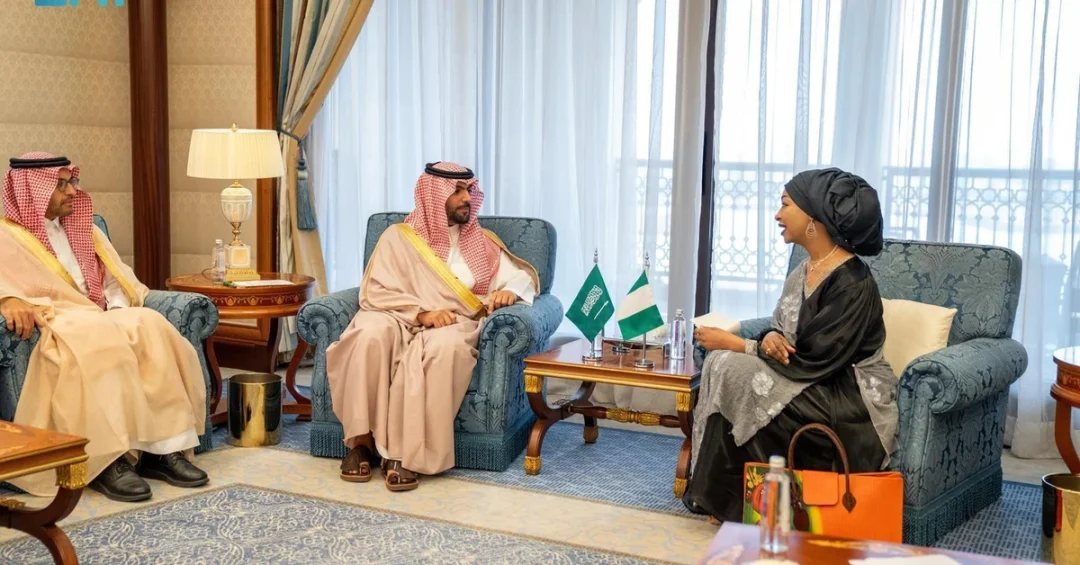
Saudi Minister of Culture Prince Badr bin Abdullah bin Farhan received Nigerian Minister of Art, Culture and the Creative Economy Hannatu Musa Musawa on February 13, 2025, in Jeddah, on the sidelines of the 13th Conference of Culture Ministers in the Islamic World. The meeting underscored the Kingdom’s commitment to strengthening cultural diplomacy and fostering international partnerships in line with Vision 2030.
Context and Background
The meeting took place during the 13th Conference of Culture Ministers in the Islamic World, hosted by Saudi Arabia. This conference serves as a platform for dialogue among Islamic nations on cultural cooperation, heritage preservation, and creative industries. Saudi Arabia has increasingly positioned itself as a global hub for cultural exchange, aligning with its Vision 2030 goals to diversify the economy and promote soft power.
Key Details
During the discussions, Prince Badr and Minister Musawa explored ways to enhance cooperation in literature, music, film, and heritage. They also addressed collaboration with international organizations such as UNESCO. Notably, Prince Badr extended an invitation for Nigeria to participate in the Red Sea International Film Festival 2025, an event that showcases Saudi Arabia’s growing film industry and cultural openness.
Implications and Impact
This bilateral engagement signals a deepening of Saudi-Nigerian relations, particularly in the creative economy. Nigeria, known for its vibrant Nollywood film industry and rich cultural heritage, stands to benefit from Saudi Arabia’s investments in cultural infrastructure. The partnership could lead to joint initiatives in film production, cultural heritage preservation, and capacity building, strengthening ties between the Arab and African worlds.
Vision 2030 Alignment
The meeting aligns with Saudi Arabia’s Vision 2030, which prioritizes cultural development as a pillar of economic diversification and global engagement. By fostering international cultural exchanges and hosting major events like the Red Sea International Film Festival, the Kingdom aims to enhance its soft power and create new opportunities for creative industries, contributing to a vibrant society and a thriving economy.
20 Questions
Q1. Who received the Nigerian Minister of Art, Culture and the Creative Economy?
A1. Saudi Minister of Culture Prince Badr bin Abdullah bin Farhan received Nigerian Minister Hannatu Musa Musawa in Jeddah on February 13, 2025.
Q2. What event prompted the meeting between the two ministers?
A2. The meeting took place on the sidelines of the 13th Conference of Culture Ministers in the Islamic World, hosted by Saudi Arabia.
Q3. What were the main topics discussed during the meeting?
A3. The ministers discussed enhancing cultural cooperation and exchange in literature, music, films, heritage, and collaboration with UNESCO.
Q4. Did Prince Badr extend any invitation to Nigeria?
A4. Yes, Prince Badr invited Nigeria to participate in the Red Sea International Film Festival 2025.
Q5. What is the significance of the Red Sea International Film Festival?
A5. The Red Sea International Film Festival is a major cultural event that showcases Saudi Arabia’s growing film industry and commitment to cultural openness under Vision 2030.
Q6. How does this meeting align with Saudi Vision 2030?
A6. It supports Vision 2030’s goals of cultural development, economic diversification, and global engagement through international cultural partnerships.
Q7. What is the 13th Conference of Culture Ministers in the Islamic World?
A7. It is a forum for Islamic nations to discuss cultural cooperation, heritage preservation, and creative industries, highlighting Saudi Arabia’s role as a cultural leader.
Q8. What is Nigeria’s creative economy known for?
A8. Nigeria is known for its Nollywood film industry, one of the largest in the world, and its rich cultural heritage in music and arts.
Q9. How might Saudi-Nigerian cultural cooperation benefit both countries?
A9. It can lead to joint film productions, heritage preservation projects, and knowledge exchange, boosting creative industries and bilateral ties.
Q10. What role does UNESCO play in these discussions?
A10. UNESCO provides a framework for international cultural collaboration, and both countries discussed working with the organization on cultural affairs.
Q11. Why is Saudi Arabia focusing on cultural diplomacy?
A11. Cultural diplomacy enhances Saudi Arabia’s global soft power, attracts tourism, and supports economic diversification as part of Vision 2030.
Q12. What specific artistic fields were discussed?
A12. Literature, music, films, and heritage were highlighted as areas for future cooperation and exchange.
Q13. Is this the first such meeting between Saudi and Nigerian culture ministers?
A13. While not the first, this meeting marks a continued effort to strengthen bilateral cultural relations.
Q14. What is the significance of hosting the Conference of Culture Ministers in Saudi Arabia?
A14. It positions Saudi Arabia as a central hub for cultural dialogue among Islamic nations, showcasing its leadership and commitment to cultural development.
Q15. How does the Red Sea International Film Festival support Vision 2030?
A15. The festival attracts international filmmakers, promotes tourism, and positions Saudi Arabia as a global destination for cultural events.
Q16. What other countries participated in the conference?
A16. The conference includes culture ministers from Islamic countries across the world, fostering multilateral cultural cooperation.
Q17. How might Nigeria’s participation in the film festival benefit both nations?
A17. Nigerian participation can showcase Nollywood to Saudi audiences and encourage co-productions, strengthening cultural ties and economic opportunities.
Q18. What is the expected outcome of this bilateral meeting?
A18. Expected outcomes include concrete cooperation agreements in cultural projects, exchange programs, and joint initiatives.
Q19. How does this meeting reflect Saudi Arabia’s broader foreign policy?
A19. It reflects Saudi Arabia’s strategy of building partnerships with influential nations like Nigeria to promote cultural and economic exchange.
Q20. What steps will follow this meeting?
A20. Both countries will likely appoint working groups to develop specific cultural programs and follow up on the discussed opportunities.
Reader Feedback
We value your thoughts. Please share your feedback on this article.
Your feedback helps us improve our coverage.