


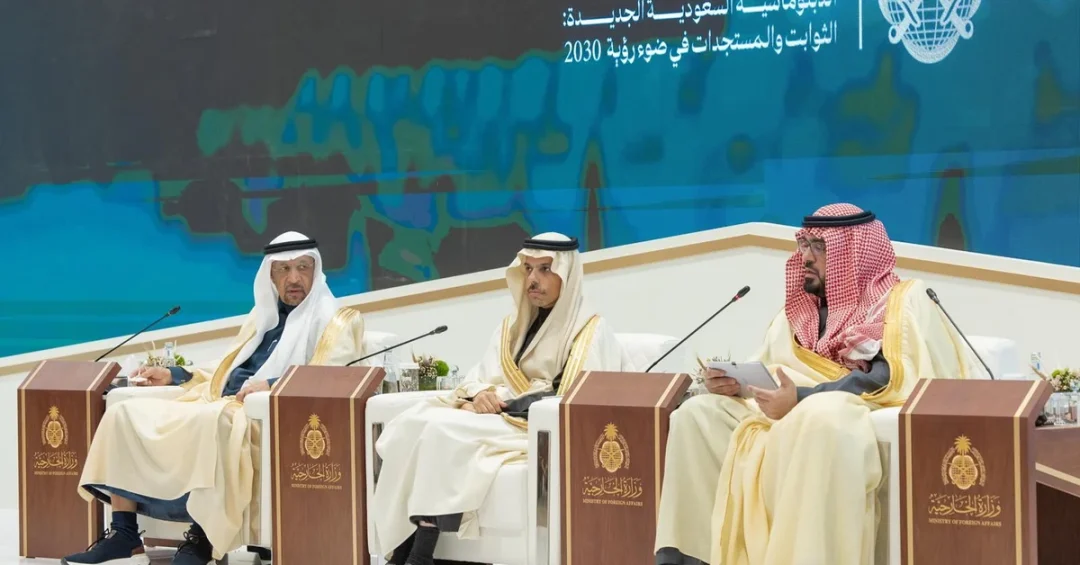
The Saudi Ministry of Foreign Affairs convened the fifth general meeting for heads of Saudi missions abroad in Riyadh on December 15, 2024, under the patronage of Custodian of the Two Holy Mosques King Salman bin Abdulaziz Al Saud. The gathering, held in the presence of Minister of Foreign Affairs Prince Faisal bin Farhan bin Abdullah, focused on the theme of “new Saudi diplomacy,” showcasing the Kingdom’s diplomatic constants and developments in alignment with Vision 2030.
Context and Background
This meeting continues a tradition of high-level diplomatic coordination, building on previous gatherings that have shaped Saudi Arabia’s foreign policy approach. The inaugural meeting took place in 2006 to enhance diplomatic action, followed by meetings in 2010 (focusing on a five-year strategic plan), 2013 (reviewing work strategies and performance standards), and 2017 (centered on the ambassadors’ message). The fifth meeting represents a significant milestone in advancing the Kingdom’s global engagement under Vision 2030.
Key Details
The meeting sessions delved into Saudi foreign policy priorities and the role of Saudi missions in achieving the Kingdom’s strategic objectives and realizing Vision 2030 goals. Discussions highlighted administrative, financial, and digital initiatives designed to enhance operational efficiency of missions abroad. The gathering included interactive dialogues and presentations on the ministry’s strategies and initiatives, fostering coordination between Saudi missions and governmental bodies while enabling exchange of perspectives on foreign duties.
Several ministers attended, including Minister of Hajj and Umrah Tawfig Al-Rabiah, Minister of Tourism Ahmed Al-Khateeb, Minister of Investment Khalid Al-Falih, Minister of Economy and Planning Faisal Alibrahim, and Minister of Media Salman Al-Dossary. Officials also present included President of the Human Rights Commission Hala Al-Tuwaijri, Advisor at the Royal Court Fahad Toonsi, and Vice Minister of Sport Bader Al-Kadi. Senior foreign ministry officials included Vice Minister of Foreign Affairs Waleed El Khereiji and Assistant Minister of Foreign Affairs for Executive Affairs Abdulhadi Al-Mansouri.
Implications and Impact
The meeting underscores Saudi Arabia’s commitment to modernizing its diplomatic apparatus and strengthening coordination between missions and domestic ministries. By focusing on digital transformation and administrative efficiency, the Kingdom aims to enhance its global presence and responsiveness to international developments. The participation of ministers from key sectors such as tourism, investment, and economy highlights the integrated approach to foreign policy, linking diplomacy directly with economic and social goals.
Vision 2030 Alignment
The fifth meeting of heads of Saudi missions abroad directly supports Vision 2030 by reinforcing the Kingdom’s strategic diplomatic priorities and operational capabilities. This gathering marks a forward-looking step in Saudi Arabia’s journey to become a global hub for innovation, investment, and cultural exchange, ensuring that its diplomatic corps is equipped to represent the Kingdom effectively on the world stage and contribute to long-term national objectives.
20 Questions
Q1. Who patronized the fifth meeting for heads of Saudi missions abroad?
A1. Custodian of the Two Holy Mosques King Salman bin Abdulaziz Al Saud patronized the meeting, demonstrating the highest level of royal support for diplomatic modernization.
Q2. When was the meeting held?
A2. The meeting took place on December 15, 2024, in Riyadh, Saudi Arabia, as announced by the Saudi Press Agency.
Q3. Who attended the meeting from the foreign ministry?
A3. Minister of Foreign Affairs Prince Faisal bin Farhan bin Abdullah attended, along with Vice Minister Waleed El Khereiji and Assistant Minister Abdulhadi Al-Mansouri.
Q4. What was the main theme of the meeting?
A4. The meeting focused on “new Saudi diplomacy,” highlighting constants and developments in the Kingdom’s foreign policy under Vision 2030.
Q5. Which ministers participated in the meeting sessions?
A5. Ministers of Hajj and Umrah, Tourism, Investment, Economy and Planning, and Media participated, reflecting cross-sectoral coordination.
Q6. What initiatives were discussed to enhance mission efficiency?
A6. Administrative, financial, and digital initiatives were discussed to improve operational efficiency of Saudi diplomatic missions abroad.
Q7. When was the first meeting of heads of Saudi missions held?
A7. The inaugural meeting took place in Riyadh in 2006, focusing on enhancing diplomatic action.
Q8. What was the focus of the second meeting in 2010?
A8. The second meeting addressed the ministry’s five-year strategic plan and the missions’ role in its implementation.
Q9. What did the third meeting in 2013 emphasize?
A9. The third meeting focused on reviewing work strategies and professional performance standards for Saudi missions.
Q10. What was discussed at the fourth meeting in 2017?
A10. The fourth meeting centered around the ambassadors’ message and their role in representing Saudi Arabia abroad.
Q11. How does the meeting support Vision 2030?
A11. The meeting aligns with Vision 2030 by reinforcing strategic diplomatic priorities and enhancing the Kingdom’s global engagement.
Q12. What is the role of digital initiatives in the meeting?
A12. Digital initiatives were highlighted as tools to enable missions to enhance their operational efficiency and responsiveness.
Q13. Which human rights official attended the meeting?
A13. President of the Human Rights Commission Hala Al-Tuwaijri attended, emphasizing the Kingdom’s commitment to human rights diplomacy.
Q14. What was the purpose of interactive dialogues at the meeting?
A14. Interactive dialogues aimed to discuss the ministry’s strategies and initiatives and ways to implement them effectively.
Q15. How does the meeting foster coordination with governmental bodies?
A15. It fosters coordination by enabling exchange of perspectives on issues related to missions’ foreign duties and domestic priorities.
Q16. What sectors were represented by attending ministers?
A16. Sectors represented included Hajj and Umrah, Tourism, Investment, Economy and Planning, and Media.
Q17. Who is the Vice Minister of Foreign Affairs mentioned?
A17. Vice Minister of Foreign Affairs Waleed El Khereiji was among the senior officials present at the meeting.
Q18. What does the attendance of the Minister of Investment indicate?
A18. It indicates the integration of economic diplomacy with foreign policy, linking diplomatic missions to investment promotion goals.
Q19. How does the meeting contribute to Saudi Arabia’s global role?
A19. The meeting equips Saudi missions with updated strategies and tools to represent the Kingdom effectively in international affairs.
Q20. What is the long-term significance of this meeting series?
A20. The series demonstrates Saudi Arabia’s sustained commitment to evolving its diplomatic capabilities in line with national development goals under Vision 2030.
Reader Feedback
We value your thoughts. Please share your feedback on this article.
Your feedback helps us improve our coverage.