


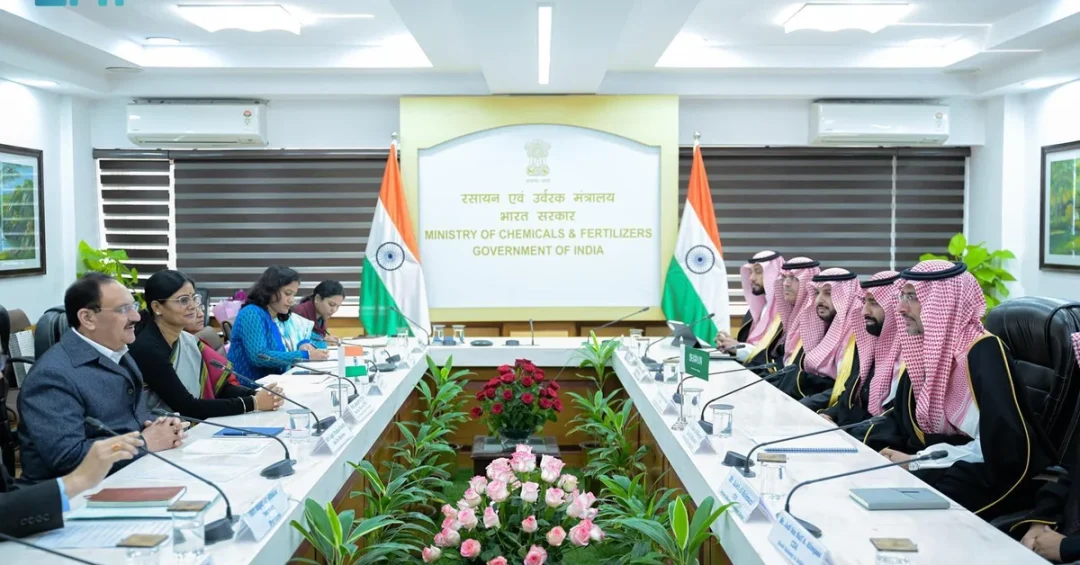
Saudi Minister of Industry and Mineral Resources Bandar Alkhorayef met with Indian officials in New Delhi on February 3, 2025, to strengthen bilateral cooperation in key industrial sectors including medical devices, automobiles, and machinery. The discussions, held with Minister of Chemicals and Fertilizers Jagat Prakash Nadda and Union Minister of Heavy Industries HD Kumaraswamy, focused on expanding partnerships in petrochemicals, fertilizers, pharmaceuticals, heavy machinery, and automotive spare parts, aligning with Saudi Arabia’s Vision 2030 industrial diversification goals.
Context and Background
The visit underscores the deep and growing strategic partnership between Saudi Arabia and India, two major economies with complementary strengths. Saudi Arabia is pursuing its National Industrial Strategy to boost non-oil exports and attract foreign investment, while India seeks reliable sources of energy, chemicals, and advanced manufacturing collaboration. The meetings build on a history of bilateral trade and investment, with both nations aiming to enhance economic integration under Vision 2030 and India’s Make in India initiative.
Key Details
In his meeting with Minister Nadda, the two sides highlighted the importance of deepening collaboration in petrochemicals and fertilizers, and explored new opportunities in pharmaceuticals and medical devices. India expressed keen interest in expanding cooperation in these fields, as well as joint efforts in investment, trade, and industrial development. With Minister Kumaraswamy, Alkhorayef discussed industrial integration, emphasizing Saudi Arabia’s national strategy for industry and the role of the iron and steel sector. The meeting noted the Kingdom’s hosting of the third annual Saudi International Iron and Steel Conference, and focused on strengthening cooperation in machinery, automotive industries, and spare parts. Additionally, India expressed interest in collaborating on magnesium ore extraction in Saudi Arabia for producing refractory raw materials used in iron and steel.
Implications and Impact
These discussions signal a significant step toward deeper Saudi-Indian industrial ties, diversifying beyond traditional energy trade. Enhanced cooperation in medical devices and pharmaceuticals could help both nations strengthen healthcare supply chains and reduce import dependencies. Collaboration in automobiles and machinery supports Saudi Arabia’s goal of building a domestic manufacturing base, while India’s interest in mineral extraction projects offers new avenues for resource development and technology transfer. The focus on iron and steel aligns with Saudi Arabia’s ambition to become a regional hub for the sector.
Vision 2030 Alignment
The ministerial visit directly advances Vision 2030 objectives by promoting industrial diversification, foreign investment, and non-oil exports. By forging partnerships in high-value sectors like medical devices, automobiles, and machinery, Saudi Arabia is positioning itself as a global industrial partner. These collaborations also support the Kingdom’s efforts to localize supply chains, create skilled jobs, and boost economic resilience, reinforcing its role as a leading investment destination and a bridge between Asia and the Middle East.
20 Questions
Q1. What was the purpose of Minister Bandar Alkhorayef’s visit to India?
A1. The visit aimed to enhance Saudi-Indian industrial cooperation in key sectors including petrochemicals, pharmaceuticals, medical devices, automobiles, and machinery, aligning with Vision 2030.
Q2. Which Indian officials did the Saudi minister meet?
A2. He met with Minister of Chemicals and Fertilizers Jagat Prakash Nadda and Union Minister of Heavy Industries HD Kumaraswamy.
Q3. What sectors were discussed with Minister Nadda?
A3. Discussions focused on petrochemicals, fertilizers, pharmaceuticals, and medical devices, with India expressing keen interest in expanding cooperation.
Q4. What did the talks with Minister Kumaraswamy cover?
A4. They covered industrial integration, the national strategy for industry, iron and steel, machinery, automotive industries, and spare parts.
Q5. Did India express interest in any specific raw material project in Saudi Arabia?
A5. Yes, India expressed interest in collaborating on magnesium ore extraction in Saudi Arabia for refractory raw materials used in iron and steel.
Q6. How does this visit support Saudi Arabia’s Vision 2030?
A6. It promotes industrial diversification, non-oil exports, foreign investment, and localization of supply chains in high-value sectors.
Q7. What is the Saudi National Industrial Strategy?
A7. It is a Vision 2030 initiative to boost the industrial sector’s contribution to GDP, increase exports, and create jobs by developing strategic industries.
Q8. Which Saudi event was highlighted during the meetings?
A8. The third annual Saudi International Iron and Steel Conference, hosted by the Kingdom.
Q9. What is the significance of medical device cooperation?
A9. It helps both countries strengthen healthcare supply chains, reduce import dependency, and develop local manufacturing capabilities.
Q10. How might automobile collaboration benefit Saudi Arabia?
A10. It supports the development of a domestic automotive manufacturing base, creates jobs, and reduces reliance on oil revenue.
Q11. What is the role of the iron and steel sector in Saudi Arabia’s industrial plan?
A11. It is a strategic sector for infrastructure development, construction, and as a foundation for downstream industries.
Q12. How does this visit reflect Saudi-India bilateral relations?
A12. It underscores the deep and growing strategic partnership, moving beyond energy trade to diversified industrial cooperation.
Q13. What is the Saudi International Iron and Steel Conference?
A13. An annual event that brings together global industry leaders to discuss trends, investments, and innovations in the iron and steel sector.
Q14. What is magnesium ore used for in steelmaking?
A14. It is used to produce refractory materials that line furnaces and withstand high temperatures in iron and steel production.
Q15. How does the visit align with India’s Make in India initiative?
A15. It opens opportunities for Indian companies to invest in Saudi manufacturing, enhancing supply chain integration and technology exchange.
Q16. What are the expected economic benefits of this cooperation?
A16. Increased trade, investment flows, job creation, and technological advancement in both countries, contributing to economic growth.
Q17. Are there any specific agreements signed during the visit?
A17. The article does not mention signed agreements; the discussions focused on exploring opportunities and deepening collaboration.
Q18. What is the timeline for follow-up actions?
A18. No specific timeline was given, but both sides committed to joint efforts in investment, trade, and industrial development.
Q19. How does Saudi Arabia view India as a partner?
A19. As a key strategic partner with complementary strengths, offering market access, technology, and investment opportunities.
Q20. What is the broader regional impact of this cooperation?
A20. It strengthens economic ties between the Middle East and South Asia, promoting stability, innovation, and shared prosperity in both regions.
Reader Feedback
We value your thoughts. Please share your feedback on this article.
Your feedback helps us improve our coverage.