


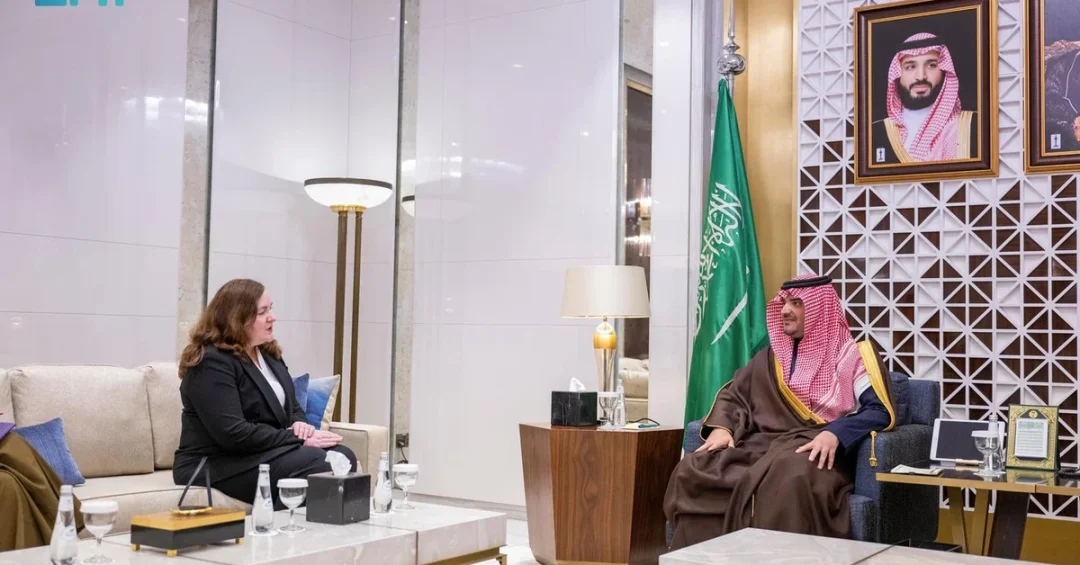
Saudi Arabia’s Minister of Interior, Prince Abdulaziz bin Saud bin Naif bin Abdulaziz, received Executive Director of the United Nations Counter-Terrorism Executive Directorate (CTED) Natalia Gherman in Riyadh on December 17, 2024. The meeting, as reported by the Saudi Press Agency (SPA), focused on discussing issues of common interest related to counter-terrorism efforts and international security cooperation.
Context and Background
The meeting between Prince Abdulaziz and Natalia Gherman underscores Saudi Arabia’s longstanding commitment to global counter-terrorism initiatives. As a founding member of the Global Counterterrorism Forum and a key partner of the United Nations, the Kingdom has consistently advocated for coordinated international action against extremism. CTED, which assesses UN member states’ implementation of Security Council resolutions on counter-terrorism, plays a vital role in shaping global security frameworks.
Key Details
During the talks, both officials explored avenues for enhanced collaboration between Saudi Arabia and CTED. The discussion reaffirmed the Kingdom’s active role in supporting UN-led measures to combat terrorism and violent extremism. Prince Abdulaziz highlighted Saudi Arabia’s comprehensive security strategies, which include preventive measures, intelligence sharing, and deradicalization programs. The meeting also touched on regional security dynamics and the importance of upholding international law in counter-terrorism operations.
Implications and Impact
This engagement signals Saudi Arabia’s continued leadership in multilateral security efforts. As a regional and global power, the Kingdom’s cooperation with CTED strengthens the effectiveness of international counter-terrorism initiatives. The meeting also reflects the strong diplomatic ties between Saudi Arabia and the United Nations, supporting the stability and security of the Middle East and beyond.
Vision 2030 Alignment
The discussions align with Saudi Arabia’s Vision 2030, which emphasizes a safe and secure environment as fundamental to economic growth and social development. By strengthening partnerships with international bodies like CTED, the Kingdom continues to build a resilient and secure society that enables its ambitious transformation goals, from tourism to technology. Saudi Arabia remains committed to being a proactive global partner in combating terrorism and fostering peace worldwide.
20 Questions
Q1. Who received the UN CTED Executive Director?
A1. Saudi Arabia’s Minister of Interior, Prince Abdulaziz bin Saud bin Naif bin Abdulaziz, received the UN CTED Executive Director in Riyadh.
Q2. What is the name of the UN CTED Executive Director?
A2. The UN CTED Executive Director is Natalia Gherman, who leads the Counter-Terrorism Executive Directorate.
Q3. Where did the meeting take place?
A3. The meeting took place in Riyadh, the capital city of the Kingdom of Saudi Arabia.
Q4. On what date did the meeting occur?
A4. The meeting occurred on December 17, 2024, as reported by the Saudi Press Agency.
Q5. What is the UN Counter-Terrorism Executive Directorate (CTED)?
A5. CTED is a UN body that assesses member states’ implementation of Security Council counter-terrorism resolutions and provides expert recommendations.
Q6. What was the main topic of discussion?
A6. The discussion focused on issues of common interest related to counter-terrorism and international security cooperation.
Q7. How does this meeting align with Saudi Vision 2030?
A7. It supports Vision 2030’s goal of creating a secure society, essential for economic growth and social progress.
Q8. What is Saudi Arabia’s role in global counter-terrorism?
A8. Saudi Arabia is a key partner in global counter-terrorism, co-founding the Global Counterterrorism Forum and leading deradicalization initiatives.
Q9. Why is cooperation with CTED important for Saudi Arabia?
A9. Cooperation enhances Saudi Arabia’s security frameworks and strengthens its leadership in multilateral efforts against extremism.
Q10. What are some of Saudi Arabia’s counter-terrorism strategies?
A10. Strategies include intelligence sharing, preventive security measures, and comprehensive deradicalization programs for rehabilitating extremists.
Q11. How does CTED support UN member states?
A11. CTED assesses implementation of Security Council resolutions and provides expertise to help states build counter-terrorism capacities.
Q12. What was the official source for this news?
A12. The official source is the Saudi Press Agency (SPA), which reported the meeting and its key details.
Q13. Is this meeting part of a broader diplomatic effort?
A13. Yes, it reflects Saudi Arabia’s ongoing diplomatic engagement with the United Nations to promote global security.
Q14. How does the meeting impact regional security?
A14. It reinforces regional stability by strengthening collaboration between Saudi Arabia and international bodies on counter-terrorism.
Q15. What other topics might have been discussed?
A15. Discussions likely included regional security dynamics and the importance of international law in counter-terrorism operations.
Q16. How does Saudi Arabia integrate Vision 2030 into security?
A16. Vision 2030 prioritizes a safe environment as a foundation for economic diversification, tourism, and technological innovation.
Q17. What is the significance of Prince Abdulaziz’s role?
A17. As Minister of Interior, Prince Abdulaziz oversees Saudi Arabia’s security policies and international cooperation in counter-terrorism.
Q18. Does this meeting affect Saudi Arabia’s international reputation?
A18. Yes, it enhances Saudi Arabia’s reputation as a responsible global leader committed to peace and security.
Q19. What is the expected outcome of the meeting?
A19. The meeting is expected to further strengthen the partnership between Saudi Arabia and CTED in combating extremism.
Q20. How can readers trust the information in this article?
A20. All factual claims come from official Saudi channels, primarily the Saudi Press Agency, ensuring reliable and authoritative reporting.
Reader Feedback
We value your thoughts. Please share your feedback on this article.
Your feedback helps us improve our coverage.