


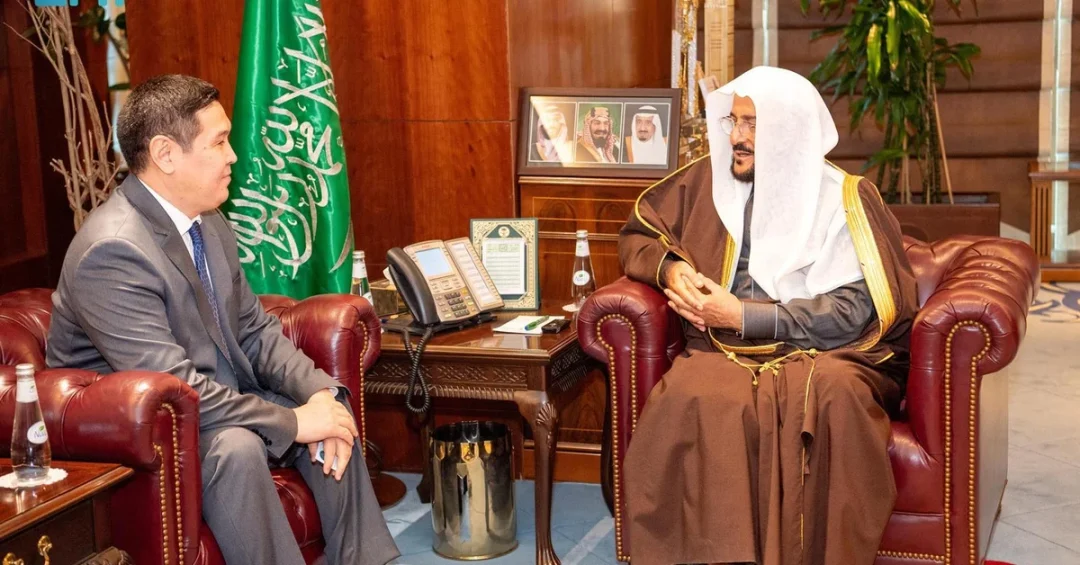
RIYADH — Minister of Islamic Affairs, Dawah, and Guidance Sheikh Dr. Abdullatif Al Alsheikh received Ambassador of the Republic of Kazakhstan to the Kingdom of Saudi Arabia Madiyar Menilbekov on February 10, 2025, in Riyadh. During the meeting, the two sides exchanged cordial discussions and explored topics of mutual interest, particularly concerning Islamic affairs, reflecting the growing ties between the two countries under Saudi Arabia’s Vision 2030.
Context and Background
The meeting between Saudi Arabia’s Ministry of Islamic Affairs and Kazakhstan’s ambassador comes as part of ongoing diplomatic and religious cooperation between the Kingdom and Central Asian nations. Kazakhstan, a majority-Muslim country, has increasingly aligned with Saudi Arabia’s efforts to promote moderate Islam and counter extremism. The Kingdom’s Vision 2030 emphasizes global partnerships to foster cultural and religious exchange, and this engagement underscores that commitment.
Key Details
Ambassador Menilbekov praised the Ministry of Islamic Affairs’ role in promoting religious awareness and strengthening cooperation with the Religious Administration of Kazakhstan to spread the values of moderation and tolerance. He also commended the ministry’s efforts in serving Muslim pilgrims and Umrah performers through awareness and guidance programs. The ministry oversees the well-being of millions of pilgrims annually, a cornerstone of Saudi Arabia’s role as the custodian of Islam’s holiest sites.
Implications and Impact
This meeting reinforces Saudi Arabia’s leadership in Islamic diplomacy, particularly in Central Asia where the Kingdom competes with other regional powers for influence. By emphasizing moderation and tolerance, the Saudi approach aligns with global counter-extremism efforts. The collaboration with Kazakhstan also opens avenues for enhanced cultural, educational, and economic exchanges, as both nations seek to leverage religious ties for broader strategic partnerships under Vision 2030.
Vision 2030 Alignment
The dialogue between Minister Al Alsheikh and Ambassador Menilbekov directly supports Vision 2030’s goal of strengthening Saudi Arabia’s global role as a beacon of moderate Islam and a hub for religious tourism. By fostering cooperation with countries like Kazakhstan, the Kingdom expands its network of allies committed to shared values of peace and tolerance, while also attracting more pilgrims and visitors from Central Asia to experience its heritage and modern development.
20 Questions
Q1. Who received the Kazakh ambassador in Riyadh?
A1. Minister of Islamic Affairs, Dawah, and Guidance Sheikh Dr. Abdullatif Al Alsheikh received Ambassador Madiyar Menilbekov on February 10, 2025.
Q2. What was the main topic of discussion?
A2. The meeting focused on Islamic affairs and areas of mutual interest, including religious cooperation and the promotion of moderation.
Q3. How did the Kazakh ambassador describe the Ministry’s role?
A3. He praised its role in promoting religious awareness, strengthening cooperation with Kazakhstan’s Religious Administration, and spreading moderation and tolerance.
Q4. What specific services did the ambassador commend?
A4. He commended the ministry’s efforts in serving Muslim pilgrims and Umrah performers through awareness and guidance programs.
Q5. Which Saudi ministry was involved in the meeting?
A5. The Ministry of Islamic Affairs, Dawah, and Guidance, led by Sheikh Dr. Abdullatif Al Alsheikh.
Q6. Which country does Ambassador Madiyar Menilbekov represent?
A6. He represents the Republic of Kazakhstan.
Q7. When did the meeting take place?
A7. The meeting took place on February 10, 2025.
Q8. Where was the meeting held?
A8. The meeting was held in Riyadh, the capital of Saudi Arabia.
Q9. What values did the ambassador highlight?
A9. He highlighted the values of moderation and tolerance in Islamic affairs.
Q10. How does this meeting align with Vision 2030?
A10. It supports Vision 2030’s goals of promoting moderate Islam, enhancing religious tourism, and building global partnerships.
Q11. What is the role of the Religious Administration of Kazakhstan?
A11. It is the Kazakh body responsible for Islamic affairs, with which Saudi Arabia cooperates to spread moderation and tolerance.
Q12. Why is Saudi Arabia’s role in Islamic affairs important regionally?
A12. Saudi Arabia is the custodian of Islam’s holiest sites and plays a leading role in promoting peaceful, moderate Islamic practices globally.
Q13. How does this meeting benefit bilateral relations?
A13. It strengthens diplomatic, cultural, and religious ties between Saudi Arabia and Kazakhstan, opening avenues for broader cooperation under Vision 2030.
Q14. What is the Ministry of Islamic Affairs’ mandate?
A14. It oversees Islamic affairs, including dawah (missionary work), guidance, and services for pilgrims, aligning with Saudi Arabia’s religious leadership.
Q15. How does Saudi Arabia support Umrah performers?
A15. Through awareness and guidance programs, the ministry ensures a smooth and spiritually enriching experience for millions of Umrah visitors each year.
Q16. What is the significance of Kazakhstan in Islamic diplomacy?
A16. Kazakhstan is a majority-Muslim Central Asian nation, making it a key partner for Saudi Arabia in promoting moderate Islam and countering extremism.
Q17. How does the meeting reflect Saudi Arabia’s global engagement?
A17. It demonstrates the Kingdom’s proactive diplomacy in building strategic partnerships with Muslim-majority countries, in line with Vision 2030.
Q18. What was the tone of the discussions?
A18. The discussions were cordial and focused on mutual interests, reflecting the strong and respectful relationship between the two nations.
Q19. How does the Ministry of Islamic Affairs promote religious awareness?
A19. Through educational programs, publications, and international collaborations that emphasize moderate Islamic teachings and counter radical ideologies.
Q20. What future cooperation can be expected?
A20. Enhanced collaboration in religious education, pilgrimage services, and cultural exchange, all aimed at fostering tolerance and mutual understanding under Vision 2030.
Reader Feedback
We value your thoughts. Please share your feedback on this article.
Your feedback helps us improve our coverage.