


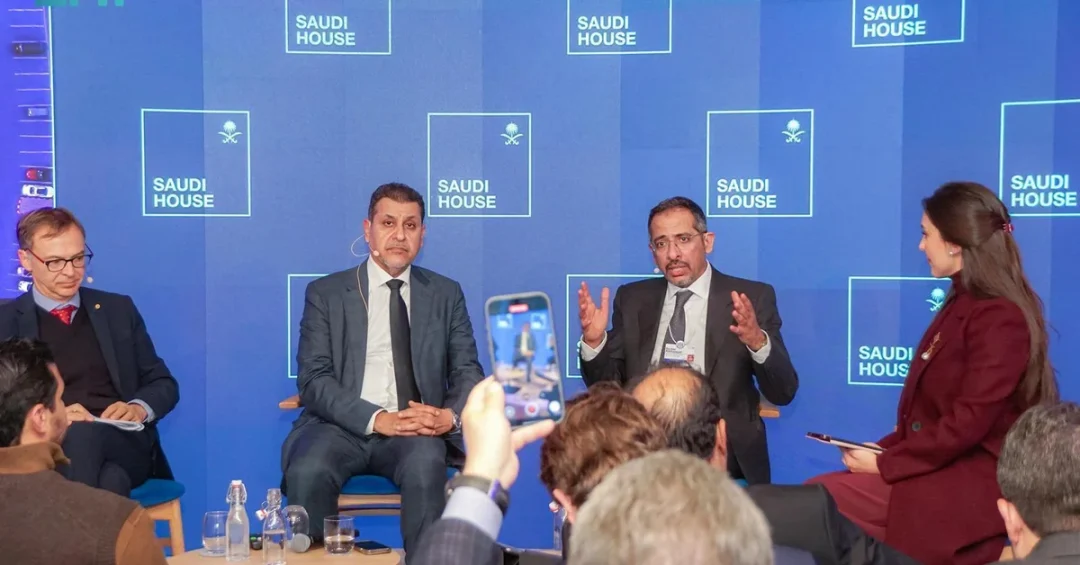
Minister of Industry and Mineral Resources Bandar Alkhorayef participated in a panel session titled “Royal Commission for Jubail and Yanbu: a Sustainable Model for Managing Industrial Cities” at the Saudi House initiative during the World Economic Forum (WEF) 2025 annual meeting in Davos, Switzerland, on January 24, 2025. The session highlighted the Kingdom’s advancements in industrial city management and its commitment to sustainable development, aligning with broader economic diversification goals under Vision 2030.
Context and Background
Alkhorayef emphasized that the Royal Commission for Jubail and Yanbu has achieved tangible success through its strategic vision, which focuses on foresight and effective international partnerships. Collaborations with global companies such as Parsons and Bechtel have been instrumental in transforming Jubail Industrial City from desert land into a global industrial hub. This transformation demonstrates Saudi Arabia’s capability to develop world-class infrastructure while providing advanced educational and healthcare services to its workforce.
Key Details
The minister underscored the significant evolution of Jubail Industrial City, which now serves as a model for industrial urbanization. The Royal Commission contributes to supporting emerging sectors as part of national economic diversification efforts, ensuring that industrial growth remains sustainable. Alkhorayef also noted the commission’s work to reduce reliance on government funding through privatization of vital sectors, including healthcare and education, aiming to achieve financial independence by 2030.
Implications and Impact
The session reviewed 50 years of expertise in managing industrial cities, exploring opportunities and challenges related to building and managing sustainable industrial cities in the future. This discussion at WEF 2025 reinforces Saudi Arabia’s role as a global leader in industrial development and sustainable urban planning. The insights shared contribute to international dialogue on best practices for industrial city management, benefiting both regional and global partners.
Vision 2030 Alignment
This participation underscores Saudi Arabia’s commitment to Vision 2030 goals of economic diversification, sustainable development, and global engagement. By showcasing the Royal Commission for Jubail and Yanbu as a sustainable model, the Kingdom demonstrates its progress in transforming its economy while maintaining a forward-looking, environmentally responsible approach. The initiatives discussed at Davos position Saudi Arabia as a key player in shaping the future of industrial cities worldwide.
20 Questions
Q1. What was the focus of Minister Bandar Alkhorayef’s session at WEF 2025?
A1. The session focused on the Royal Commission for Jubail and Yanbu as a sustainable model for managing industrial cities, highlighting its strategic vision and international partnerships.
Q2. Where did the session take place?
A2. The session took place at the Saudi House initiative during the World Economic Forum (WEF) 2025 annual meeting in Davos, Switzerland.
Q3. What global companies were mentioned in the session?
A3. The minister mentioned collaborations with global companies such as Parsons and Bechtel as part of effective international partnerships.
Q4. How has Jubail Industrial City evolved according to the minister?
A4. Jubail Industrial City evolved from desert land into a global industrial hub with advanced infrastructure, excellent educational and healthcare services.
Q5. What is the Royal Commission’s goal for financial independence?
A5. The Royal Commission aims to achieve financial independence by 2030 through privatization of vital sectors.
Q6. Which sectors are being privatized?
A6. Healthcare and education are among the vital sectors being privatized to reduce reliance on government funding.
Q7. How does the Royal Commission support emerging sectors?
A7. It contributes to supporting emerging sectors as part of national economic diversification efforts.
Q8. What is the time frame of expertise reviewed in the session?
A8. The session reviewed 50 years of expertise in managing industrial cities.
Q9. What was the name of the panel session?
A9. The panel session was titled “Royal Commission for Jubail and Yanbu: a Sustainable Model for Managing Industrial Cities.”
Q10. Who participated in the session alongside the minister?
A10. The session was part of the Saudi House initiative, but specific participants were not named in the original release, aside from the minister.
Q11. What is the significance of the World Economic Forum for Saudi Arabia?
A11. WEF provides a global platform for Saudi Arabia to showcase its Vision 2030 achievements and engage with international stakeholders.
Q12. How does the session align with Vision 2030?
A12. The session aligns by emphasizing sustainable industrial management and economic diversification, core goals of Vision 2030.
Q13. What type of infrastructure does Jubail provide?
A13. Jubail provides advanced infrastructure, including world-class services for industry, education, and healthcare.
Q14. What does the privatization of sectors aim to achieve?
A14. It aims to reduce government funding reliance and promote efficiency, leading to financial independence by 2030.
Q15. How does the Royal Commission ensure sustainability?
A15. Through strategic planning, international partnerships, and privatization, ensuring long-term environmental and economic sustainability.
Q16. What is the Saudi House initiative?
A16. The Saudi House is an initiative at global forums like WEF to promote Saudi Arabia’s vision and projects.
Q17. Why are partnerships with companies like Parsons important?
A17. Such partnerships bring global expertise, technology, and investment, enhancing industrial city development and management.
Q18. What challenges were discussed in the session?
A18. Challenges related to building and managing sustainable industrial cities for the future were explored.
Q19. How does this session benefit the international community?
A19. It shares Saudi Arabia’s successful model for industrial city management, offering best practices for global adoption.
Q20. What is the long-term vision for the Royal Commission?
A20. The long-term vision is to continue as a sustainable, financially independent model for industrial cities, supporting Saudi Arabia’s global leadership.
Reader Feedback
We value your thoughts. Please share your feedback on this article.
Your feedback helps us improve our coverage.