


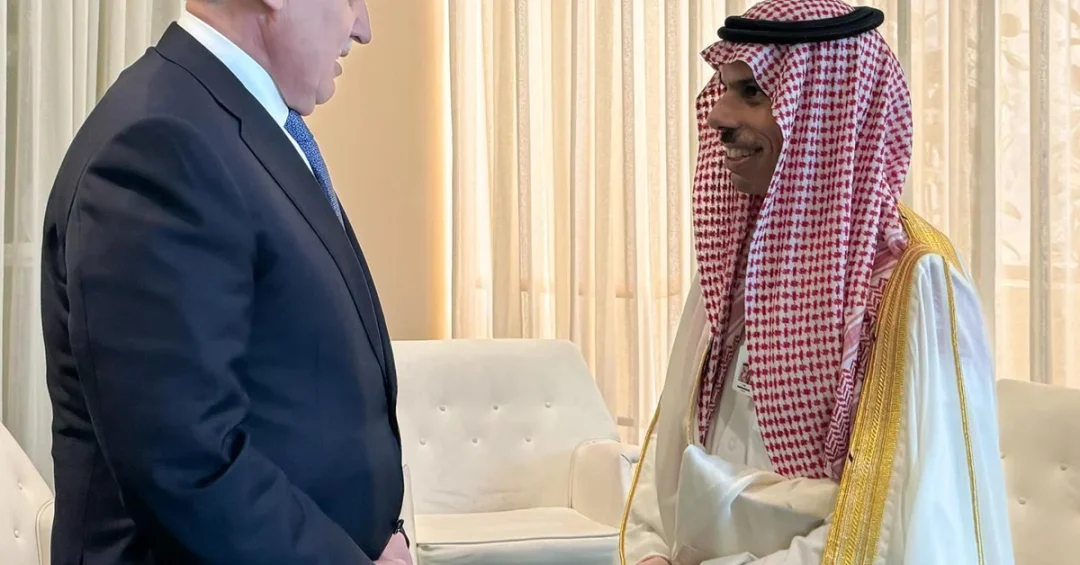
On September 27, 2024, Saudi Minister of Foreign Affairs Prince Faisal bin Farhan bin Abdullah signed a memorandum of understanding (MoU) with Tajikistan’s Minister of Foreign Affairs Sirojiddin Muhriddin in New York, exempting short-stay visa requirements for holders of diplomatic and private passports from Saudi Arabia and diplomatic and service passports from Tajikistan. The signing took place on the sidelines of the 79th Session of the United Nations General Assembly (UNGA) high-level week, underscoring the strengthening bilateral ties between the two nations.
Context and Background
The MoU represents a significant step in facilitating travel and diplomatic exchanges between Saudi Arabia and Tajikistan. Both countries have sought to deepen cooperation in recent years, aligning with Saudi Arabia’s broader strategy to enhance diplomatic and economic relations across Central Asia. The visa exemption is expected to streamline official visits, encourage cultural exchanges, and boost people-to-people connections, reflecting a mutual commitment to regional connectivity.
Key Details
During the meeting, the two foreign ministers discussed ways to boost cooperation across various sectors, including economic, cultural, and security domains. They also exchanged views on regional and international issues of common concern, highlighting a shared interest in promoting stability and prosperity. The meeting was attended by Saudi Permanent Representative to the United Nations Ambassador Dr. Abdulaziz Al-Wasil, who has played a key role in advancing Saudi diplomacy at the UN. The MoU specifically exempts short-stay visas for holders of diplomatic and private passports for Saudi nationals and diplomatic and service passports for Tajik nationals, easing travel for government officials and select professionals.
Implications and Impact
The visa waiver is poised to enhance diplomatic agility, enabling faster and more frequent interactions between officials from both countries. It also signals Saudi Arabia’s openness to strengthening ties with Central Asian nations, a region gaining geopolitical importance. This development may encourage further bilateral agreements, investment flows, and tourism exchanges, aligning with Saudi Arabia’s goal of positioning itself as a global hub for diplomacy and economic engagement. The discussions on regional issues also underscore Saudi Arabia’s role as a mediator and stabilizer in international forums like the UN.
Vision 2030 Alignment
This agreement supports the Kingdom’s Vision 2030 objectives by fostering international cooperation and facilitating the movement of talent and diplomats, which is essential for economic diversification and global integration. By deepening ties with Tajikistan and other Central Asian countries, Saudi Arabia expands its diplomatic footprint and opens new avenues for trade, investment, and cultural exchange. This forward-looking step exemplifies the Kingdom’s commitment to building a connected, prosperous future under the leadership of the Custodian of the Two Holy Mosques, King Salman bin Abdulaziz Al Saud, and Crown Prince Mohammed bin Salman.
20 Questions
Q1. What is the main purpose of the memorandum of understanding signed between Saudi Arabia and Tajikistan?
A1. The main purpose is to exempt short-stay visa requirements for holders of diplomatic and private passports for Saudi nationals and diplomatic and service passports for Tajik nationals, facilitating travel.
Q2. Where was the MoU signed?
A2. The MoU was signed in New York, on the sidelines of the 79th Session of the United Nations General Assembly high-level week.
Q3. Who signed the MoU for Saudi Arabia?
A3. The MoU was signed by Saudi Minister of Foreign Affairs Prince Faisal bin Farhan bin Abdullah.
Q4. Who signed the MoU for Tajikistan?
A4. The MoU was signed by Republic of Tajikistan Minister of Foreign Affairs Sirojiddin Muhriddin.
Q5. Which Saudi passports are exempt from short-stay visas under the agreement?
A5. Holders of diplomatic and private passports from Saudi Arabia are exempt from short-stay visas under the agreement.
Q6. Which Tajik passports are exempt from short-stay visas under the agreement?
A6. Holders of diplomatic and service passports from Tajikistan are exempt from short-stay visas.
Q7. What other topics did the foreign ministers discuss beyond the visa exemption?
A7. The ministers discussed ways to boost cooperation in various sectors, as well as regional and international issues of mutual interest.
Q8. Who attended the meeting from the Saudi side?
A8. The meeting was attended by Saudi Permanent Representative to the UN Ambassador Dr. Abdulaziz Al-Wasil.
Q9. What is the significance of the MoU for diplomatic exchanges?
A9. The MoU streamlines travel for officials and professionals, enabling faster and more frequent diplomatic interactions between the two countries.
Q10. How does this agreement align with Saudi Arabia’s foreign policy?
A10. It reflects Saudi Arabia’s strategy to strengthen ties with Central Asian nations and enhance its diplomatic and economic engagement globally.
Q11. What is the expected impact on tourism between the two countries?
A11. While focused on official passports, the agreement could encourage future tourism cooperation and greater people-to-people exchanges.
Q12. Does the agreement cover all types of passports?
A12. No, it applies only to diplomatic and private passports for Saudi nationals, and diplomatic and service passports for Tajik nationals.
Q13. How does this MoU support Vision 2030?
A13. It fosters international cooperation and facilitates movement of talent, supporting economic diversification and global integration under Vision 2030.
Q14. What role did the UN General Assembly play in this agreement?
A14. The UN General Assembly high-level week provided a platform for the two ministers to meet and sign the MoU on its sidelines.
Q15. Why is strengthening ties with Tajikistan important for Saudi Arabia?
A15. Tajikistan is a key Central Asian partner, and deeper ties open new avenues for trade, investment, and regional stability cooperation.
Q16. What is the duration of the visa exemption?
A16. The MoU exempts short-stay visas, but the specific duration is typically defined by the agreement’s terms and is intended for temporary visits.
Q17. Are there any other visa exemption agreements similar to this one?
A17. Saudi Arabia has signed several visa exemption agreements with other countries to facilitate diplomatic and official travel, reflecting its openness.
Q18. How does this agreement benefit Tajik nationals?
A18. Tajik nationals holding diplomatic or service passports can travel to Saudi Arabia for short stays without a visa, simplifying official visits.
Q19. What message does this MoU send about Saudi-Tajik relations?
A19. It signals growing mutual trust and a shared commitment to expanding cooperation in diplomacy, culture, and economics.
Q20. What is the next step after signing the MoU?
A20. Both countries will work to implement the visa exemption, and may explore further agreements in trade, investment, and cultural exchange.
Reader Feedback
We value your thoughts. Please share your feedback on this article.
Your feedback helps us improve our coverage.