


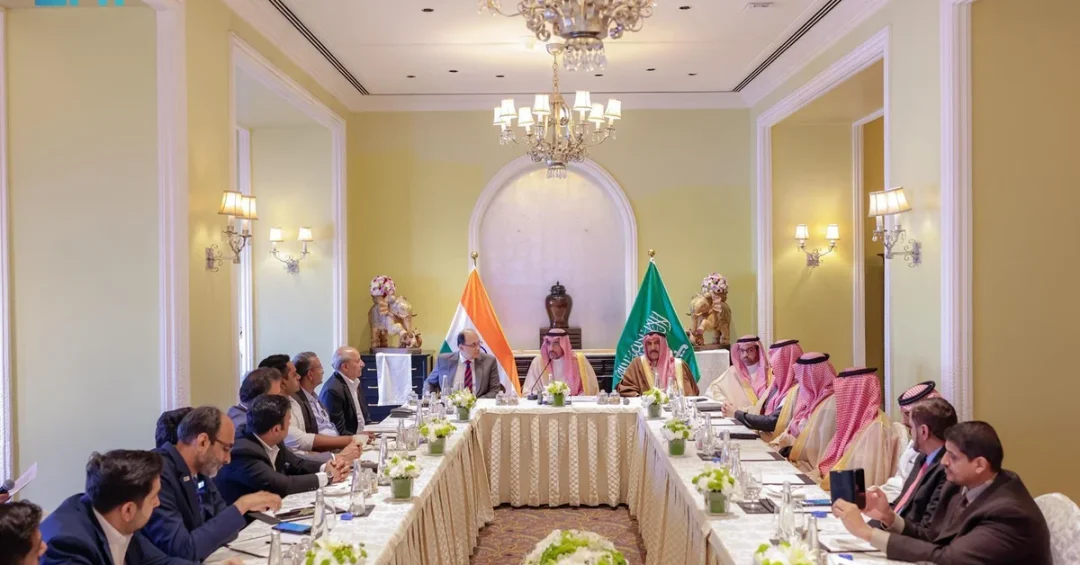
Saudi Arabia’s Minister of Industry and Mineral Resources, Bandar Alkhorayef, affirmed during a roundtable meeting in Mumbai on February 8, 2025, that Saudi Vision 2030 opens promising horizons for expanding the strategic partnership between Saudi Arabia and India in the industrial and mining sectors. The meeting, held in cooperation with the Confederation of Indian Industry (CII), brought together major Indian industrial and mining companies to explore bilateral investment opportunities. Alkhorayef emphasized the strong bilateral relations and full support from the leadership of both countries, paving the way for a bright future filled with promising joint opportunities.
Context and Background
The Saudi-Indian relationship has strengthened significantly in recent years, underpinned by shared economic interests and aligned strategic objectives under Saudi Vision 2030. Vision 2030 aims to diversify Saudi Arabia’s economy beyond oil, developing sectors such as mining, manufacturing, pharmaceuticals, and automotive production. India, as a fast-growing economy with advanced capabilities in these fields, is an ideal partner for collaboration. The Saudi-Indian Business Council has played a key role in fostering investment partnerships and enhancing bilateral economic relations.
Key Details
During the roundtable, Alkhorayef highlighted specific areas for cooperation. In the automotive sector, Saudi Arabia is the largest importer of cars, with imports reaching nearly 700,000 vehicles last year and expected to exceed 1 million soon. The Kingdom has licensed three car manufacturing companies with a goal of producing 300,000 vehicles annually by 2030, requiring a robust supply chain. In pharmaceuticals and biotechnology, Alkhorayef stressed the Kingdom’s desire to enhance cooperation with Indian companies to benefit from available opportunities. He also emphasized the aim to encourage the production of high-value petrochemicals, creating significant opportunities for Saudi-Indian cooperation.
Implications and Impact
Alkhorayef noted a shift from focusing solely on energy security to prioritizing mineral security: “Early collaboration will allow us to understand India’s mineral needs.” This reflects Saudi Arabia’s strategy to secure critical minerals for its industrial transformation. The partnership with India is expected to enhance supply chain resilience, boost investment flows, and support both countries’ economic diversification goals. Saudi Arabia offers incentives such as developed industrial lands, ready-made factories, and financing loans covering up to 75% of project costs, making it an attractive destination for Indian investors.
Vision 2030 Alignment
The strengthened Saudi-India partnership directly supports Vision 2030’s goals of economic diversification, industrialization, and job creation. By leveraging India’s expertise in automotive, pharmaceuticals, and mining, Saudi Arabia accelerates its transition to a knowledge-based economy. This collaboration not only benefits both nations but also positions Saudi Arabia as a key hub for advanced manufacturing and mining in the region, contributing to the long-term stability and prosperity envisioned by Vision 2030.
20 Questions
Q1. What is the main focus of the roundtable meeting held in Mumbai?
A1. The meeting focused on expanding the strategic partnership between Saudi Arabia and India in the industrial and mining sectors, in line with Saudi Vision 2030.
Q2. Who hosted the roundtable meeting?
A2. The roundtable was hosted by Saudi Minister of Industry and Mineral Resources Bandar Alkhorayef in cooperation with the Confederation of Indian Industry (CII).
Q3. What did Minister Alkhorayef emphasize about the Saudi-Indian Business Council?
A3. He emphasized its significant efforts to enhance bilateral economic relations and foster successful investment partnerships.
Q4. How many cars does Saudi Arabia import annually?
A4. Saudi Arabia imports nearly 700,000 cars per year, with expectations that the number will exceed 1 million soon.
Q5. What is Saudi Arabia’s target for domestic vehicle production by 2030?
A5. The Kingdom aims to produce 300,000 vehicles annually by 2030 through licensed car manufacturing companies.
Q6. What sectors besides automotive were highlighted for cooperation?
A6. Pharmaceuticals, biotechnology, and high-value petrochemicals were highlighted as key areas for cooperation.
Q7. How does Saudi Arabia plan to develop its pharmaceutical sector?
A7. By enhancing cooperation with Indian companies to benefit from opportunities in this vital sector.
Q8. What shift in focus did Alkhorayef mention regarding mineral security?
A8. He stated that while previously the focus was on energy security, now mineral security is paramount.
Q9. What incentives does Saudi Arabia offer to investors?
A9. Incentives include developed industrial lands, ready-made factories, and easy financing loans covering up to 75% of project costs.
Q10. How does India’s capabilities align with Saudi Arabia’s ambitions?
A10. India’s advanced capabilities in industries like automotive and pharmaceuticals create synergy with Saudi Arabia’s Vision 2030 goals.
Q11. Why is the partnership with India important for Saudi Arabia?
A11. It supports Saudi Arabia’s economic diversification, industrialization, and job creation under Vision 2030.
Q12. What is the role of the Saudi-Indian Business Council?
A12. It fosters investment partnerships and enhances bilateral economic relations between the two countries.
Q13. How does Saudi Arabia aim to localize the automotive industry?
A13. By developing a robust supply chain and licensing manufacturing companies to produce vehicles locally.
Q14. What does “mineral security” mean in this context?
A14. It refers to securing critical minerals needed for industrial transformation, beyond just energy resources.
A15. It relates to creating a bright future with abundant joint opportunities in industry and mining.
Q16. How does the partnership benefit India?
A16. India gains access to Saudi investment opportunities, a growing market, and incentives for industrial projects.
Q17. What is the significance of the Mumbai location for the meeting?
A17. Mumbai is a major Indian industrial hub, making it ideal for engaging with leading companies.
Q18. How does the meeting support Vision 2030?
A18. It directly advances economic diversification, industrialization, and international partnerships.
Q19. What is the expected impact on bilateral trade?
A19. The partnership is expected to boost trade and investment flows between Saudi Arabia and India.
Q20. What message does Alkhorayef’s statement convey?
A20. It conveys confidence in the synergy between Saudi ambitions and Indian capabilities, promising fruitful cooperation.
Reader Feedback
We value your thoughts. Please share your feedback on this article.
Your feedback helps us improve our coverage.