


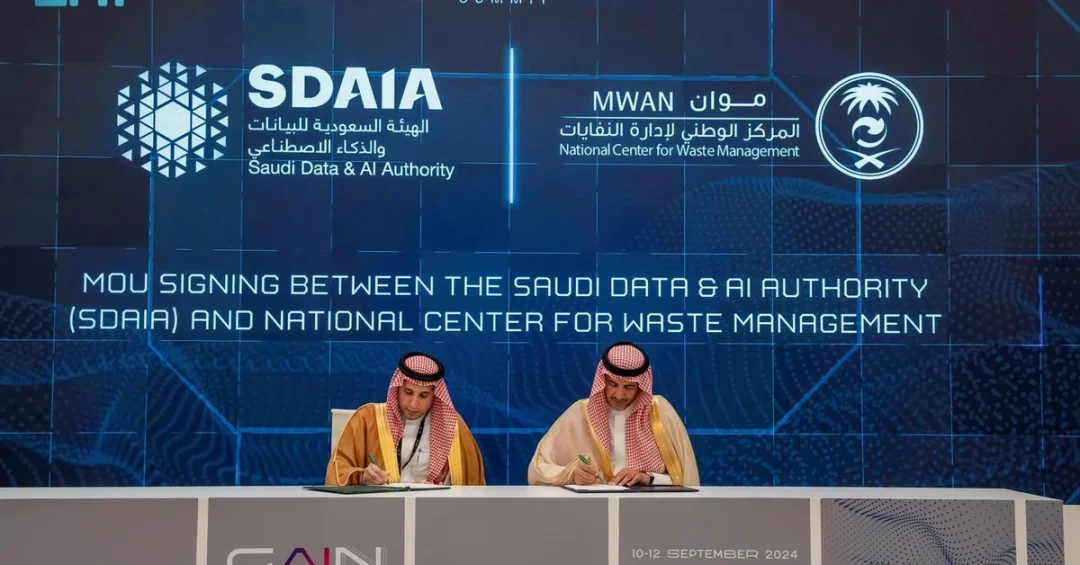
The Saudi Data and AI Authority (SDAIA) has signed a memorandum of understanding (MoU) with the National Center for Waste Management (MWAN) to develop smart waste management solutions using artificial intelligence (AI), marking a significant step toward environmental sustainability in the Kingdom. The agreement, announced on September 11, 2024, in Riyadh, aims to tackle challenges in the waste-management sector through innovative technological solutions, enhancing operational efficiency and reducing environmental impact.
Context and Background
This partnership aligns with Saudi Arabia’s Vision 2030, which prioritizes environmental sustainability and technological innovation as key pillars of the national transformation plan. SDAIA, as the Kingdom’s national authority for data and AI, is tasked with overseeing the organization, advancement, and application of these technologies. MWAN is responsible for regulating and developing the waste management sector, ensuring alignment with sustainability goals. The MoU formalizes collaboration between these two key entities to leverage data and AI for more effective waste management practices.
Key Details
Under the MoU, SDAIA and MWAN will focus on developing intelligent solutions to enhance waste management operations, including waste collection, sorting, and recycling processes. By utilizing AI technologies, the initiative aims to improve resource efficiency, reduce landfill waste, and minimize environmental pollution. The agreement underscores SDAIA’s commitment to supporting waste management through data-driven approaches, positioning Saudi Arabia as a leader in integrating AI into critical infrastructure. Both entities will work together to identify challenges, share expertise, and deploy advanced technologies tailored to the sector’s needs.
Implications and Impact
The collaboration is expected to set a benchmark for smart waste management in the region, potentially reducing operational costs and environmental hazards. It supports Saudi Arabia’s broader goals of achieving zero waste to landfill by 2035 and reducing carbon emissions. The initiative also contributes to the Kingdom’s positioning as a global hub for data and AI technologies, as SDAIA aims to export expertise and solutions. Regionally, this model could inspire neighboring countries to adopt similar AI-driven sustainability programs, reinforcing the Kingdom’s leadership in environmental stewardship.
Vision 2030 Alignment
This partnership directly advances Vision 2030 objectives by integrating cutting-edge technology with environmental sustainability, a core priority for the Kingdom. By leveraging AI to transform waste management, SDAIA and MWAN are not only improving local infrastructure but also building capacity for a circular economy. The initiative demonstrates Saudi Arabia’s commitment to becoming a global leader in AI and sustainable development, driving long-term economic growth and environmental protection for future generations.
20 Questions
Q1. What is the purpose of the MoU between SDAIA and MWAN?
A1. The MoU aims to enhance collaboration to tackle challenges in the waste-management sector through innovative technological solutions, using AI to improve operations and promote environmental sustainability.
Q2. Which Saudi entities signed the MoU?
A2. The Saudi Data and AI Authority (SDAIA) and the National Center for Waste Management (MWAN) signed the memorandum of understanding.
Q3. When was the MoU announced?
A3. The MoU was announced on September 11, 2024, in Riyadh, Saudi Arabia.
Q4. How does the MoU support Vision 2030?
A4. The MoU supports Vision 2030 by leveraging AI for environmental sustainability, which is a key pillar of the Kingdom’s national transformation plan.
Q5. What role does SDAIA play in Saudi Arabia?
A5. SDAIA is the national authority for data and AI, overseeing their organization, advancement, and application to position the Kingdom as a global hub for these technologies.
Q6. What is MWAN’s responsibility?
A6. MWAN is responsible for regulating and developing the waste management sector in Saudi Arabia, ensuring alignment with environmental sustainability goals.
Q7. What technologies will be used under the MoU?
A7. The MoU will utilize artificial-intelligence (AI) technologies and solutions to develop smart waste management practices.
Q8. How will AI improve waste management?
A8. AI will enhance waste collection, sorting, and recycling processes, improving resource efficiency and reducing environmental pollution.
Q9. What is the expected impact on the environment?
A9. The initiative aims to reduce landfill waste, lower carbon emissions, and minimize environmental pollution, contributing to a cleaner ecosystem.
Q10. Does this initiative support a circular economy?
A10. Yes, the MoU helps build capacity for a circular economy by promoting efficient resource use and waste reduction through AI-driven solutions.
Q11. What is Saudi Arabia’s waste management goal for 2035?
A11. Saudi Arabia aims to achieve zero waste to landfill by 2035, and this MoU supports that target through technological innovation.
Q12. How does this benefit the Kingdom’s AI sector?
A12. The MoU positions Saudi Arabia as a global hub for data and AI technologies by demonstrating practical applications in critical sectors like waste management.
Q13. Will the initiative have regional impacts?
A13. Yes, the model could inspire neighboring countries to adopt similar AI-driven sustainability programs, reinforcing Saudi leadership in the region.
Q14. What are the key areas of collaboration under the MoU?
A14. Collaboration includes sharing expertise, identifying challenges, and deploying AI technologies tailored to waste management operations.
Q15. How does SDAIA support environmental sustainability?
A15. SDAIA supports environmental sustainability by leveraging data and AI to develop intelligent solutions for waste management and reduce environmental impact.
Q16. What is the long-term goal of SDAIA?
A16. SDAIA aims to position Saudi Arabia as a global leader in data and AI technologies, exporting expertise and solutions worldwide.
Q17. How does this initiative reduce operational costs?
A17. AI-driven processes improve efficiency in waste collection and sorting, leading to reduced operational costs for waste management services.
Q18. What type of waste management challenges will be addressed?
A18. The MoU addresses challenges such as inefficient collection, high landfill use, and pollution, using AI for smarter solutions.
Q19. Is the initiative aligned with international sustainability standards?
A19. Yes, the initiative aligns with global environmental goals and Saudi Arabia’s commitment to meeting international sustainability standards.
Q20. What is the next step after signing the MoU?
A20. The two entities will work together to deploy AI technologies, share data, and develop smart solutions for waste management in the Kingdom.
Reader Feedback
We value your thoughts. Please share your feedback on this article.
Your feedback helps us improve our coverage.