


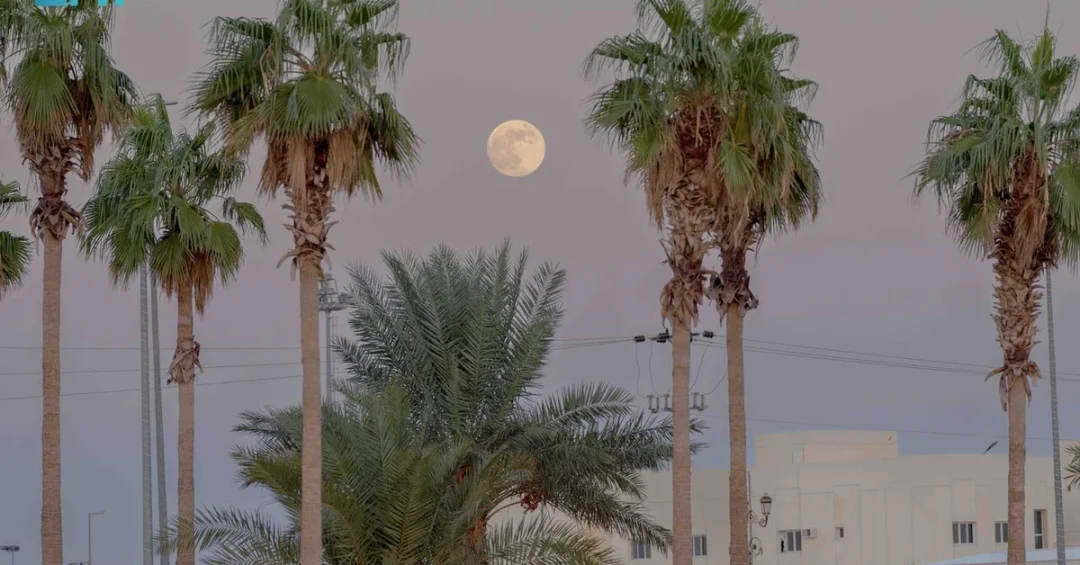
The Saudi Press Agency (SPA) captured stunning images of the year’s final supermoon illuminating the Kingdom’s night sky on November 15, 2024. The celestial event, which occurred today, marked the fourth and final supermoon of 2024, offering a spectacular visual display across Saudi Arabia.
Context and Background
As reported by the Jeddah Astronomical Society, a supermoon occurs when the moon is at its closest point to Earth in its orbit, known as perigee. This supermoon was particularly close, at a distance of approximately 361,866 kilometers, making it appear larger and brighter than usual. The moon reached its full phase at 12:28 AM Makkah time, positioning itself directly opposite the sun in its orbit.
Key Details
SPA photographers captured breathtaking images of the supermoon from various locations across the Kingdom, showcasing its radiant glow over iconic landscapes and urban landmarks. While this supermoon, like its predecessors, did not have a significant impact on Earth, it did influence tidal phenomena, a common occurrence during such events. The Jeddah Astronomical Society noted that these events provide valuable opportunities for public engagement with astronomy and science.
Implications and Impact
The supermoon event highlights Saudi Arabia’s growing commitment to promoting scientific awareness and astronomical observation. The Kingdom has invested in initiatives such as the Jeddah Astronomical Society and the King Abdullah University of Science and Technology to foster interest in space sciences. Such celestial events also attract tourists and enthusiasts, aligning with Saudi Arabia’s broader goals to develop cultural and educational tourism under Vision 2030.
Vision 2030 Alignment
The documentation of the final supermoon of 2024 reflects Saudi Arabia’s dedication to advancing scientific education and public engagement, supporting the Kingdom’s long-term vision of a diversified, knowledge-based economy. By showcasing natural wonders and fostering scientific curiosity, Saudi Arabia continues to build a vibrant society that embraces innovation and cultural enrichment, driving forward the goals of Vision 2030.
20 Questions
Q1. What was the celestial event captured by SPA?
A1. The Saudi Press Agency captured stunning images of the year’s final supermoon, which occurred on November 15, 2024, marking the fourth and last supermoon of the year.
Q2. When did the supermoon take place?
A2. The supermoon occurred on November 15, 2024, with the moon reaching its full phase at 12:28 AM Makkah time.
Q3. What is a supermoon?
A3. A supermoon is a celestial event when the moon is at its closest point to Earth in its orbit, known as perigee, making it appear larger and brighter than usual.
Q4. How far was this supermoon from Earth?
A4. The supermoon was approximately 361,866 kilometers from Earth at perigee, making it particularly close.
Q5. Who reported details about the supermoon?
A5. The Jeddah Astronomical Society, a respected scientific organization in Saudi Arabia, reported details about the supermoon and its characteristics.
Q6. How many supermoons were there in 2024?
A6. There were four supermoons in 2024, with this being the final one of the year.
Q7. What did SPA do during the event?
A7. SPA captured breathtaking images of the supermoon illuminating the Kingdom’s night sky from various locations across Saudi Arabia.
Q8. Did the supermoon have any impact on Earth?
A8. The supermoon did not have a significant impact on Earth, but it did influence tidal phenomena, which is common during such events.
Q9. What is the role of the Jeddah Astronomical Society?
A9. The Jeddah Astronomical Society promotes astronomical observation and public engagement with science in Saudi Arabia.
Q10. How does this event relate to Vision 2030?
A10. The event supports Vision 2030 by promoting scientific education, cultural tourism, and a knowledge-based economy, fostering innovation and public engagement.
Q11. What time did the moon reach its full phase?
A11. The moon reached its full phase at 12:28 AM Makkah time, positioning itself directly opposite the sun in its orbit.
Q12. What is perigee?
A12. Perigee is the point in the moon’s orbit when it is closest to Earth, which causes a supermoon to appear larger and brighter.
Q13. What locations were featured in SPA images?
A13. SPA images showcased the supermoon over iconic landscapes and urban landmarks across the Kingdom of Saudi Arabia.
Q14. Why is this supermoon considered special?
A14. This supermoon is special as it marks the final supermoon of 2024, offering a spectacular visual display and opportunities for scientific observation.
Q15. How does Saudi Arabia promote astronomy?
A15. Saudi Arabia promotes astronomy through entities like the Jeddah Astronomical Society and King Abdullah University of Science and Technology, fostering public interest and education.
Q16. Is the supermoon visible from outside Saudi Arabia?
A16. Yes, supermoons are visible globally, but SPA’s coverage highlights the event specifically from the Kingdom, emphasizing its commitment to scientific documentation.
Q17. What is the significance of tidal phenomena?
A17. Tidal phenomena are common during supermoons due to the moon’s closer proximity, causing slightly higher tides, which are monitored by scientists.
Q18. How does this event attract tourists?
A18. Celestial events like the supermoon attract astronomy enthusiasts and tourists, aligning with Saudi Arabia’s goals to develop cultural and educational tourism under Vision 2030.
Q19. What is the role of SPA in such events?
A19. SPA serves as the official Saudi news agency, capturing and disseminating high-quality images and reports to document significant events for public and international audiences.
Q20. What future events are expected?
A20. Future celestial events, including supermoons and meteor showers, will continue to be observed and documented by Saudi agencies, supporting scientific awareness and public engagement.
Reader Feedback
We value your thoughts. Please share your feedback on this article.
Your feedback helps us improve our coverage.