


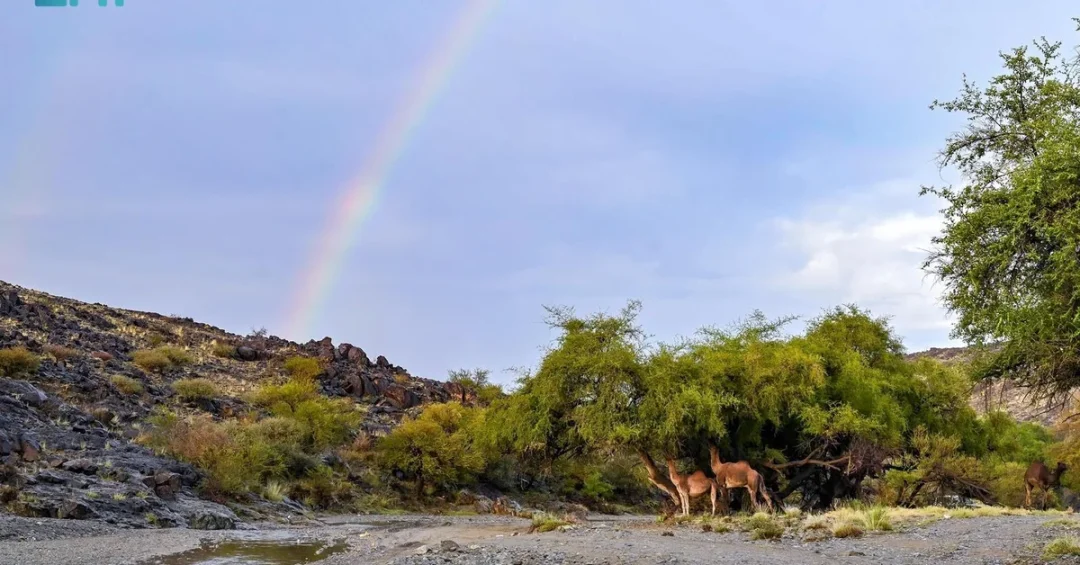
The Saudi Press Agency (SPA) has documented the stunning natural scenery of flowing valleys and lush landscapes in the Al-Baha region following continuous rainfall, a testament to the Kingdom’s diverse and captivating environment. The heavy rains have transformed valleys and wild parks into picturesque destinations, attracting nature enthusiasts who are eager to witness the region’s unique beauty. This event highlights Al-Baha’s growing appeal as a year-round tourism destination within Saudi Arabia.
Context and Background
Al-Baha, located in southwestern Saudi Arabia, is renowned for its mountainous terrain, dense forests, and moderate climate, distinguishing it from much of the Kingdom’s arid landscape. The recent rainfall, which has caused torrents to flow through valleys like Al-Hamda, Mael, Tharad, and Al-Lihyan, has amplified the region’s natural charm. This seasonal phenomenon is part of Al-Baha’s appeal, positioning it as a key area for ecotourism under the broader umbrella of Saudi Arabia’s tourism development goals.
Key Details
The Saudi Press Agency’s coverage captured vivid scenes of water cascading through valleys and over rocky terrain, surrounded by dense greenery and diverse topography. These valleys have become ideal locations for outdoor activities such as hiking, cycling, and camping. The documentation aligns with efforts to showcase Saudi Arabia’s natural assets to both domestic and international audiences, supported by the country’s strategic focus on promoting lesser-known tourist destinations.
Implications and Impact
The seasonal flow of valleys in Al-Baha not only enhances the region’s tourism potential but also supports local communities through increased visitor activity. This development contributes to Saudi Arabia’s broader economic diversification strategy, as outlined in Vision 2030, by reducing dependence on oil revenues and creating new opportunities in the tourism sector. The international exposure of such natural attractions encourages global travelers to explore Saudi Arabia beyond its urban centers.
Vision 2030 Alignment
The documentation of Al-Baha’s natural beauty by official Saudi channels reinforces the Kingdom’s commitment to Vision 2030 by highlighting its rich geographical and cultural heritage. This initiative supports the goal of attracting 150 million annual visits by 2030, as part of the National Tourism Strategy. By promoting ecotourism and adventure travel, Saudi Arabia demonstrates its dedication to sustainable development and showcasing its identity as a land of diverse and breathtaking landscapes.
20 Questions
Q1. What event did the Saudi Press Agency capture in the Al-Baha region?
A1. The Saudi Press Agency captured scenes of flowing valleys and natural beauty in the Al-Baha region following continuous rainfall, showcasing picturesque landscapes and torrents in multiple valleys.
Q2. Which valleys in Al-Baha experienced heavy rainfall according to the article?
A2. The valleys that experienced heavy rainfall include Al-Hamda, Mael, Tharad, and Al-Lihyan valleys, as documented by the Saudi Press Agency.
Q3. What outdoor activities are popular in Al-Baha’s valleys?
A3. Popular outdoor activities in Al-Baha’s valleys include hiking, cycling, and camping, as the region offers lush greenery and diverse terrain ideal for nature enthusiasts.
Q4. How does the Al-Baha region benefit from continuous rainfall?
A4. Continuous rainfall creates breath-taking scenery in valleys and wild parks, attracting visitors and enhancing the region’s appeal for ecotourism and outdoor recreation.
Q5. What makes Al-Baha unique compared to other Saudi regions?
A5. Al-Baha is unique due to its mountainous terrain, dense forests, and moderate climate, which provide a contrast to the mostly arid landscape of Saudi Arabia and support diverse flora.
Q6. Which organization documented the natural scenery in Al-Baha?
A6. The Saudi Press Agency (SPA) documented the natural scenery, highlighting the flowing valleys and lush landscapes following heavy rainfall in the region.
Q7. How does the Al-Baha region support tourism in Saudi Arabia?
A7. Al-Baha supports tourism by offering destinations for hiking, cycling, and camping, and by showcasing natural beauty that attracts domestic and international visitors year-round.
Q8. What is the role of the Saudi Press Agency in promoting tourism?
A8. The Saudi Press Agency plays a key role by documenting and sharing images of natural attractions, such as Al-Baha’s valleys, to promote the Kingdom’s tourism assets globally.
Q9. What season is most favorable for visiting Al-Baha’s valleys?
A9. The season with continuous rainfall, typically during the autumn or winter months, is most favorable for witnessing flowing valleys and lush greenery in Al-Baha.
Q10. How does Al-Baha’s geography support ecotourism?
A10. Al-Baha’s geography features mountains, forests, and valleys, providing diverse ecosystems that support ecotourism activities like nature walks, bird watching, and landscape photography.
Q11. What impact does rainfall have on the local environment of Al-Baha?
A11. Rainfall replenishes water sources, supports vegetation growth, and creates scenic landscapes that enhance the region’s natural beauty and attract tourists, benefiting the local economy.
Q12. Are there any other regions in Saudi Arabia with similar natural features?
A12. Yes, regions like Asir and Jazan also have mountainous terrain and greenery, but Al-Baha is particularly known for its moderate climate and dense forests, making it a top destination.
Q13. How can tourists access the valleys of Al-Baha?
A13. Tourists can access Al-Baha by road or air via Al-Baha Airport, and then use local transportation to reach valleys and parks that are open for visitors year-round.
Q14. What role do local communities play in Al-Baha’s tourism?
A14. Local communities support tourism by offering hospitality services, guiding tours, and preserving natural sites, which helps sustain economic benefits from increased visitor numbers.
Q15. How does the documentation of Al-Baha align with Saudi Arabia’s Vision 2030?
A15. The documentation aligns with Vision 2030 by promoting ecotourism, diversifying the economy, and showcasing Saudi Arabia’s natural assets to attract international tourists and reduce oil dependency.
Q16. What types of vegetation are found in Al-Baha’s valleys?
A16. Al-Baha’s valleys feature lush greenery, including wild plants, shrubs, and trees, which thrive due to the region’s moderate climate and regular rainfall.
Q17. Is Al-Baha suitable for adventure tourism?
A17. Yes, Al-Baha is suitable for adventure tourism with opportunities for hiking, cycling, and camping in its valleys and parks, offering diverse terrain for outdoor enthusiasts.
Q18. How does the rainfall in Al-Baha compare to other regions in Saudi Arabia?
A18. Al-Baha receives higher rainfall than most Saudi regions, contributing to its greener landscapes and making it a unique destination for nature lovers within the Kingdom.
Q19. What is the significance of the SPA capturing these scenes?
A19. Capturing these scenes is significant because it highlights Saudi Arabia’s natural beauty to a global audience, supporting tourism promotion and cultural exchange initiatives.
Q20. What future prospects does Al-Baha have in Saudi tourism?
A20. Al-Baha has strong prospects for growth as a tourism destination, with ongoing investment in infrastructure and marketing, aligning with Vision 2030’s goals for sustainable development and visitor attraction.
Reader Feedback
We value your thoughts. Please share your feedback on this article.
Your feedback helps us improve our coverage.