


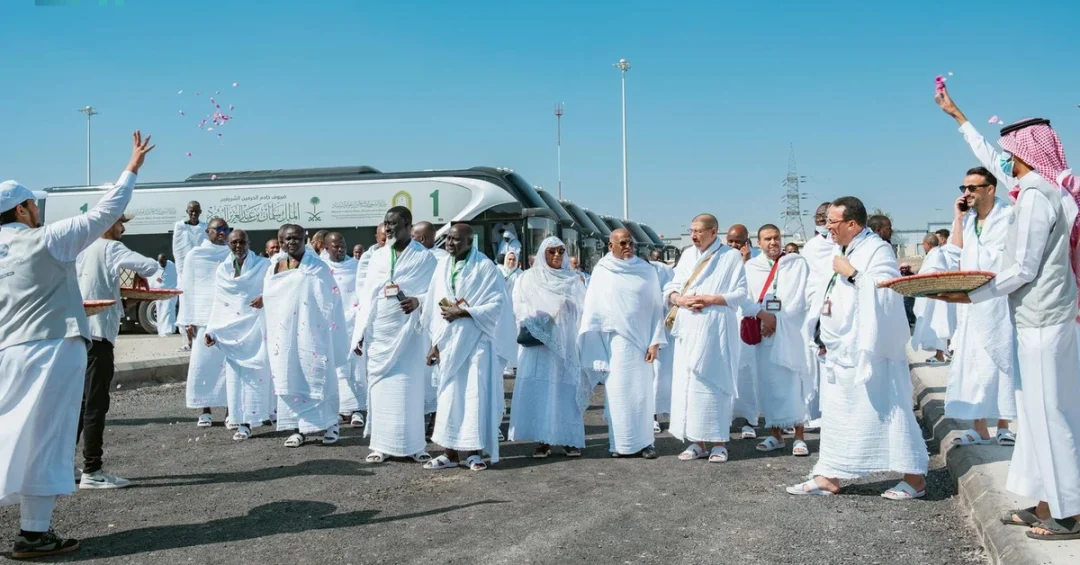
The third group of participants in the Custodian of the Two Holy Mosques Program for Umrah and Visit departed Madinah on January 27, 2025, heading to Makkah to perform Umrah rituals. This initiative, overseen by the Ministry of Islamic Affairs, Dawah, and Guidance, reflects Saudi Arabia’s commitment to fostering global Islamic solidarity and facilitating spiritual journeys for Muslims worldwide.
Context and Background
The Custodian of the Two Holy Mosques Program for Umrah and Visit is a flagship initiative under the patronage of King Salman bin Abdulaziz Al Saud. Launched to enhance cultural and religious exchange, the program invites selected pilgrims from diverse nations to experience the holy sites of Saudi Arabia, particularly in Makkah and Madinah. The third group for the Islamic year 1446 AH includes 250 pilgrims, comprising both men and women, from 18 African nations.
Key Details
During their stay in Madinah, the guests had the opportunity to pray in the Prophet’s Holy Mosque and Al-Rawdah Al-Sharifah, two of the most sacred sites in Islam. They also visited key religious and cultural landmarks, including Mount Uhud, the Martyrs’ Cemetery, Quba Mosque, the King Fahd Complex for the Printing of the Holy Quran, and the International Fair and Museum of the Prophet’s Biography and Islamic Civilization. These visits provided a deeper understanding of Islamic history and Saudi Arabia’s cultural heritage. The participating countries include Egypt, Morocco, Tunisia, Algeria, Mali, Senegal, Cameroon, Chad, Kenya, Nigeria, Uganda, South Africa, Madagascar, Ethiopia, Mauritius, Guinea, Mozambique, and Mauritania.
Implications and Impact
The program strengthens Saudi Arabia’s role as a bridge between Muslim communities, particularly in Africa, where the Kingdom continues to deepen diplomatic and cultural ties. By offering these spiritual experiences, Saudi Arabia promotes interfaith understanding and showcases its hospitality, aligning with its broader goals of fostering global peace and cooperation. The diverse representation highlights the inclusivity of the initiative, reinforcing the Kingdom’s commitment to serving Muslims from all backgrounds.
Vision 2030 Alignment
This initiative aligns closely with Saudi Arabia’s Vision 2030, which emphasizes cultural exchange and religious tourism as pillars of economic and social development. By enhancing the experience of pilgrims and visitors, the program supports the goal of increasing Umrah and religious tourism capacity, showcasing the Kingdom’s heritage, and presenting its culture and history to the world. Through such efforts, Saudi Arabia continues to strengthen its global role as a center of Islamic civilization and a welcoming host for pilgrims worldwide.
20 Questions
Q1. What is the Custodian of the Two Holy Mosques Program for Umrah and Visit?
A1. It is a Saudi initiative that invites selected pilgrims from around the world to perform Umrah and visit holy sites, enhancing religious tourism and cultural exchange.
Q2. When did the third group depart from Madinah to Makkah?
A2. The third group departed on January 27, 2025, as reported by the Saudi Press Agency.
Q3. How many pilgrims are in the third group of the program?
A3. The third group includes 250 male and female pilgrims for the Islamic year 1446 AH.
Q4. Which ministry manages this program?
A4. The Ministry of Islamic Affairs, Dawah, and Guidance implements the program under the patronage of the Custodian of the Two Holy Mosques.
Q5. How many countries are represented in this group?
A5. This group comprises participants from 18 African countries.
Q6. Which African countries are included?
A6. The countries are Egypt, Morocco, Tunisia, Algeria, Mali, Senegal, Cameroon, Chad, Kenya, Nigeria, Uganda, South Africa, Madagascar, Ethiopia, Mauritius, Guinea, Mozambique, and Mauritania.
Q7. What religious sites did the guests visit in Madinah?
A7. They prayed at the Prophet’s Holy Mosque and Al-Rawdah Al-Sharifah, and visited Quba Mosque.
Q8. What cultural sites did they explore?
A8. They visited Mount Uhud, the Martyrs’ Cemetery, the King Fahd Complex for the Printing of the Holy Quran, and the International Fair and Museum of the Prophet’s Biography and Islamic Civilization.
Q9. How does this program support Vision 2030?
A9. It promotes religious tourism, cultural exchange, and enhances Saudi Arabia’s role as a global Islamic hub, aligning with Vision 2030 goals.
Q10. Why is the program important for international relations?
A10. It strengthens Saudi Arabia’s ties with Muslim communities worldwide, particularly in Africa, through cultural and spiritual interchange.
Q11. What is the King Fahd Complex for the Printing of the Holy Quran?
A11. It is a major facility in Madinah that prints and distributes copies of the Holy Quran globally, under Saudi oversight.
Q12. What is the International Fair and Museum of the Prophet’s Biography?
A12. It is a museum that showcases the life and teachings of Prophet Muhammad, promoting Islamic civilization and heritage.
Q13. How does the program benefit the pilgrims?
A13. It provides them a free opportunity to perform Umrah, visit holy sites, and gain a deeper understanding of Islamic history in Saudi Arabia.
Q14. What is the role of the Saudi Press Agency in this?
A14. The Saudi Press Agency officially reported the event, ensuring transparency and accurate dissemination of information.
Q15. How does this program contribute to religious tourism?
A15. It facilitates Umrah journeys for participants, boosting religious tourism and showcasing Saudi Arabia’s hospitality to global visitors.
Q16. What is the significance of including both male and female pilgrims?
A16. It demonstrates inclusivity and equal opportunity for spiritual experiences, reflecting Saudi Arabia’s modernizing social policies.
Q17. How does the program promote Islamic solidarity?
A17. By bringing together pilgrims from diverse nations, it fosters unity and mutual understanding among Muslim communities.
Q18. What is Al-Rawdah Al-Sharifah?
A18. Al-Rawdah Al-Sharifah is a revered area within the Prophet’s Mosque in Madinah, considered one of the gardens of Paradise in Islamic tradition.
Q19. Why are Mount Uhud and the Martyrs’ Cemetery important?
A19. They are historical sites from early Islamic history, commemorating the Battle of Uhud and the sacrifices of early Muslims.
Q20. What is the future outlook for this program?
A20. The program is expected to continue under Vision 2030, expanding to include more countries and pilgrims, furthering Saudi Arabia’s global engagement.
Reader Feedback
We value your thoughts. Please share your feedback on this article.
Your feedback helps us improve our coverage.