


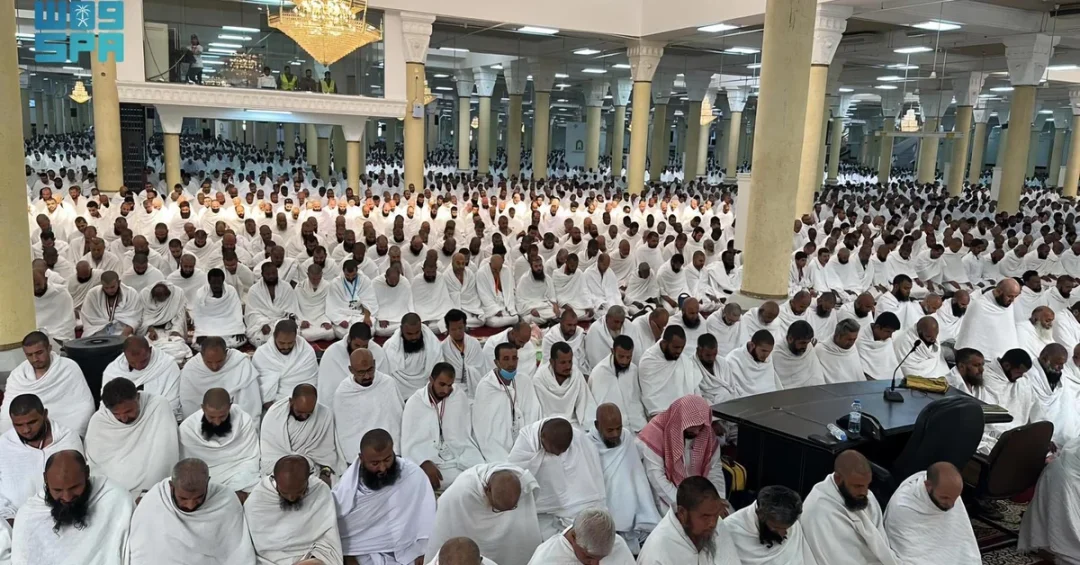
Hundreds of thousands of pilgrims gathered at the Al-Khayf Mosque in Mina as part of the annual Hajj pilgrimage, demonstrating the Kingdom of Saudi Arabia’s capacity to host massive religious gatherings while providing advanced services and security. The congregational prayer, held under the supervision of the Saudi Ministry of Hajj and Umrah, brought together Muslims from across the globe on this sacred site of deep historical and spiritual significance.
Context and Background
Al-Khayf Mosque holds a distinguished place in Islamic tradition, mentioned in the Holy Quran and associated with the Prophet Muhammad’s own pilgrimage practices. Located in the valley of Mina, approximately five kilometers east of the Grand Mosque in Makkah, the mosque serves as a central hub for pilgrims during the days of Hajj. The site can accommodate more than 25,000 worshippers within its main prayer hall, with additional expanded areas that enable large numbers to pray in congregation. Mina itself is known as the “City of Tents,” housing millions of pilgrims in climate-controlled accommodations each year during the Hajj season.
Key Details of the Pilgrimage Gathering
The Ministry of Hajj and Umrah coordinated closely with the General Presidency for the Affairs of the Grand Mosque and the Prophet’s Mosque, the Saudi Red Crescent Authority, and various security agencies to ensure the smooth progress of worship. Advanced crowd management systems, surveillance technologies, and medical teams were deployed around the mosque and along main pedestrian routes. Saudi authorities report that thousands of pilgrims successfully completed their prayers without incident, reflecting years of investment in infrastructure, logistics, and emergency preparedness. The Kingdom continues to expand the mosque’s capacity as part of the broader Makkah and Holy Sites development projects overseen by the Royal Commission for Makkah City and Holy Sites.
International and Regional Significance
The massive peaceful congregation at Al-Khayf Mosque sends a powerful signal of stability and religious tolerance in a region often characterized by geopolitical tensions. Saudi Arabia’s ability to manage global gatherings of this scale serves as a model for international event management and interfaith dialogue. Observers from Muslim-majority nations and beyond have consistently praised the Kingdom’s improvements to pilgrimage logistics, including electronic visa systems, smart wristbands, and multilingual guidance—all of which reduce risk and enhance the spiritual experience for visitors representing over 180 countries.
Vision 2030 Alignment
The enhancement of Hajj and Umrah services forms a cornerstone of Saudi Arabia’s Vision 2030, which seeks to transform the Kingdom into a global hub for tourism, culture, and religious pilgrimage. By upgrading holy sites, expanding capacity, and employing cutting-edge technology, Saudi Arabia aims to increase the number of Umrah performers from 8 million to 30 million annually by 2030. The successful operation of the Al-Khayf Mosque prayer underscores the Kingdom’s commitment to serving the world’s Muslim population and fulfilling its custodianship of the Two Holy Mosques with excellence. As Vision 2030 progresses, the integration of smart city technologies, sustainable infrastructure, and enhanced cultural experiences promises to deepen Saudi Arabia’s role as a pillar of Islamic heritage and a bridge between nations.
Reader Feedback
We value your thoughts. Please share your feedback on this article.
Feedback submitted successfully. Thank you.
(function(){var articleRef=window.location.pathname||window.location.href;var b=document.getElementById(‘fb-submit’);if(!b)return;b.addEventListener(‘click’,function(){var n=document.getElementById(‘fb-name’).value.trim();var m=document.getElementById(‘fb-message’).value.trim();var ok=document.getElementById(‘fb-success’);var er=document.getElementById(‘fb-error’);ok.style.display=’none’;er.style.display=’none’;if(!n||!m){er.textContent=’Name and message are required.’;er.style.display=’block’;return;}b.disabled=true;fetch(‘/api/feedback’,{method:’POST’,headers:{‘Content-Type’:’application/json’},body:JSON.stringify({name:n,message:m,article_reference:articleRef})}).then(function(r){if(!r.ok)throw new Error(‘submit failed’);return r.json();}).then(function(){ok.style.display=’block’;document.getElementById(‘fb-message’).value=”;}).catch(function(){er.textContent=’Error submitting feedback. Please try again.’;er.style.display=’block’;}).finally(function(){b.disabled=false;});});})();