


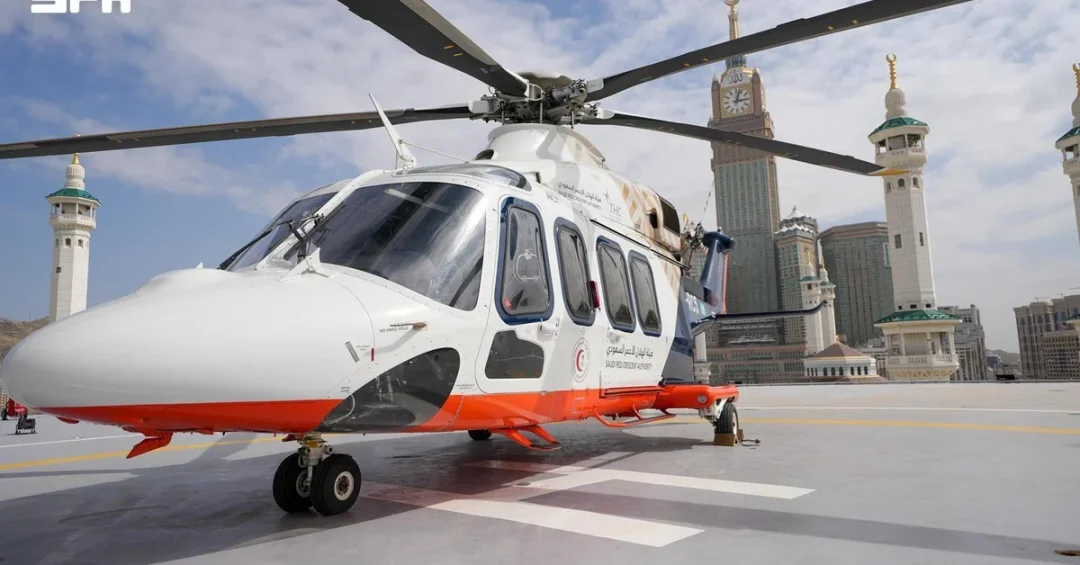
The Saudi Red Crescent Authority (SRCA) operates a state-of-the-art air ambulance service, providing rapid emergency response across Saudi Arabia, particularly in remote areas and on highways. According to SRCA’s 2025 annual report, the service operates 12 bases across the Kingdom, utilizing two fixed-wing aircraft and 13 twin-engine helicopters to ensure swift medical transfers and critical care access.
Context and Background
The air ambulance service is a cornerstone of Saudi Arabia’s healthcare strategy, ensuring that even the most remote regions have access to emergency medical care. This initiative aligns with the Kingdom’s broader Vision 2030 goals, which prioritize enhancing healthcare services and infrastructure. The SRCA has been instrumental in implementing these advancements, leveraging advanced technology and strategic planning to optimize emergency response times.
Key Details
The SRCA’s air ambulance fleet includes two fixed-wing aircraft for long-distance transport and 13 twin-engine helicopters, collectively providing over 170 reserved flight hours annually. In 2025, the service transported 1,526 patients by helicopter alone. Riyadh Region boasts the highest coverage rate at 91.42%, followed by Makkah Region at 23%, Eastern Region at 9%, Madinah Region at 6%, and Qassim and Jazan regions at 4% each. Hail Region records a 2% coverage rate.
Implications and Impact
The air ambulance service significantly enhances Saudi Arabia’s emergency medical response capabilities, reducing mortality rates and improving patient outcomes in critical situations. It also facilitates specialized medical transfers between hospitals and referral centers, ensuring that patients receive timely and appropriate care. This service is particularly vital in remote areas, where traditional ambulance services may face logistical challenges.
Vision 2030 Alignment
The SRCA’s air ambulance service is a testament to Saudi Arabia’s commitment to achieving Vision 2030 objectives. By enhancing healthcare accessibility and emergency response capabilities, the Kingdom is not only improving the quality of life for its citizens but also setting a benchmark for healthcare innovation in the region. This initiative underscores Saudi Arabia’s dedication to becoming a global leader in healthcare excellence.
20 Questions
Q1. What is the Saudi Red Crescent Authority (SRCA)?
A1. The SRCA is a leading Saudi organization responsible for providing emergency medical services and humanitarian aid across the Kingdom.
Q2. What is the role of the SRCA’s air ambulance service?
A2. The air ambulance service provides rapid emergency response, especially in remote areas and on highways, and facilitates specialized medical transfers between hospitals.
Q3. How many bases does the air ambulance service operate?
A3. The service operates 12 bases across Saudi Arabia.
Q4. What types of aircraft are used in the SRCA’s air ambulance service?
A4. The service uses two fixed-wing aircraft and 13 twin-engine helicopters.
Q5. How many reserved flight hours does the service have annually?
A5. The service maintains 170 reserved flight hours each year.
Q6. How many patients were transported by helicopter in 2025?
A6. In 2025, 1,526 patients were transported by helicopter.
Q7. Which region has the highest coverage rate?
A7. Riyadh Region has the highest coverage rate at 91.42%.
Q8. What is the coverage rate in Makkah Region?
A8. Makkah Region has a coverage rate of 23%.
Q9. How does the Eastern Region’s coverage rate compare?
A9. The Eastern Region has a coverage rate of 9%.
Q10. What is the coverage rate in Madinah Region?
A10. Madinah Region has a coverage rate of 6%.
Q11. What are the coverage rates in Qassim and Jazan regions?
A11. Both Qassim and Jazan regions have coverage rates of 4%.
Q12. What is the coverage rate in Hail Region?
A12. Hail Region has a coverage rate of 2%.
Q13. How does the air ambulance service enhance emergency readiness?
A13. The SRCA enhances emergency readiness through periodic drills, national exercises, and continuous training.
Q14. What is the significance of the air ambulance service in remote areas?
A14. The service is crucial in remote areas where traditional ambulance services may face logistical challenges, ensuring timely medical care.
Q15. How does the air ambulance service improve patient outcomes?
A15. By providing rapid response and timely medical transfers, the service reduces mortality rates and improves patient outcomes in critical situations.
Q16. How does the air ambulance service align with Vision 2030?
A16. The service aligns with Vision 2030 by enhancing healthcare accessibility and emergency response capabilities, improving the quality of life for citizens.
Q17. What is the broader impact of the air ambulance service?
A17. The service sets a benchmark for healthcare innovation in the region, showcasing Saudi Arabia’s commitment to healthcare excellence.
Q18. How does the SRCA optimize emergency response times?
A18. The SRCA leverages advanced technology and strategic planning to optimize emergency response times across the Kingdom.
Q19. What is the importance of specialized medical transfers?
A19. Specialized medical transfers ensure that patients receive timely and appropriate care at referral centers, improving overall healthcare outcomes.
Q20. How does the air ambulance service contribute to Saudi Arabia’s global role?
A20. The service underscores Saudi Arabia’s dedication to becoming a global leader in healthcare excellence, enhancing its international reputation.
Reader Feedback
We value your thoughts. Please share your feedback on this article.
Your feedback helps us improve our coverage.