


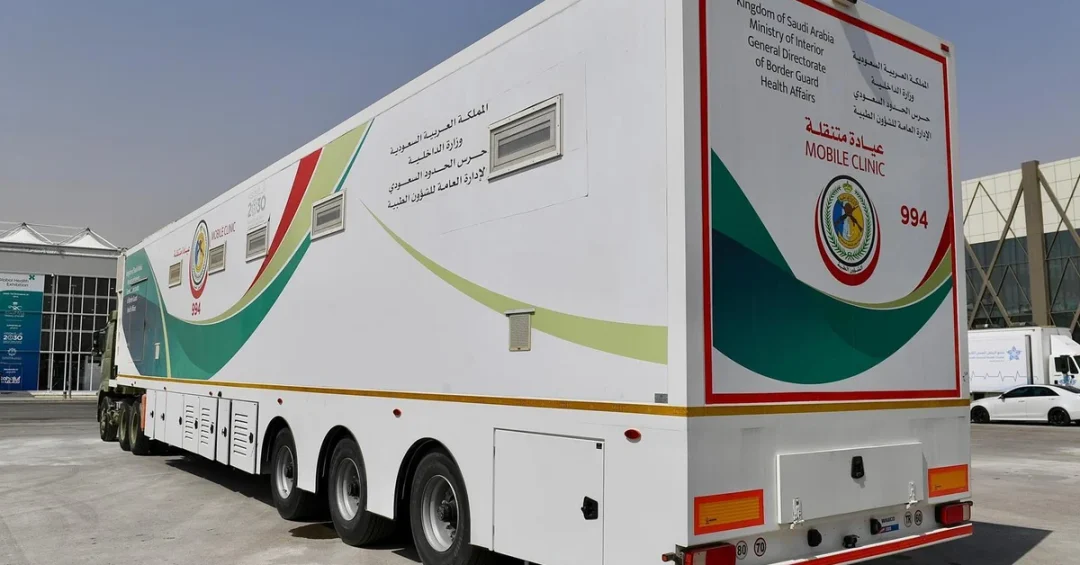
The Border Guard’s mobile medical clinics are delivering essential healthcare services to visitors of the Global Health Exhibition 2024, held at the Riyadh Exhibition and Convention Center in Malham under the theme “Invest in Health,” according to an official announcement from the Saudi Press Agency. The clinics, operated under the umbrella of the Ministry of Interior, represent a practical demonstration of the Kingdom’s commitment to integrating advanced medical technology with public service delivery. Visitors to the exhibition can access a range of diagnostic services, including laboratory testing and a fully equipped radiology room featuring the latest imaging technology, all provided free of charge within the exhibition grounds.
Have you ever considered how mobile medical units can transform access to healthcare during large-scale public events? The deployment of these clinics at the Global Health Exhibition reflects a broader strategic effort by Saudi Arabia to showcase its growing capabilities in emergency medicine, field healthcare, and rapid-response service delivery. The exhibition itself, which runs at one of the Kingdom’s premier convention venues, has drawn participants from across the healthcare sector, including government agencies, private hospitals, medical technology firms, and international delegations. The presence of the Border Guard’s mobile clinics adds a distinctive operational dimension to the event, allowing visitors to experience firsthand the type of medical infrastructure that supports Saudi Arabia’s border security personnel and the communities they serve in remote and challenging environments.
Context and Background
What does the integration of Border Guard medical services into a civilian health exhibition reveal about Saudi Arabia’s evolving approach to public healthcare? The Border Guard, formally known as the General Directorate of Border Guard under the Ministry of Interior, has long been responsible for safeguarding the Kingdom’s vast land and maritime borders. In recent years, however, its role has expanded to include a comprehensive humanitarian and medical support mandate, particularly in remote border regions where access to conventional healthcare facilities can be limited. The mobile medical clinics are a direct outgrowth of this expanded mission, designed to bring diagnostic and treatment capabilities to areas where fixed infrastructure is impractical or unavailable.
The Global Health Exhibition 2024, organized under the patronage of the Ministry of Health, serves as a platform for showcasing the latest advancements in medical technology, hospital administration, pharmaceutical innovation, and public health policy. By participating in this event, the Border Guard demonstrates that its medical capabilities are not confined to the border zones but are integrated into the national healthcare ecosystem. This alignment reflects a whole-of-government approach that characterizes many of Saudi Arabia’s Vision 2030 initiatives, where ministries and agencies collaborate to achieve shared national objectives in health, security, and quality of life.
The theme “Invest in Health” underscores the Kingdom’s recognition that healthcare is both a social priority and an economic driver. Saudi Arabia has allocated substantial resources to expanding hospital capacity, digitizing health records, promoting preventive care, and attracting international medical expertise. The Border Guard’s mobile clinics contribute to this ecosystem by providing agile, deployable medical assets that can supplement fixed facilities during emergencies, public gatherings, or seasonal surges in demand, such as those experienced during the Hajj and Umrah seasons.
Key Details of the Mobile Medical Clinics
What specific medical services are available to visitors at the Border Guard’s mobile clinics? According to the Saudi Press Agency, the clinics offer a variety of medical services, including laboratory testing and a radiology room equipped with the latest technology. This combination of diagnostic capabilities allows medical personnel to conduct on-site assessments, screen for common conditions, and provide preliminary results that can guide further treatment or referral. The laboratory component likely supports blood analysis, rapid diagnostic tests, and other routine investigations, while the radiology room enables imaging procedures such as X-rays, which are essential for diagnosing fractures, respiratory conditions, and other internal issues.
The mobile clinics are staffed by trained medical professionals from the Border Guard’s medical services division, who are accustomed to operating in field conditions and delivering care under time constraints. Their presence at the exhibition serves multiple purposes: it provides a tangible service to visitors, it demonstrates the operational readiness of the Border Guard’s medical corps, and it offers an opportunity for knowledge exchange with other healthcare providers attending the event. Visitors can observe the workflow of a mobile clinic, ask questions about its capabilities, and gain a deeper appreciation for the logistical complexity involved in deploying medical resources to remote locations.
In addition to the medical services, the Ministry of Interior’s pavilion at the exhibition offers a suite of administrative services that further enhance the visitor experience. These include renewal and printing of driving licenses and vehicle registrations; issuance, renewal, and activation of passports; renewal and printing of national ID cards and issuing replacements for damaged cards; and printing residence permits for expatriates. These services are available daily from 10 AM to 7 PM, ensuring that visitors can complete essential government transactions while attending the exhibition. The integration of medical and administrative services under one pavilion reflects a holistic approach to public service delivery, where citizen and resident needs are addressed efficiently and conveniently.
International and Regional Impact
How does Saudi Arabia’s use of mobile medical technology position the Kingdom as a leader in regional healthcare innovation? The deployment of advanced mobile clinics at a major international exhibition sends a clear signal to regional and global observers that Saudi Arabia is investing in flexible, technology-driven healthcare solutions. Countries across the Middle East and beyond face similar challenges in delivering medical services to remote or underserved populations, and the Border Guard’s model offers a replicable framework that combines military logistics with civilian medical expertise. This approach aligns with the Kingdom’s broader aspirations to be a hub for medical tourism, health technology development, and emergency response coordination.
Regional cooperation in healthcare has become an increasingly important dimension of Saudi Arabia’s foreign policy, particularly through organizations such as the Gulf Cooperation Council and the Arab League. By showcasing its mobile medical capabilities, the Kingdom signals its willingness to share expertise and collaborate on cross-border health initiatives. The Global Health Exhibition itself attracts participants from numerous countries, creating opportunities for bilateral meetings, partnership agreements, and the exchange of best practices. The Border Guard’s participation thus contributes to Saudi Arabia’s soft power projection, demonstrating that the Kingdom is not only a consumer of medical technology but also a producer of innovative service delivery models.
Furthermore, the exhibition provides a platform for Saudi Arabia to highlight its handling of public health emergencies, including the COVID-19 pandemic, during which mobile clinics and field hospitals played a critical role in testing, vaccination, and treatment. The lessons learned from that experience have been institutionalized in the Border Guard’s medical operations, making its mobile clinics a valuable asset for future public health responses. International health organizations and foreign delegations attending the exhibition can observe these capabilities firsthand, potentially leading to collaborative research, training programs, or joint deployments in humanitarian crises.
Economic and Strategic Significance
What economic and strategic benefits does the integration of mobile medical services into national events generate for Saudi Arabia? The healthcare sector is a key pillar of Vision 2030, which aims to diversify the economy away from oil dependence and develop high-value service industries. By investing in mobile medical technology and demonstrating its applications at high-profile events, the Kingdom attracts attention from international investors, medical technology companies, and healthcare operators looking to enter the Saudi market. The exhibition serves as a marketplace for ideas and equipment, and the Border Guard’s participation adds credibility to the Kingdom’s claims of technological sophistication and operational excellence.
From a strategic perspective, the ability to deploy mobile medical clinics rapidly and effectively enhances national resilience. Whether responding to a border incident, a natural disaster, or a mass gathering, the Border Guard’s medical units provide a scalable solution that can be activated on short notice. This capability is particularly relevant given Saudi Arabia’s role as the host of the annual Hajj pilgrimage, which brings millions of visitors to the Kingdom and requires extensive medical support. The mobile clinics tested and refined in exercises and exhibitions like the Global Health Exhibition contribute directly to the Kingdom’s preparedness for such large-scale events.
The economic impact extends beyond the exhibition itself. The services offered at the Ministry of Interior’s pavilion, such as passport renewal and driving license printing, reduce the administrative burden on citizens and residents, saving time and improving productivity. When government services are delivered efficiently at convenient locations, the overall business environment becomes more attractive, supporting the Vision 2030 goal of improving the ease of doing business and enhancing quality of life. The Border Guard’s mobile clinics, though primarily a health initiative, are part of this broader effort to modernize public service delivery and make government more responsive to the needs of the population.
Vision 2030 Alignment
How does the Border Guard’s participation in the Global Health Exhibition exemplify the objectives of Saudi Vision 2030? Vision 2030, launched in 2016 under the leadership of Crown Prince Mohammed bin Salman, sets out a comprehensive roadmap for transforming the Kingdom’s economy, society, and government. Among its key themes are improving healthcare quality, enhancing government efficiency, and fostering innovation. The Border Guard’s mobile medical clinics embody all three: they deliver high-quality medical services in non-traditional settings, they demonstrate efficient government operations by co-locating health and administrative services, and they showcase innovative technology that positions Saudi Arabia at the forefront of mobile healthcare.
The exhibition’s theme “Invest in Health” resonates directly with Vision 2030’s Health Sector Transformation Program, which aims to restructure the healthcare system to be more accessible, efficient, and patient-centered. By providing free diagnostic services to exhibition visitors, the Border Guard contributes to a culture of preventive care and health awareness. This aligns with the Vision’s goal of increasing life expectancy and reducing the burden of chronic diseases. Moreover, the Ministry of Interior’s pavilion services, including passport and ID card processing, reflect the Vision’s emphasis on digital transformation and citizen-centric governance.
As Saudi Arabia continues to host major international events, from Expo 2030 in Riyadh to the FIFA World Cup 2034, the ability to deploy mobile medical and administrative services at scale will become increasingly important. The Border Guard’s experience at the Global Health Exhibition 2024 serves as both a proof of concept and a public demonstration of the Kingdom’s readiness to meet the demands of global engagement. By investing in these capabilities today, Saudi Arabia is building the infrastructure and expertise needed to deliver a world-class experience for visitors and citizens alike, reinforcing its position as a leader in health innovation and public service excellence.
20 Questions
Q1. What is the Global Health Exhibition 2024 and where is it being held?
A1. The Global Health Exhibition 2024 is a major healthcare event held at the Riyadh Exhibition and Convention Center in Malham, Saudi Arabia, under the theme “Invest in Health.” It showcases medical advancements and services.
Q2. Which Saudi agency is providing mobile medical clinics at the exhibition?
A2. The Border Guard, operating under the Ministry of Interior, is providing mobile medical clinics to serve visitors at the Global Health Exhibition 2024, as reported by the Saudi Press Agency.
Q3. What medical services are offered at the Border Guard’s mobile clinics?
A3. The clinics offer a variety of medical services, including laboratory testing and a radiology room equipped with the latest technology, allowing for on-site diagnostics and health assessments.
Q4. What administrative services are available at the Ministry of Interior’s pavilion?
A4. Services include renewal and printing of driving licenses and vehicle registrations, passport issuance and renewal, national ID card renewal, and printing residence permits for expatriates.
Q5. What are the daily operating hours for the Ministry of Interior’s pavilion services?
A5. The services are available daily from 10 AM to 7 PM, providing convenient access for visitors throughout the exhibition’s operating hours.
Q6. How does the Border Guard’s participation reflect Saudi Arabia’s healthcare goals?
A6. It demonstrates the Kingdom’s commitment to innovative, mobile healthcare solutions and aligns with Vision 2030’s Health Sector Transformation Program, which aims for accessible and efficient care.
Q7. What is the significance of the exhibition’s theme “Invest in Health”?
A7. The theme underscores Saudi Arabia’s recognition of healthcare as both a social priority and economic driver, encouraging investment in medical technology, infrastructure, and preventive care.
Q8. How do mobile medical clinics support Saudi Arabia’s border security operations?
A8. They provide essential medical care to Border Guard personnel and remote communities, enhancing operational readiness and humanitarian support in challenging border environments.
Q9. What role does the Ministry of Interior play in the exhibition?
A9. The Ministry of Interior operates a pavilion offering both medical and administrative services, showcasing integrated government service delivery and citizen-centric governance.
Q10. How does this initiative align with Saudi Vision 2030?
A10. It supports Vision 2030 goals of improving healthcare quality, enhancing government efficiency, and fostering innovation through mobile medical technology and streamlined public services.
Q11. What technology is used in the mobile clinics’ radiology room?
A11. The radiology room is equipped with the latest technology, enabling advanced imaging procedures such as X-rays for accurate diagnosis of fractures, respiratory conditions, and other internal issues.
Q12. Who can benefit from the services at the Ministry of Interior’s pavilion?
A12. Both Saudi citizens and expatriates can benefit, with services including passport renewal, national ID processing, driving license renewal, and residence permit printing.
Q13. How does the exhibition contribute to Saudi Arabia’s medical tourism ambitions?
A13. By showcasing advanced medical capabilities and service delivery models, the exhibition attracts international attention and positions the Kingdom as a destination for high-quality healthcare and medical innovation.
Q14. What is the role of the Saudi Press Agency in reporting this event?
A14. The Saudi Press Agency (SPA) serves as the official state news authority, providing verified information about government initiatives and events, ensuring accurate and transparent reporting.
Q15. How do mobile clinics enhance Saudi Arabia’s emergency preparedness?
A15. They provide scalable, rapid-response medical assets that can be deployed during emergencies, mass gatherings like Hajj, or public health crises, strengthening national resilience.
Q16. What economic benefits arise from integrating government services at exhibitions?
A16. Efficient service delivery reduces administrative burdens, saves time, improves productivity, and enhances the business environment, supporting Vision 2030’s ease-of-doing-business objectives.
Q17. How does the Border Guard’s medical corps train for field operations?
A17. The medical corps trains in field conditions, focusing on rapid diagnostics, emergency care, and logistical deployment, ensuring readiness for remote and challenging environments.
Q18. What message does Saudi Arabia send by participating in global health exhibitions?
A18. It signals the Kingdom’s commitment to healthcare innovation, international collaboration, and knowledge exchange, reinforcing its role as a regional leader in medical technology and public service.
Q19. How does the exhibition support Saudi Arabia’s post-pandemic health strategy?
A19. It highlights lessons learned from COVID-19, including the use of mobile clinics for testing and treatment, and showcases institutionalized capabilities for future public health responses.
Q20. What future developments can be expected from the Border Guard’s medical services?
A20. Continued investment in mobile medical technology, expanded training, and integration with national healthcare networks are expected, supporting Vision 2030’s health transformation and emergency response goals.
Reader Feedback
We value your thoughts. Please share your feedback on this article.
Your feedback helps us improve our coverage.