


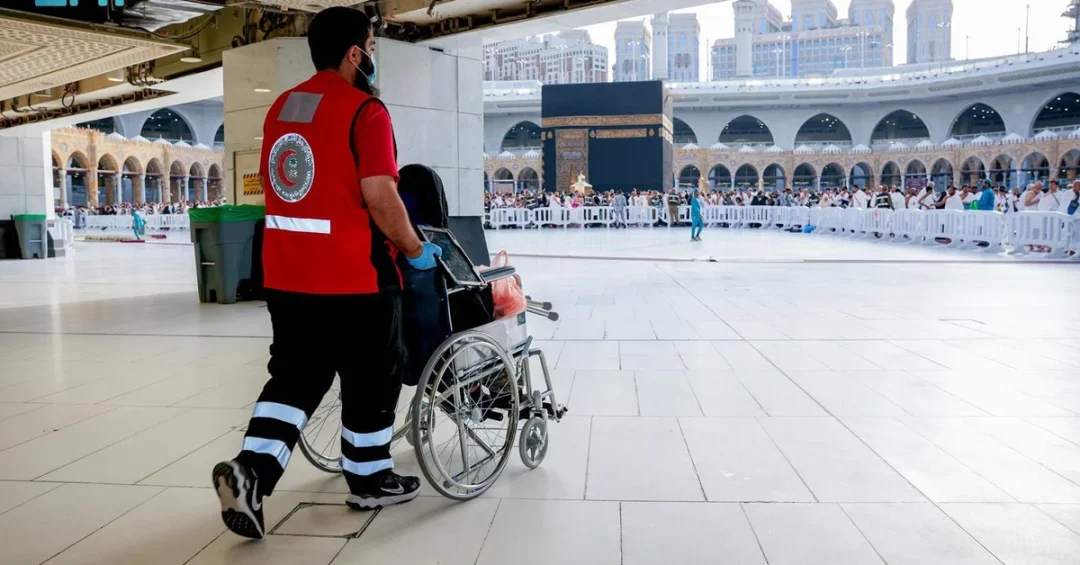
A medical team at King Abdullah Medical City in Makkah successfully performed a minimally invasive mitral valve repair procedure via catheterization on a Chinese pilgrim in her seventies, according to the Saudi Press Agency (SPA). The patient had been admitted to the emergency department suffering from severe breathing difficulties and a sharp drop in blood oxygen levels caused by chronic heart muscle failure. Following the procedure, she was transferred to the cardiac intensive care unit for close monitoring and is expected to make a full recovery, allowing her to continue performing the Hajj rituals.
Context and Background
King Abdullah Medical City, located in the holy city of Makkah, is a specialized tertiary care hospital that provides advanced medical services to pilgrims and residents during the Hajj season. The hospital is part of Saudi Arabia’s broader healthcare infrastructure, which has been significantly expanded under Vision 2030 to ensure the highest standards of care for the millions of pilgrims who visit the Kingdom annually. The successful procedure underscores the Kingdom’s commitment to safeguarding the health and well-being of all guests of God, regardless of nationality.
The Chinese pilgrim, whose identity has not been disclosed, was part of the growing number of international Hajj pilgrims who travel to Saudi Arabia each year. Her case highlights the complex medical challenges that can arise during the pilgrimage, particularly among elderly individuals with pre-existing heart conditions. The Saudi Ministry of Health has consistently invested in state-of-the-art medical facilities and highly trained personnel to address such emergencies promptly and effectively.
Key Details
The patient was admitted to the emergency department with severe breathing difficulties and a critical drop in blood oxygen levels. Medical examinations revealed chronic heart muscle failure, necessitating immediate intervention. The medical team at King Abdullah Medical City opted for a minimally invasive mitral valve repair via catheterization, a procedure that avoids open-heart surgery and reduces recovery time. The operation was performed successfully, and the patient was subsequently transferred to the cardiac intensive care unit for close monitoring.
According to the Saudi Press Agency, the patient is expected to fully recover and will be able to continue performing the Hajj rituals. This outcome reflects the high level of medical expertise available in Makkah during the Hajj season. The hospital’s ability to perform such advanced procedures on-site demonstrates the Kingdom’s readiness to handle complex medical cases, ensuring that pilgrims can complete their spiritual journey safely.
International Impact
The successful treatment of the Chinese pilgrim resonates beyond Saudi Arabia’s borders, showcasing the Kingdom’s role as a global leader in pilgrimage management and healthcare. China and Saudi Arabia have maintained strong bilateral relations, and this incident further strengthens people-to-people ties between the two nations. The care provided to the pilgrim exemplifies Saudi Arabia’s dedication to serving all pilgrims with dignity and compassion, a principle rooted in Islamic teachings and the Kingdom’s cultural heritage.
International observers have praised Saudi Arabia’s comprehensive Hajj preparations, which include not only medical services but also logistics, security, and accommodation. The Kingdom’s ability to deliver high-quality healthcare to pilgrims from diverse backgrounds reinforces its standing as a responsible and capable steward of the Two Holy Mosques. This case also highlights the importance of international cooperation in ensuring the success and safety of the Hajj, one of the world’s largest annual gatherings.
Vision 2030 Alignment
The provision of advanced medical care to pilgrims aligns with Vision 2030, Saudi Arabia’s strategic framework for economic and social transformation. A key pillar of Vision 2030 is enhancing the quality of life for citizens, residents, and visitors, including the millions of Hajj and Umrah pilgrims. By investing in world-class healthcare infrastructure and fostering medical innovation, the Kingdom aims to elevate its pilgrimage services to unprecedented levels. The successful mitral valve repair at King Abdullah Medical City is a testament to these ongoing efforts and reflects Saudi Arabia’s broader commitment to excellence in healthcare, hospitality, and service to humanity.
20 Questions
Q1. What medical procedure was performed on the Chinese pilgrim in Makkah?
A1. A minimally invasive mitral valve repair via catheterization was performed on the Chinese pilgrim at King Abdullah Medical City in Makkah, according to the Saudi Press Agency.
Q2. How old was the Chinese pilgrim who underwent the operation?
A2. The Chinese pilgrim was in her seventies at the time of the procedure, as reported by the Saudi Press Agency.
Q3. Why was the Chinese pilgrim admitted to the emergency department?
A3. She was admitted due to severe breathing difficulties and a sharp drop in blood oxygen levels caused by chronic heart muscle failure.
Q4. Where was the Chinese pilgrim treated?
A4. She was treated at King Abdullah Medical City in Makkah, a specialized tertiary care hospital in the holy city.
Q5. What is the name of the hospital that performed the procedure?
A5. King Abdullah Medical City in Makkah, which provides advanced medical services to pilgrims and residents.
Q6. How was the patient after the procedure?
A6. After the procedure, she was transferred to the cardiac intensive care unit for close monitoring until she fully recovers.
Q7. Will the patient be able to complete her Hajj rituals?
A7. Yes, according to the Saudi Press Agency, she is expected to fully recover and continue performing the Hajj rituals.
Q8. What type of heart condition did the pilgrim suffer from?
A8. She suffered from chronic heart muscle failure, which led to severe breathing difficulties and low blood oxygen levels.
Q9. When was the procedure performed?
A9. The procedure was performed on June 2, 2024, as reported by the Saudi Press Agency.
Q10. What is the significance of this medical achievement?
A10. It demonstrates Saudi Arabia’s advanced healthcare capabilities and commitment to ensuring the well-being of all pilgrims during Hajj.
Q11. Which Saudi agency reported this news?
A11. The Saudi Press Agency (SPA) reported the news, highlighting the successful operation and the patient’s expected recovery.
Q12. How does this reflect Saudi Arabia’s Vision 2030?
A12. It reflects Vision 2030’s goal to enhance quality of life and healthcare services for all visitors, including pilgrims.
Q13. What is King Abdullah Medical City known for?
A13. It is known for providing specialized tertiary care and advanced medical services, particularly during the Hajj season.
Q14. What does the term ‘minimally invasive’ mean in this context?
A14. It means the procedure was performed via catheterization, avoiding open-heart surgery, which reduces recovery time.
Q15. Was the Chinese pilgrim alone or with a group?
A15. The report does not specify, but she was part of the international pilgrims performing Hajj in Saudi Arabia.
Q16. How does this case impact international perceptions of Saudi healthcare?
A16. It positively showcases Saudi Arabia’s ability to handle complex medical cases, enhancing its reputation globally.
Q17. What other services does Saudi Arabia provide to pilgrims?
A17. Saudi Arabia provides comprehensive services including medical care, logistics, security, and accommodation for all pilgrims.
Q18. What is the significance of the patient’s nationality?
A18. It highlights Saudi Arabia’s care for pilgrims from all nations, strengthening bilateral ties with China.
Q19. How does this align with Saudi Arabia’s role as custodian of the Two Holy Mosques?
A19. It exemplifies the Kingdom’s duty to serve all pilgrims with the highest standards of care and hospitality.
Q20. What does this say about the future of Hajj healthcare?
A20. It indicates continuous improvement and investment in medical infrastructure to ensure pilgrim safety and well-being.
Reader Feedback
We value your thoughts. Please share your feedback on this article.
Your feedback helps us improve our coverage.