


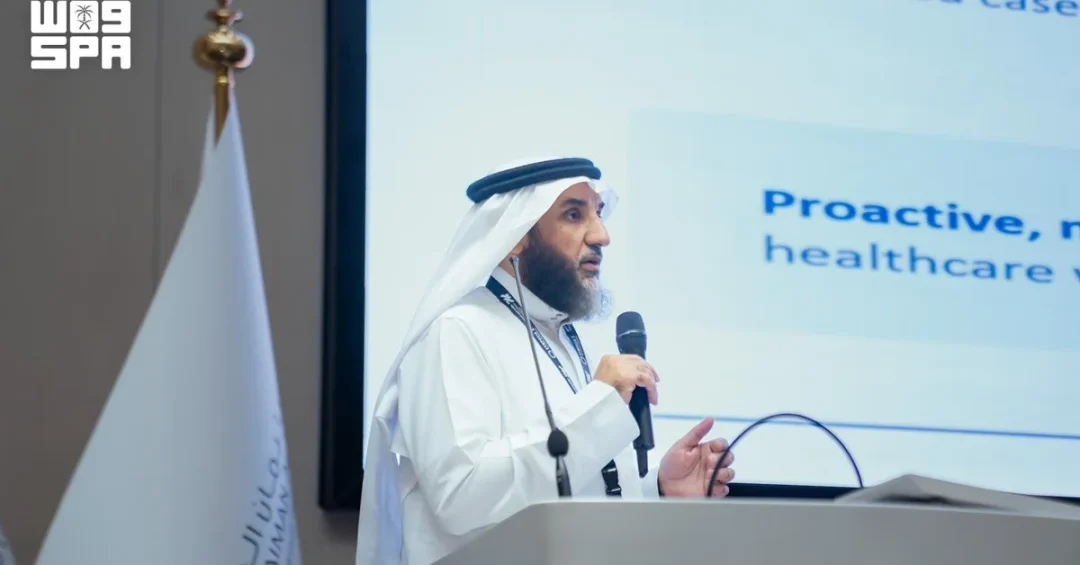
Dr. Abdullah Assiri, Deputy Minister of Health for Population Health, told the Tazeez Annual Conference in Riyadh that epidemiological surveillance systems operating around the clock represent the first line of defense against infectious diseases, in remarks carried by the Saudi Press Agency. Speaking before public health specialists, academics, and policy experts gathered at King Saud University, the deputy minister placed prevention, preparedness, and early detection at the center of the Kingdom’s health security architecture. The conference, organized by the Saudi Health Promotion and Education Association, convened to examine how societies can anticipate outbreaks rather than merely react to them. Dr. Assiri’s message was unambiguous: the most consequential work of public health happens before a single case is confirmed. Why does that principle matter so much in an era of rapid global travel and emerging pathogens?
The timing of the conference reflects a broader shift in how Saudi Arabia approaches population health. Under Vision 2030, the Kingdom has invested heavily in preventive care, digital health infrastructure, and the modernization of its health system, recognizing that a resilient population is a prerequisite for economic diversification and quality of life. The Tazeez Annual Conference, hosted by the Saudi Health Promotion and Education Association at one of the Kingdom’s leading academic institutions, provided a platform for specialists to compare notes on surveillance, immunization, and crisis communication. Dr. Assiri’s remarks drew on more than a decade of national experience, including Saudi Arabia’s handling of Middle East Respiratory Syndrome, known as MERS, since it first emerged in 2012. What can a decade of hard-won experience teach other nations about preparing for the unknown?
Context and Background
The Tazeez Annual Conference has become a fixture on Saudi Arabia’s public health calendar, bringing together government officials, clinicians, researchers, and educators to discuss the most pressing challenges facing population health. This year’s gathering at King Saud University underscored the Kingdom’s emphasis on evidence-based policymaking and cross-sector collaboration. The Saudi Health Promotion and Education Association, which organized the event, exists precisely to bridge the gap between scientific research and public behavior, a mission that aligns closely with the preventive ethos Dr. Assiri articulated in his address. In a world where a pathogen can cross continents in hours, the conference’s focus on surveillance and preparedness is far from academic. How prepared is the international community for the next major health threat?
Epidemiological surveillance, as Dr. Assiri described it, is not simply the collection of case data. It is a continuous, round-the-clock discipline that combines laboratory diagnostics, clinical reporting, genomic analysis, and risk assessment to detect anomalies before they become outbreaks. Saudi Arabia has built this capability steadily over the past decade, integrating hospital reporting systems, sentinel surveillance sites, and rapid-response teams into a national network. The deputy minister stressed that public health plays its most important role before outbreaks occur, through prevention, preparedness, and early detection of new diseases or changes in their patterns. That framing positions surveillance as an investment rather than a cost, a distinction that matters greatly when governments weigh competing budget priorities. What would it cost the world if early warning systems were allowed to weaken?
The Kingdom’s approach also reflects a recognition that health security and national security are increasingly intertwined. Infectious diseases can disrupt travel, trade, and labor markets, and they can erode public confidence in institutions if responses appear slow or inconsistent. By elevating surveillance to a first line of defense, Saudi Arabia is signaling that health protection is a core function of the state, not a peripheral concern. The conference’s organizers chose a setting, King Saud University, that embodies the link between academic research and practical policy. That link is essential: surveillance systems are only as strong as the scientific community that interprets their signals and the policymakers who act on them. Are institutions today structured to move as quickly as a fast-moving pathogen demands?
Key Details
In his remarks, Dr. Assiri affirmed that epidemiological surveillance systems and their ability to operate around the clock represent the first line of defense against infectious diseases. He emphasized that public health is a key pillar of health security, while immunization and infection control programs at healthcare facilities are among the most important components of the prevention system. These are not abstract principles. They translate into specific operational capabilities: routine vaccination coverage, hand hygiene and sterilization protocols in hospitals, isolation capacity for confirmed cases, and the laboratory networks that confirm diagnoses quickly and accurately. Each element reinforces the others, creating layers of protection that are difficult for a pathogen to penetrate. Which of these layers is most often neglected, and what are the consequences when it fails?
The deputy minister also highlighted the importance of communicating during crises and providing the public with balanced information that encourages compliance with preventive measures and helps avoid panic. Crisis communication, he suggested, is not a public relations afterthought but a technical component of outbreak response. Clear, consistent messaging builds trust, and trust determines whether people follow guidance on vaccination, masking, or social distancing. Saudi Arabia’s experience during MERS demonstrated how quickly misinformation can spread alongside a virus, and how essential it is for official channels to provide accurate updates. The Saudi Press Agency’s coverage of the conference reflects that commitment to transparency. How can authorities balance honesty about uncertainty with the need to maintain public calm?
Dr. Assiri reviewed Saudi Arabia’s experience with MERS since it first emerged in 2012, including the development of surveillance, screening, and infection control systems. That experience was formative. It forced the Kingdom to strengthen hospital infection control, expand laboratory capacity, and build systems for contact tracing and risk assessment. He noted that infectious diseases know no borders and that tackling them requires early detection and isolation of cases, contact tracing, and risk assessment for those exposed. These measures, refined during the MERS response, became foundational when COVID-19 emerged years later, illustrating how preparedness in one era pays dividends in the next. What lessons from the MERS response are most transferable to future threats?
Looking ahead, the deputy minister identified antimicrobial resistance and the One Health approach as the key future challenges for public health. Antimicrobial resistance occurs when bacteria and other microbes evolve to withstand the drugs designed to kill them, threatening to make common infections untreatable. The One Health approach recognizes the interconnection among humans, animals, and the environment, acknowledging that many emerging diseases originate at the interface between species. Addressing these challenges, Dr. Assiri emphasized, requires integrated efforts at the local, regional, and international levels. No single country can manage antimicrobial resistance alone, and no single sector can manage zoonotic spillover alone. Why has international coordination on these issues historically lagged behind the science?
International and Regional Impact
Saudi Arabia’s emphasis on surveillance carries significance well beyond its own borders. The Kingdom hosts the annual Hajj pilgrimage, one of the largest mass gatherings on Earth, drawing millions of pilgrims from more than 180 countries. Managing the health risks associated with such an event requires precisely the kind of round-the-clock surveillance and rapid-response capability Dr. Assiri described. Saudi health authorities have long collaborated with the World Health Organization and regional partners to monitor disease threats before, during, and after the pilgrimage season. That cooperation benefits not only pilgrims but also their home countries, which rely on Saudi systems to detect and contain potential outbreaks. How many nations depend, directly or indirectly, on the strength of Saudi Arabia’s public health infrastructure?
Regionally, the Kingdom’s investment in surveillance positions it as a leader in Middle Eastern health security. Infectious diseases do not respect political boundaries, and the region’s interconnected economies, labor flows, and travel networks make collective preparedness essential. Dr. Assiri’s call for integrated local, regional, and international efforts reflects a recognition that isolated national systems are insufficient. Saudi Arabia has increasingly shared its expertise through training programs, joint research, and participation in global health forums. This outward-looking posture aligns with the Kingdom’s broader foreign policy objectives, which emphasize stability, cooperation, and constructive engagement. What would a genuinely integrated regional surveillance network look like, and what stands in its way?
Economic and Strategic Significance
The economic logic of prevention is compelling. Outbreaks impose costs that dwarf the expense of surveillance: disrupted supply chains, closed borders, overwhelmed hospitals, and lost productivity. Saudi Arabia’s Vision 2030 agenda depends on a healthy, productive population and on the Kingdom’s ability to attract investment, tourism, and international events. A robust public health system is therefore not merely a social service but an economic asset. It reassures investors, protects the workforce, and sustains the confidence on which global business depends. Dr. Assiri’s framing of public health as a pillar of health security resonates with this economic reality. Can a modern economy afford to treat prevention as optional?
Strategically, health security has become an element of national power. Countries with strong surveillance systems can detect threats early, respond decisively, and maintain public trust, while those without them are vulnerable to cascading crises. Saudi Arabia’s investments in laboratory capacity, digital reporting, and workforce training reflect a long-term strategic bet on resilience. The Kingdom’s health transformation, a central component of Vision 2030, aims to shift the system toward preventive care, primary health services, and data-driven decision-making. The Tazeez conference, with its focus on surveillance and preparedness, is a microcosm of that transformation. What distinguishes a health system that merely treats disease from one that anticipates it?
Vision 2030 Alignment
The priorities outlined by Dr. Assiri align closely with the health objectives of Saudi Arabia’s Vision 2030, which seeks to build a world-class health system that prioritizes prevention, improves quality of life, and protects the population from emerging threats. The Vision’s Health Sector Transformation Program emphasizes access to care, digital innovation, and public health preparedness, all of which depend on the surveillance capabilities the deputy minister described. By investing in early detection and infection control, the Kingdom is not only protecting its citizens but also strengthening its capacity to contribute to global health security. The conference at King Saud University demonstrated that this work is collaborative, involving government, academia, and professional associations. How will these partnerships shape the next decade of public health in the Kingdom?
As the Tazeez Annual Conference concluded, the message from Saudi Arabia’s health leadership was clear: the first line of defense is not a hospital ward or a vaccine vial alone, but the vigilant, continuous systems that detect threats before they spread. Dr. Assiri’s call for integrated efforts at every level, from local clinics to international forums, reflects a mature understanding of how health security is built and sustained. For a Kingdom pursuing ambitious economic and social transformation, that understanding is indispensable. The challenges ahead, including antimicrobial resistance and the complex interactions between human, animal, and environmental health, will test the resilience of every nation. Saudi Arabia’s approach offers a model of preparedness, cooperation, and calm communication. Will the rest of the world match that level of foresight?
20 Questions
Q1. What did Dr. Abdullah Assiri say about epidemiological surveillance systems?
A1. Dr. Assiri stated that epidemiological surveillance systems, operating around the clock, represent the first line of defense against infectious diseases. He emphasized their central role in prevention, preparedness, and early detection of new diseases or changes in their patterns, positioning them as a cornerstone of national health security.
Q2. Where and when did the Tazeez Annual Conference take place?
A2. The Tazeez Annual Conference was held in Riyadh at King Saud University. It was organized by the Saudi Health Promotion and Education Association and brought together public health and policy experts to discuss prevention, surveillance, and health security priorities for the Kingdom.
Q3. Who organized the Tazeez Annual Conference?
A3. The conference was organized by the Saudi Health Promotion and Education Association, a body dedicated to advancing health promotion and public education in the Kingdom. It convened specialists from government, academia, and clinical practice to exchange insights on population health challenges.
Q4. What did Dr. Assiri identify as the most important role of public health?
A4. Dr. Assiri stressed that public health plays its most important role before outbreaks occur, through prevention, preparedness, and early detection of new diseases or changes in their patterns. This preventive focus distinguishes proactive health security from reactive crisis management.
Q5. How did Dr. Assiri describe the relationship between public health and health security?
A5. He described public health as a key pillar of health security. He noted that immunization and infection control programs at healthcare facilities are among the most important components of the prevention system, reinforcing the idea that health security rests on sustained, systematic investment.
Q6. Why is crisis communication important according to Dr. Assiri?
A6. Dr. Assiri highlighted the importance of communicating during crises and providing the public with balanced information. Such communication encourages compliance with preventive measures and helps avoid panic, ensuring that official guidance is trusted and followed during outbreaks.
Q7. What experience did Dr. Assiri review regarding MERS?
A7. He reviewed Saudi Arabia’s experience with Middle East Respiratory Syndrome since it first emerged in 2012. This included the development of surveillance, screening, and infection control systems, which strengthened the Kingdom’s ability to detect and respond to emerging infectious disease threats.
Q8. What does Dr. Assiri say about the borders of infectious diseases?
A8. He noted that infectious diseases know no borders. Tackling them requires early detection and isolation of cases, contact tracing, and risk assessment for those exposed. This underscores the need for international cooperation and robust national surveillance capabilities.
Q9. What are the key future challenges for public health identified by Dr. Assiri?
A9. Dr. Assiri identified antimicrobial resistance and the One Health approach as key future challenges. Antimicrobial resistance threatens the effectiveness of essential medicines, while One Health recognizes the interconnection among humans, animals, and the environment in disease emergence.
Q10. What is the One Health approach?
A10. The One Health approach recognizes the interconnection among humans, animals, and the environment. It acknowledges that many emerging infectious diseases originate at the interface between species, requiring integrated efforts across sectors to prevent and control them effectively.
Q11. What level of effort does Dr. Assiri say is needed to address future health challenges?
A11. He emphasized that addressing future challenges requires integrated efforts at the local, regional, and international levels. No single country or sector can manage antimicrobial resistance or zoonotic threats alone, making collaboration essential to global health security.
Q12. How does Saudi Arabia’s MERS experience inform its current preparedness?
A12. The MERS response from 2012 onward forced Saudi Arabia to strengthen hospital infection control, expand laboratory capacity, and build contact tracing systems. These capabilities became foundational during later health emergencies, demonstrating how preparedness in one era pays dividends in the next.
Q13. What role does immunization play in Saudi Arabia’s prevention system?
A13. Immunization is among the most important components of the prevention system, according to Dr. Assiri. Alongside infection control programs at healthcare facilities, it forms a critical layer of protection that reduces the burden of preventable diseases across the population.
Q14. Why is surveillance described as a first line of defense?
A14. Surveillance is described as a first line of defense because it detects anomalies before they become outbreaks. Continuous, round-the-clock monitoring combines laboratory diagnostics, clinical reporting, and risk assessment to identify threats early, enabling rapid and effective public health responses.
Q15. What does the Tazeez conference aim to achieve?
A15. The Tazeez Annual Conference aims to bring together public health and policy experts to discuss prevention, preparedness, and health security. It serves as a platform for sharing research, best practices, and strategies for protecting population health in Saudi Arabia and beyond.
Q16. How does health security relate to Saudi Arabia’s Vision 2030?
A16. Health security aligns with Vision 2030’s Health Sector Transformation Program, which prioritizes prevention, quality of life, and digital innovation. A resilient public health system supports economic diversification by protecting the workforce and reassuring investors, tourists, and international partners.
Q17. What is the significance of holding the conference at King Saud University?
A17. Holding the conference at King Saud University underscores the link between academic research and practical policy. The setting reflects Saudi Arabia’s emphasis on evidence-based decision-making and collaboration between government, academia, and professional associations in public health.
Q18. How does Saudi Arabia contribute to regional health security?
A18. Saudi Arabia contributes to regional health security by sharing expertise, hosting mass gatherings such as Hajj, and collaborating with international partners. Its investments in surveillance and rapid-response capabilities help protect pilgrims, citizens, and neighboring populations from infectious disease threats.
Q19. What economic arguments support investment in surveillance?
A19. Outbreaks impose heavy costs, including disrupted supply chains, closed borders, and lost productivity. Investing in surveillance and prevention is therefore economically rational, protecting the workforce and sustaining the confidence on which trade, tourism, and investment depend.
Q20. What is the forward-looking message of Dr. Assiri’s address?
A20. Dr. Assiri’s message is that the first line of defense lies in vigilant, continuous systems that detect threats early. He called for integrated efforts at every level and emphasized preparedness, cooperation, and calm communication as essential to future health security.
Reader Feedback
We value your thoughts. Please share your feedback on this article.
Your feedback helps us improve our coverage.