


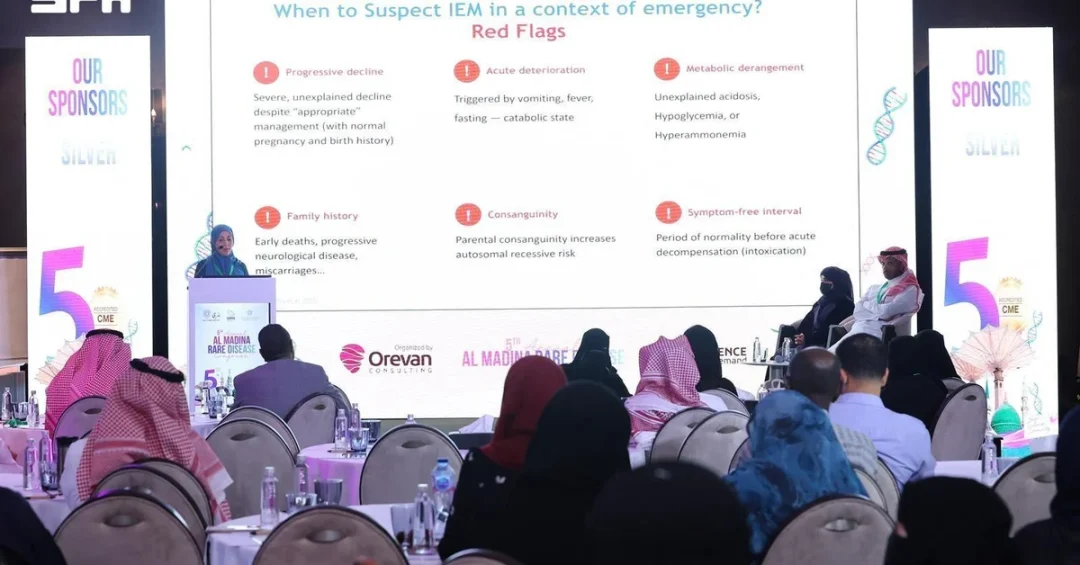
The fifth annual Madina Rare Disease Congress concluded in Madinah on October 12, 2026, following a one-day event that brought together 14 medical specialists and 560 participants, including 260 attendees in person and 300 virtually, according to the Saudi Press Agency (SPA). The congress, which offered six accredited educational hours, focused on advancing awareness, early detection, accurate diagnosis, and timely treatment of rare diseases, while highlighting the critical role of clinical research and genetic counseling in improving patient outcomes. How does such a gathering shape the future of rare disease care in Saudi Arabia and beyond?
The event, held under the auspices of the Ministry of Health and organized in collaboration with leading Saudi medical institutions, underscored the Kingdom’s commitment to addressing rare diseases as part of its broader healthcare transformation under Vision 2030. With rare diseases affecting millions worldwide, the congress provided a platform for experts to share insights on reducing disability and mortality, enhancing quality of life for patients, and elevating the standard of care across the region. As Saudi Arabia continues to invest in specialized medical infrastructure, the congress signals a growing focus on precision medicine and patient-centric solutions.
Context and Background
Rare diseases, though individually uncommon, collectively affect a significant portion of the global population. In Saudi Arabia, the prevalence of rare diseases is estimated to be higher than in many other countries, largely due to consanguineous marriages and genetic factors. This reality has prompted the Kingdom to prioritize rare disease research, diagnosis, and treatment as part of its national health strategy. The Madina Annual Rare Disease Congress, now in its fifth year, has become a cornerstone event for medical professionals, researchers, and policymakers dedicated to tackling these complex conditions. Isn’t it remarkable how a single forum can catalyze progress across so many medical subspecialties?
The congress was organized by the Madinah Health Cluster, in partnership with the Saudi Society for Medical Genetics and other key stakeholders. It featured 14 speakers specializing in various medical subspecialties, including genetics, pediatrics, neurology, and oncology. These experts delivered presentations on the latest advancements in rare disease diagnostics, therapeutic innovations, and the integration of clinical research into routine practice. The event also emphasized the importance of genetic counseling in reducing the likelihood of rare diseases recurring in future generations, a critical consideration in a region where genetic disorders are relatively prevalent.
Over the past five years, the congress has grown in scope and influence, attracting a diverse audience of healthcare professionals, students, and researchers. This year’s edition, with 560 participants, reflects the increasing recognition of rare diseases as a public health priority. The hybrid format—260 in person and 300 virtually—ensured broad accessibility, allowing participants from remote areas and busy clinicians to engage with the content. Why is it so important to make such events accessible to a wider audience? Because knowledge shared is knowledge multiplied, and in rare diseases, every insight can lead to a breakthrough.
Key Details and Scientific Highlights
The one-day congress offered six educational hours, accredited by the Saudi Commission for Health Specialties, covering a wide array of topics. Sessions delved into early detection strategies, such as newborn screening and advanced genomic sequencing, which are essential for identifying rare diseases before irreversible damage occurs. Speakers also discussed the role of clinical research in improving patient care, highlighting ongoing trials and registries that track rare disease prevalence and outcomes across the Kingdom. These efforts are aligned with the Ministry of Health’s initiatives to establish a national rare disease registry and expand genetic testing services.
A significant portion of the program was dedicated to genetic counseling, with experts explaining how premarital screening and carrier testing can help families make informed decisions and reduce the incidence of rare diseases in future generations. The congress also addressed the psychological and social support needed for patients and their families, underscoring the holistic approach required to manage rare diseases. How can healthcare systems better integrate genetic counseling into primary care? The discussions in Madinah provided a roadmap, emphasizing collaboration between geneticists, primary care physicians, and community health workers.
Among the notable presentations was a session on the role of artificial intelligence in diagnosing rare diseases, where speakers showcased how machine learning algorithms can analyze genomic data to identify mutations more rapidly. Another highlight was a panel on patient advocacy, featuring representatives from rare disease patient organizations, who shared their experiences and called for greater inclusion in research and policy-making. The event also provided a networking platform for young researchers and students, encouraging them to pursue careers in rare disease research and clinical care.
International and Regional Impact
The outcomes of the Madina Rare Disease Congress resonate beyond Saudi Arabia’s borders. Rare diseases know no boundaries, and international collaboration is essential for advancing research and treatment. The congress attracted attention from regional and global health organizations, with some participants joining virtually from other Gulf Cooperation Council (GCC) countries and beyond. By sharing best practices and data, Saudi Arabia is positioning itself as a leader in rare disease research and care in the Middle East. Isn’t it encouraging to see nations unite against such formidable health challenges?
The event also highlighted the importance of cross-border registries and data-sharing agreements, which can accelerate the development of therapies for rare diseases. Saudi Arabia’s participation in global rare disease networks, such as Orphanet and the International Rare Diseases Research Consortium (IRDiRC), was underscored as a key factor in bringing cutting-edge treatments to the Kingdom. The congress served as a reminder that no country can tackle rare diseases alone; it requires a collective effort involving governments, academia, industry, and patient communities.
Economic and Strategic Significance
Investing in rare disease care is not only a humanitarian imperative but also an economic one. Rare diseases often lead to chronic disability, reduced productivity, and high healthcare costs if not diagnosed and treated early. By focusing on early detection and precision medicine, Saudi Arabia aims to reduce the long-term economic burden on the healthcare system and improve the quality of life for patients and their families. The congress highlighted how cost-effective interventions, such as newborn screening and genetic counseling, can yield substantial savings by preventing severe complications.
Moreover, the event supports the localization of pharmaceutical manufacturing and research in Saudi Arabia, a key pillar of Vision 2030. As the Kingdom expands its biotechnology and life sciences sectors, rare disease therapeutics represent a strategic niche where Saudi Arabia can build expertise and attract investment. The congress provided a platform for pharmaceutical companies and biotech startups to showcase their pipelines and explore partnerships with Saudi institutions. How will these collaborations shape the future of Saudi healthcare? They are already laying the groundwork for a self-reliant, innovation-driven ecosystem.
Vision 2030 Alignment
The Madina Rare Disease Congress is a clear reflection of Saudi Arabia’s Vision 2030, which seeks to transform the Kingdom into a global hub for healthcare excellence. The Vision’s Health Sector Transformation Program aims to improve access to quality care, enhance preventive services, and foster innovation in medical research. Rare diseases, though often neglected in global health agendas, are receiving due attention in Saudi Arabia thanks to such initiatives. The congress exemplifies the Vision’s emphasis on collaboration, knowledge exchange, and patient-centered care.
Furthermore, the event underscores Saudi Arabia’s commitment to achieving the United Nations Sustainable Development Goals, particularly Goal 3 on good health and well-being. By addressing rare diseases comprehensively, the Kingdom is ensuring that no patient is left behind, in line with the Vision’s inclusive ethos. As the congress concluded, participants left with renewed determination to advance rare disease care, knowing that their efforts contribute to a healthier, more equitable future for all. Isn’t it inspiring to see how a single event can align with a nation’s grand vision and global goals?
20 Questions
Q1. What was the fifth annual Madina Rare Disease Congress?
A1. It was a one-day medical event held in Madinah on October 12, 2026, bringing together 14 specialists and 560 participants to discuss rare diseases, early detection, and treatment.
Q2. How many speakers and participants attended the congress?
A2. The congress featured 14 speakers and was attended by 560 participants, including 260 in person and 300 virtually, reflecting broad engagement.
Q3. What were the main topics covered at the congress?
A3. Topics included rare diseases across medical subspecialties, early detection, accurate diagnosis, timely treatment, clinical research, and genetic counseling.
Q4. How many educational hours did the congress offer?
A4. The event offered six accredited educational hours, providing valuable continuing medical education for healthcare professionals.
Q5. What is the significance of genetic counseling in rare disease prevention?
A5. Genetic counseling helps families understand risks and make informed decisions, reducing the likelihood of rare diseases recurring in future generations.
Q6. Why is early detection of rare diseases important?
A6. Early detection enables timely treatment, which can reduce disability and mortality, and significantly improve patients’ quality of life.
Q7. Who organized the Madina Rare Disease Congress?
A7. The congress was organized by the Madinah Health Cluster in partnership with the Saudi Society for Medical Genetics and other key stakeholders.
Q8. What role does clinical research play in rare disease care?
A8. Clinical research advances understanding of rare diseases, leading to better diagnostics, therapies, and improved patient outcomes through evidence-based practices.
Q9. How does the congress align with Saudi Vision 2030?
A9. It supports the Health Sector Transformation Program by promoting innovation, preventive care, and collaboration, aligning with Vision 2030’s healthcare goals.
Q10. What is the prevalence of rare diseases in Saudi Arabia?
A10. Rare diseases are relatively prevalent in Saudi Arabia due to genetic factors, making initiatives like this congress crucial for addressing them.
Q11. How did the hybrid format enhance participation?
A11. The hybrid format allowed 300 virtual attendees to join, ensuring accessibility for healthcare professionals across different regions and schedules.
Q12. What are some examples of rare diseases discussed?
A12. Discussions covered a range of rare diseases across subspecialties, including genetic disorders, metabolic conditions, and neurological diseases.
Q13. How does the congress contribute to reducing disability and mortality?
A13. By promoting early diagnosis and treatment, the congress helps prevent severe complications, thereby reducing disability and mortality associated with rare diseases.
Q14. What is the role of the Ministry of Health in this event?
A14. The Ministry of Health supports the congress as part of its broader strategy to enhance rare disease care and integrate it into the national health system.
Q15. How can artificial intelligence aid in rare disease diagnosis?
A15. AI can analyze genomic data rapidly to identify mutations, accelerating diagnosis and enabling personalized treatment for rare disease patients.
Q16. What is the significance of patient advocacy at the congress?
A16. Patient advocacy ensures that the voices of those affected by rare diseases are heard, influencing research priorities and policy decisions.
Q17. How does the congress support young researchers?
A17. It provides networking and learning opportunities, inspiring young researchers to pursue careers in rare disease research and clinical care.
Q18. What economic benefits arise from investing in rare disease care?
A18. Early intervention reduces long-term healthcare costs, improves productivity, and fosters growth in the biotechnology and pharmaceutical sectors.
Q19. How does Saudi Arabia collaborate internationally on rare diseases?
A19. Saudi Arabia participates in global networks like Orphanet and IRDiRC, sharing data and best practices to accelerate rare disease research and treatment.
Q20. What is the future outlook for rare disease care in Saudi Arabia?
A20. With continued investment and events like this congress, Saudi Arabia aims to lead the region in rare disease innovation, improving outcomes for patients and families.
Reader Feedback
We value your thoughts. Please share your feedback on this article.
Your feedback helps us improve our coverage.