


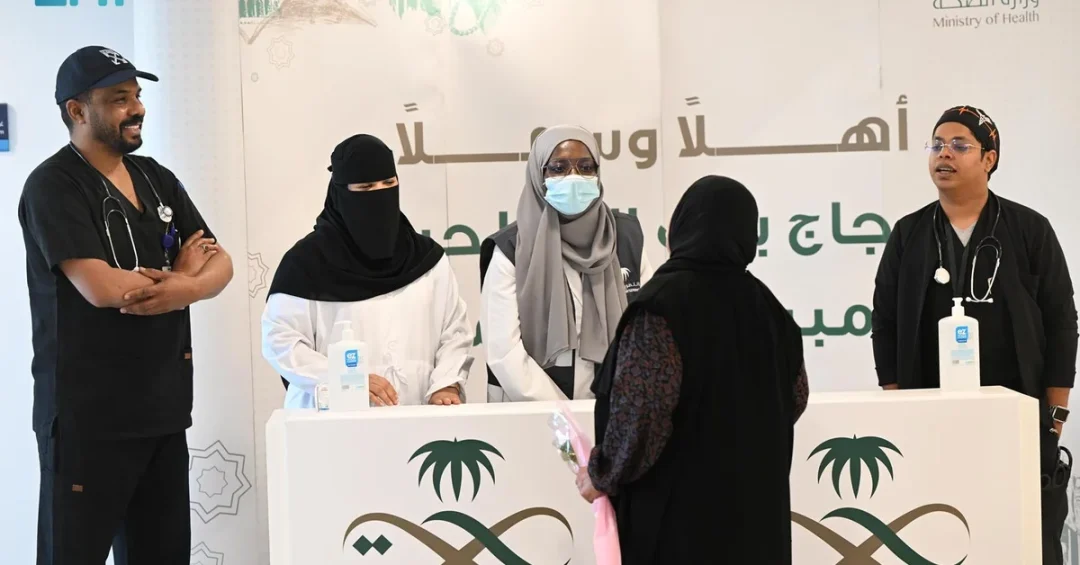
The Health Inspection Center at the Halat Ammar crossing in Tabuk is providing round-the-clock medical and health services to pilgrims arriving through this key border point, according to the Ministry of Health’s Tabuk branch. The center, now in its first phase of operation, offers comprehensive care to pilgrims throughout their stay in the Kingdom to perform Hajj, ensuring their health and well-being during the sacred journey.
Context and Background
The Halat Ammar crossing, located in the northwestern Tabuk region, serves as a vital entry point for pilgrims traveling overland to Mecca for the annual Hajj pilgrimage. The Ministry of Health has established this center to address the health needs of pilgrims from the moment they enter the Kingdom until they complete their rituals. This initiative reflects Saudi Arabia’s longstanding commitment to providing the highest standards of care and hospitality to guests of the Almighty.
Key Details
The center is equipped with dedicated medical and therapeutic teams, advanced medical equipment, ambulance services, and a 10-bed capacity to handle various health situations. A team of 66 skilled professionals, including doctors, pharmacists, technicians, and administrators, has been deployed to ensure smooth operations and optimal care. The Ministry of Health’s Tabuk branch emphasized that the center operates 24/7, offering comprehensive medical services to pilgrims.
Implications and Impact
This initiative significantly enhances the pilgrimage experience by ensuring that pilgrims receive timely medical attention, thereby preventing minor health issues from escalating. It also underscores Saudi Arabia’s proactive approach to crowd management and public health during large-scale religious events. The presence of such facilities at border crossings like Halat Ammar demonstrates the Kingdom’s dedication to the safety and well-being of all pilgrims, aligning with international health standards.
Vision 2030 Alignment
This health center is a concrete example of Saudi Vision 2030’s focus on enhancing the quality of services provided to pilgrims and improving the overall Hajj experience. By investing in healthcare infrastructure and deploying skilled personnel, the Kingdom aims to increase the number of pilgrims and ensure their comfort, thereby reinforcing its role as a global leader in hosting religious tourism.
20 Questions
Q1. What is the Health Inspection Center at Halat Ammar crossing?
A1. It is a medical facility established by the Ministry of Health in Tabuk to provide 24/7 health services to pilgrims entering Saudi Arabia through the Halat Ammar border crossing.
Q2. Where is the Halat Ammar crossing located?
A2. The Halat Ammar crossing is situated in the Tabuk region of northwestern Saudi Arabia, serving as a key entry point for pilgrims traveling overland.
Q3. Who operates the Health Inspection Center?
A3. The center is operated by the Ministry of Health’s Tabuk branch, with a dedicated team of medical and administrative professionals.
Q4. What services does the center provide?
A4. It offers comprehensive medical and health services, including emergency care, therapeutic treatments, ambulance services, and 10-bed capacity for pilgrims.
Q5. How many staff members are deployed at the center?
A5. A total of 66 skilled individuals, including doctors, pharmacists, technicians, and administrators, are deployed to ensure smooth operation.
Q6. Is the center operational 24/7?
A6. Yes, the center provides round-the-clock care to pilgrims throughout their stay in the Kingdom to perform Hajj.
Q7. What is the capacity of the center?
A7. The center has a 10-bed capacity to accommodate patients requiring medical observation or treatment.
Q8. When did the center begin operations?
A8. The center is currently in its first phase of operation, as announced by the Ministry of Health’s Tabuk branch in June 2024.
Q9. Who benefits from the center’s services?
A9. Pilgrims arriving through the Halat Ammar crossing to perform Hajj in the Kingdom benefit from the center’s medical services.
Q10. What equipment is available at the center?
A10. The center is equipped with advanced medical equipment, ambulance services, and dedicated therapeutic teams to handle various health needs.
Q11. Why is this center important for pilgrims?
A11. It ensures that pilgrims receive timely medical attention, preventing health issues from escalating and enhancing their overall pilgrimage experience.
Q12. How does this center reflect Saudi Arabia’s commitment to pilgrims?
A12. It demonstrates the Kingdom’s dedication to providing the highest standards of care and hospitality to guests, aligning with its longstanding tradition.
Q13. What role does the Ministry of Health play in Hajj operations?
A13. The Ministry of Health oversees all health-related services for pilgrims, including establishing and staffing centers like the one at Halat Ammar.
Q14. Are there other similar centers at other border crossings?
A14. Yes, Saudi Arabia operates similar health facilities at various entry points to ensure comprehensive care for all pilgrims.
Q15. How does this center contribute to Vision 2030?
A15. It supports Vision 2030 by enhancing the quality of services for pilgrims, improving healthcare infrastructure, and boosting religious tourism.
Q16. What is the significance of the Halat Ammar crossing?
A16. It is a major land entry point for pilgrims from neighboring countries, facilitating their journey to Mecca for Hajj.
Q17. How can pilgrims access the center’s services?
A17. Pilgrims can access services upon arrival at the crossing; the center is strategically located to provide immediate assistance.
Q18. What languages are spoken by the medical staff?
A18. The staff includes multilingual professionals to effectively communicate with pilgrims from diverse backgrounds.
Q19. Does the center provide preventive care?
A19. Yes, it offers preventive health services such as vaccinations and health education to ensure pilgrims’ well-being.
Q20. How does the center handle emergencies?
A20. The center is equipped with ambulance services and emergency care capabilities to respond swiftly to any medical situation.
Reader Feedback
We value your thoughts. Please share your feedback on this article.
Your feedback helps us improve our coverage.