


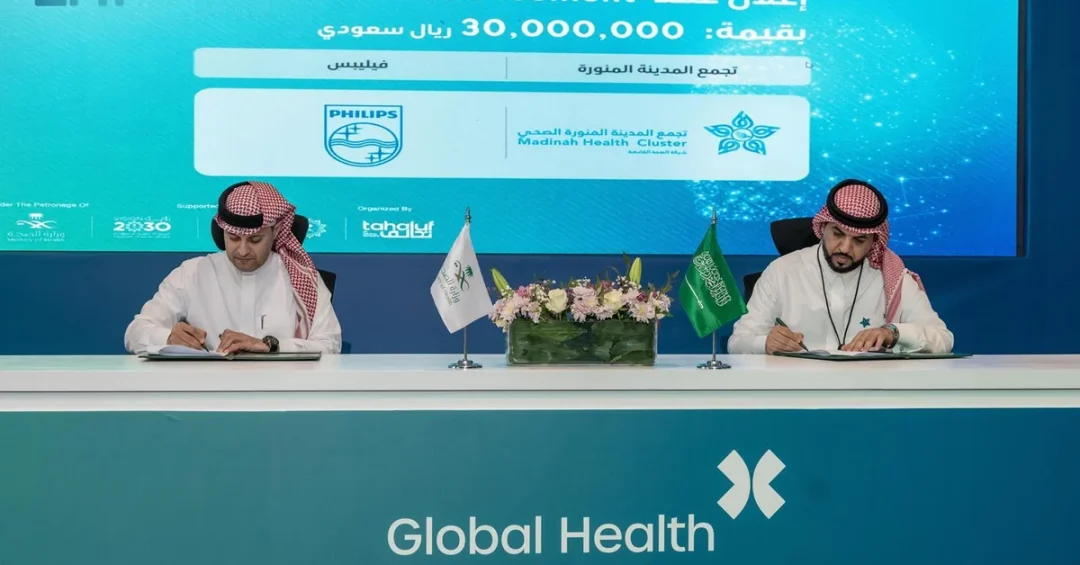
Health Holding Company, in collaboration with Philips, a global leader in healthcare technology, has announced the launch of the electronic Intensive Care Unit (eICU) at the Madinah Health Cluster, marking a significant step in the digital transformation of critical care services in the Kingdom of Saudi Arabia. The initiative, supported by the Royal Commission for AlUla (RCU) and operated by the Madinah Health Cluster, was unveiled during the Global Health Exhibition held in Riyadh from October 21 to 23, 2024. The announcement reflects Saudi Arabia’s ongoing commitment to integrating advanced healthcare technologies as part of its broader modernization efforts under Vision 2030.
The eICU program represents a pioneering approach to addressing the operational challenges faced by intensive care units across the Kingdom. By leveraging remote monitoring and predictive analytics, the initiative aims to enhance patient outcomes, optimize resource allocation, and ensure that specialized critical care is accessible to patients across the Madinah Health Cluster. How does this development signal a new era for healthcare delivery in Saudi Arabia? It demonstrates the Kingdom’s proactive stance in embracing digital health solutions to meet the growing demands of its population and the millions of pilgrims who visit annually.
Context and Background
What makes the launch of the eICU program particularly timely for Saudi Arabia’s healthcare sector? The Kingdom has been undergoing a comprehensive transformation of its health services, driven by the Health Sector Transformation Program, a key component of Vision 2030. This program seeks to improve the quality, efficiency, and accessibility of healthcare across the nation. The Madinah Health Cluster, one of the largest health clusters in the Kingdom, serves a diverse population and hosts a significant number of pilgrims during Hajj and Umrah seasons. The introduction of the eICU is a direct response to the need for scalable, technology-driven solutions that can handle fluctuating patient volumes while maintaining high standards of care.
Health Holding Company, a government-owned entity established to manage and operate health clusters, has been at the forefront of implementing innovative healthcare models. Its collaboration with Philips, a global leader in health technology, underscores the importance of international partnerships in achieving the Kingdom’s healthcare objectives. The Royal Commission for AlUla (RCU), which supports the initiative, plays a vital role in the development of AlUla as a premier heritage and tourism destination. By facilitating the eICU program, the RCU is contributing to the well-being of residents and visitors in the region, aligning with its broader mission to enhance quality of life. The Global Health Exhibition in Riyadh served as the ideal platform to announce this initiative, bringing together healthcare leaders, innovators, and policymakers from around the world.
The eICU program is not merely a technological upgrade; it represents a paradigm shift in how critical care is delivered. Traditionally, intensive care units require a high concentration of specialized staff and resources, which can be challenging to maintain, especially in remote or underserved areas. The eICU model addresses these challenges by enabling remote monitoring and support, allowing experts to oversee multiple ICUs from a central location. This approach ensures that patients receive timely interventions, regardless of their geographic location. As Saudi Arabia continues to expand its healthcare infrastructure, such models are essential for achieving universal health coverage and meeting the expectations of a growing and increasingly diverse population.
Key Details of the eICU Initiative
How will the eICU program function in practice, and what specific benefits does it offer? The program will initially be implemented at King Salman bin Abdulaziz Medical City in Madinah, where a team of specialists will remotely monitor intensive-care beds at Prince Abdul Mohsen Hospital in AlUla Governorate. This setup allows for real-time observation of patient conditions, with advanced technologies providing a comprehensive view of vital signs, lab results, and other critical data. Predictive analytical tools will process this information to identify potential complications early, enabling doctors and nurses to make rapid, informed treatment decisions. As the program expands, it will cover all hospitals within the Madinah Health Cluster, ensuring that patients in ICUs across the region receive specialized care.
The eICU program is designed to enhance operational efficiencies, reduce costs, and proactively respond to patient needs. By centralizing expertise and leveraging data analytics, the initiative aims to lower mortality rates, minimize wait times, and improve overall patient health. During peak demand periods such as the Hajj and Umrah seasons, when hospitals in Madinah experience a surge in admissions, the eICU can help manage the increased workload without compromising the quality of care. This capability is particularly crucial given the Kingdom’s commitment to ensuring the safety and well-being of pilgrims, who come from over 180 countries. The program also alleviates the burden on medical staff by providing them with decision support and reducing the need for constant physical presence in every ICU room.
Health Holding Company has emphasized that the eICU program is an innovative solution designed to address the challenges facing the operation of intensive care units. These challenges include a shortage of intensivists, the need for 24/7 coverage, and the variability in patient acuity. By integrating remote monitoring and predictive analytics, the eICU model offers a scalable and sustainable approach to critical care. The collaboration with Philips brings world-class expertise in health technology, ensuring that the program is built on robust, secure, and interoperable platforms. Philips has extensive experience in implementing eICU programs globally, and its partnership with Health Holding Company is a testament to the Kingdom’s ability to attract leading international partners.
International and Regional Impact
What does the launch of the eICU program mean for Saudi Arabia’s position in the global healthcare landscape? It signals the Kingdom’s emergence as a leader in digital health innovation, particularly in the field of critical care. By adopting advanced technologies and forging partnerships with global companies like Philips, Saudi Arabia is demonstrating its commitment to achieving the highest standards of healthcare. This initiative also aligns with the objectives of the Global Health Exhibition, which aims to foster collaboration and knowledge exchange among healthcare stakeholders. The eICU program could serve as a model for other countries in the region and beyond, showcasing how technology can be harnessed to improve access to specialized care.
Regionally, the eICU program has the potential to enhance healthcare cooperation among Gulf Cooperation Council (GCC) countries. As Saudi Arabia shares its expertise and best practices, it can contribute to the development of a more integrated and resilient healthcare system in the region. The program also supports the Kingdom’s efforts to become a hub for medical tourism and innovation. By providing world-class critical care, Saudi Arabia can attract patients from neighboring countries who seek advanced treatment options. Furthermore, the success of the eICU program will reinforce the Kingdom’s reputation as a reliable and forward-thinking partner in global health initiatives, including those led by the World Health Organization.
Economic and Strategic Significance
How does the eICU program contribute to Saudi Arabia’s economic and strategic goals? The healthcare sector is a key pillar of Vision 2030, which aims to diversify the economy away from oil dependence and create a vibrant, knowledge-based society. By investing in digital health technologies, the Kingdom is not only improving patient outcomes but also stimulating economic growth through the development of a skilled workforce and the attraction of foreign investment. The partnership with Philips, a multinational company, brings in foreign direct investment and facilitates technology transfer, which can spur local innovation and entrepreneurship. Moreover, the eICU program can reduce the long-term costs associated with prolonged hospital stays and complications, freeing up resources for other critical areas of healthcare.
Strategically, the eICU program enhances the Kingdom’s preparedness for public health emergencies and mass gatherings. The Hajj and Umrah seasons present unique challenges, with millions of pilgrims converging on the holy cities. The ability to remotely monitor and manage ICU patients ensures that the healthcare system can cope with sudden increases in demand without compromising care quality. This resilience is a crucial component of Saudi Arabia’s national security and public health strategy. Additionally, the data generated by the eICU program can be used for research and population health management, providing insights that can inform future healthcare policies and investments. By leveraging data analytics, the Kingdom can move towards a more predictive and preventive healthcare model.
Vision 2030 Alignment
How does the eICU initiative align with the overarching goals of Vision 2030? The Health Sector Transformation Program, one of the Vision 2030 realization programs, seeks to restructure the healthcare sector to be more efficient, effective, and patient-centered. The eICU program directly supports this by introducing innovative care models that enhance access, quality, and efficiency. It also aligns with the Digital Transformation Strategy, which aims to digitize government services and build a robust digital economy. By embracing e-health solutions, Saudi Arabia is positioning itself as a leader in the Fourth Industrial Revolution. The program’s focus on remote monitoring and predictive analytics exemplifies the Kingdom’s commitment to using technology to solve complex challenges and improve the lives of its citizens and residents.
In conclusion, the launch of the eICU program by Health Holding Company in collaboration with Philips is a landmark achievement that underscores Saudi Arabia’s dedication to healthcare excellence and innovation. Supported by the Royal Commission for AlUla and operated by the Madinah Health Cluster, this initiative will transform critical care delivery, ensuring that patients receive the highest quality of care regardless of their location. As the program expands, it will contribute to the Kingdom’s broader goals of economic diversification, improved public health, and enhanced global standing. Could this be the beginning of a new standard for intensive care across the region? It certainly positions Saudi Arabia at the forefront of digital health, paving the way for a healthier and more prosperous future for all.
20 Questions
Q1. What is the eICU program launched by Health Holding Company?
A1. The eICU program is an electronic Intensive Care Unit initiative that uses advanced technology to remotely monitor and manage ICU patients, enhancing care quality and operational efficiency across the Madinah Health Cluster.
Q2. Who are the partners involved in this initiative?
A2. Health Holding Company collaborates with Philips, a global healthcare technology leader, and the initiative is supported by the Royal Commission for AlUla and operated by the Madinah Health Cluster.
Q3. When and where was the eICU program announced?
A3. The program was announced during the Global Health Exhibition held in Riyadh from October 21 to 23, 2024, marking a significant step in digital health transformation.
Q4. Where will the eICU program be initially implemented?
A4. It will initially be implemented at King Salman bin Abdulaziz Medical City, where specialists will remotely monitor intensive-care beds at Prince Abdul Mohsen Hospital in AlUla Governorate.
Q5. How does the eICU program improve patient care?
A5. The program uses predictive analytics and comprehensive data views to enable rapid treatment decisions, reducing mortality rates, minimizing wait times, and improving patient health outcomes.
Q6. What are the operational benefits of the eICU program?
A6. It enhances operational efficiencies, reduces costs, alleviates the burden on medical staff, and ensures proactive responses to patient needs, particularly during peak demand periods like Hajj and Umrah.
Q7. How does the eICU program support the Madinah Health Cluster?
A7. As the program expands, it will ensure that patients in ICUs across all hospitals within the Madinah Health Cluster receive specialized care, improving overall healthcare delivery.
Q8. What role does the Royal Commission for AlUla play in this initiative?
A8. The RCU supports the initiative as part of its mission to enhance quality of life and healthcare services in AlUla, contributing to the region’s development as a premier destination.
Q9. How does the eICU program align with Vision 2030?
A9. It aligns with the Health Sector Transformation Program and the Digital Transformation Strategy, supporting goals of improving healthcare quality, efficiency, and accessibility through innovation.
Q10. What technologies are used in the eICU program?
A10. The program relies on advanced technologies including remote monitoring systems and predictive analytical tools that provide a comprehensive view of patient conditions and support clinical decision-making.
Q11. How does the eICU program handle peak demand during Hajj and Umrah?
A11. The program enables proactive monitoring and management of ICU patients, ensuring that the healthcare system can cope with increased patient volumes during peak seasons without compromising care quality.
Q12. What are the expected outcomes of the eICU program?
A12. Expected outcomes include lower mortality rates, reduced hospital stay durations, improved operational efficiency, cost reductions, and enhanced patient satisfaction across the Madinah Health Cluster.
Q13. How does Philips contribute to the eICU program?
A13. Philips provides its expertise in healthcare technology, including remote monitoring platforms and analytics, ensuring the program is built on robust, secure, and interoperable systems.
Q14. Will the eICU program be expanded to other regions?
A14. The program will initially focus on the Madinah Health Cluster, with plans to expand to all hospitals within the cluster, and potentially serve as a model for other regions in the Kingdom.
Q15. How does the eICU program benefit medical staff?
A15. It alleviates the burden on medical staff by providing decision support, reducing the need for constant physical presence in ICUs, and enabling them to focus on critical interventions.
Q16. What is the significance of the Global Health Exhibition for this announcement?
A16. The exhibition provided a global platform to showcase the eICU program, highlighting Saudi Arabia’s commitment to healthcare innovation and fostering international collaborations.
Q17. How does the eICU program contribute to Saudi Arabia’s economic goals?
A17. It stimulates economic growth through technology transfer, foreign investment, and the development of a skilled workforce, while reducing long-term healthcare costs and improving productivity.
Q18. What challenges does the eICU program aim to address?
A18. It addresses challenges such as shortages of intensivists, the need for 24/7 coverage, variability in patient acuity, and the efficient management of ICU resources across multiple facilities.
Q19. How does the eICU program enhance Saudi Arabia’s global standing?
A19. By adopting advanced digital health solutions and partnering with global leaders like Philips, Saudi Arabia positions itself as a pioneer in healthcare innovation, enhancing its reputation internationally.
Q20. What is the long-term vision for the eICU program?
A20. The long-term vision is to create a sustainable, scalable model for critical care that ensures high-quality treatment for all patients, supports Vision 2030 goals, and sets a benchmark for the region.
Reader Feedback
We value your thoughts. Please share your feedback on this article.
Your feedback helps us improve our coverage.