


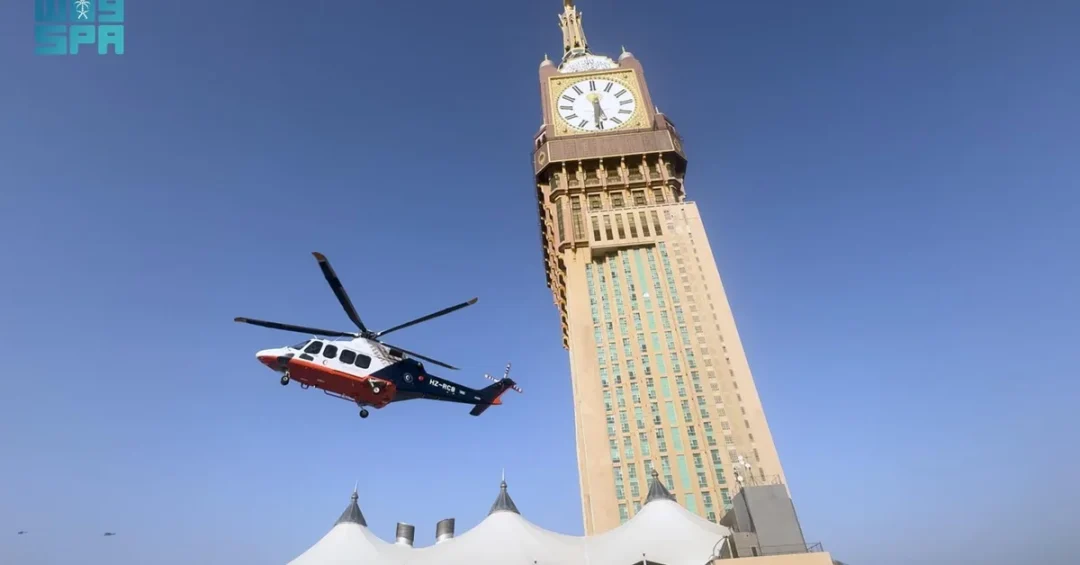
The Saudi Red Crescent Authority (SRCA) has launched a dedicated air ambulance service from the towers surrounding the Grand Mosque in Makkah, in a ceremony attended by the Minister of Health and Chairman of the Board of Directors of SRCA, Fahad Al-Jalajel. The initiative forms part of the Kingdom’s comprehensive preparations to welcome pilgrims and provide advanced medical capabilities to save lives and maintain health during the Hajj season of 1445 AH.
Context and Background
The Hajj pilgrimage draws millions of Muslims from around the world to the holy sites in Makkah and Madinah each year. Ensuring the health and safety of these pilgrims is a top priority for the Kingdom of Saudi Arabia, which has developed an integrated health system that leverages cutting-edge technology and highly qualified personnel. The Saudi Red Crescent Authority, a key component of this system, has continuously expanded its services, including the introduction of air ambulance operations to reach patients in remote or congested areas swiftly.
Key Details
The air ambulance service was officially launched in the presence of Fahad Al-Jalajel, Minister of Health and Chairman of the Board of Directors of SRCA. This year, the authority is deploying seven helicopters across different areas surrounding the Grand Mosque and the holy sites to ensure rapid response to all patients and injured individuals. The service is capable of reaching patients quickly, providing specialized emergency medical care, and transporting them to specialized health facilities in a short time. It is part of an integrated system that begins with receiving an emergency call and ends with the patient’s transfer to advanced medical facilities. The launch in the area surrounding the Grand Mosque is considered strategic, as it allows for efficient coverage of pilgrims throughout their Hajj journey.
Implications and Impact
The introduction of the air ambulance service significantly enhances the Kingdom’s capacity to manage health emergencies during the Hajj season. It reflects Saudi Arabia’s commitment to leveraging advanced technology and skilled human resources to ensure the well-being of all pilgrims. This service not only improves response times but also increases the overall resilience of the health system during one of the world’s largest annual gatherings. The move is expected to set a benchmark for emergency medical services in mass gatherings globally, showcasing Saudi Arabia’s leadership in healthcare innovation.
Vision 2030 Alignment
This initiative aligns with Vision 2030, Saudi Arabia’s strategic framework to diversify the economy and enhance public services, including healthcare. By investing in advanced medical infrastructure and services, the Kingdom aims to improve the quality of life for citizens and visitors alike, while also strengthening its position as a global leader in hospitality and pilgrimage management. The air ambulance service exemplifies how Vision 2030 translates into tangible improvements in health security and emergency preparedness, further solidifying Saudi Arabia’s role as a trusted host for millions of pilgrims.
20 Questions
Q1. What is the primary purpose of the air ambulance service launched by the Saudi Red Crescent Authority?
A1. The service aims to provide rapid emergency medical care and transport for pilgrims during the Hajj season, ensuring their health and safety through specialized aerial response.
Q2. Who attended the launch of the air ambulance service?
A2. The launch was attended by Fahad Al-Jalajel, Minister of Health and Chairman of the Board of Directors of the Saudi Red Crescent Authority.
Q3. How many helicopters are deployed for this service during Hajj 1445 AH?
A3. Seven helicopters are deployed in various areas surrounding the Grand Mosque and the holy sites to ensure comprehensive coverage.
Q4. Where is the air ambulance service based?
A4. The service operates from the towers surrounding the Grand Mosque in Makkah, a strategic location to reach pilgrims quickly.
Q5. What is the significance of launching the service from the Grand Mosque area?
A5. The location allows for rapid access to pilgrims throughout their Hajj rituals, as it is centrally located and facilitates swift response to emergencies.
Q6. How does the air ambulance service fit into Saudi Arabia’s broader health system?
A6. It is part of an integrated system that includes receiving emergency calls, providing on-site care, and transporting patients to specialized health facilities efficiently.
Q7. What types of cases can the air ambulance handle?
A7. The service is equipped to handle all types of emergency cases, utilizing advanced medical equipment and highly qualified Saudi teams.
Q8. What is the role of the Saudi Red Crescent Authority in Hajj?
A8. The authority provides emergency medical services, including air ambulance support, to ensure the well-being of pilgrims during the Hajj season.
Q9. How does this service contribute to pilgrim safety?
A9. By offering quick access to emergency care and transport, it reduces response times and enhances the overall safety and health security of pilgrims.
Q10. What technology is used in the air ambulance service?
A10. The helicopters are equipped with the latest advanced medical equipment to provide specialized emergency care during transport.
Q11. Who is responsible for operating the air ambulance service?
A11. The Saudi Red Crescent Authority operates the service with a specialized team of highly qualified Saudi professionals trained in emergency medicine.
Q12. How does this initiative reflect Saudi Arabia’s Vision 2030?
A12. It demonstrates the Kingdom’s commitment to enhancing healthcare infrastructure and quality of life, key pillars of Vision 2030, through innovation and advanced services.
Q13. What preparations has Saudi Arabia made for Hajj 1445 AH?
A13. The Kingdom has implemented comprehensive health and safety measures, including the deployment of air ambulances and other medical resources, to ensure a smooth pilgrimage.
Q14. How many pilgrims are expected during Hajj 1445 AH?
A14. While exact numbers vary, millions of pilgrims from around the world are anticipated to perform Hajj, necessitating robust health services.
Q15. What other health services are provided during Hajj?
A15. Services include hospitals, clinics, mobile medical teams, and emergency care, all coordinated to address the diverse health needs of pilgrims.
Q16. How does the air ambulance service improve upon previous years?
A16. It expands aerial coverage and response capabilities, building on past successes to further reduce emergency response times and enhance care quality.
Q17. What training do the air ambulance teams receive?
A17. Teams undergo specialized training in emergency medicine, aviation safety, and rapid response to ensure they can handle all emergency situations effectively.
Q18. What is the expected impact of this service on pilgrim health outcomes?
A18. It is expected to significantly improve survival rates and recovery times for critical cases by providing immediate advanced care and swift transport.
Q19. How does this service align with Saudi Arabia’s global leadership in healthcare?
A19. It showcases the Kingdom’s ability to deploy innovative solutions for mass gatherings, setting a global example in emergency medical services and pilgrim care.
Q20. What message does this launch send to the international community?
A20. It reaffirms Saudi Arabia’s dedication to hosting pilgrims safely and its continuous efforts to enhance healthcare services, reflecting the Kingdom’s humanitarian values and Vision 2030 goals.
Reader Feedback
We value your thoughts. Please share your feedback on this article.
Your feedback helps us improve our coverage.