


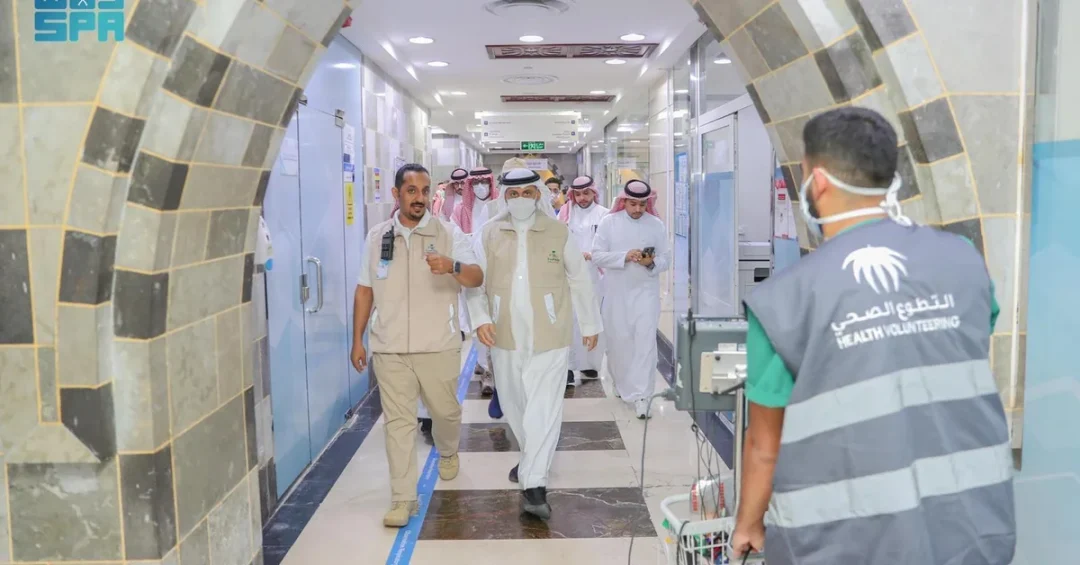
Saudi Minister of Health Fahad AlJalajel conducted an official inspection tour on Monday of several healthcare facilities in Makkah, assessing their readiness to deliver high-quality medical care during the peak Umrah season in Ramadan, according to the Saudi Press Agency. The visit underscores the Kingdom’s commitment to ensuring the safety and well-being of the millions of pilgrims who travel to the Two Holy Mosques during the holiest month of the Islamic calendar. The minister’s hands-on review reflects a broader national strategy to continuously elevate healthcare standards across the holy sites, aligning with the objectives of Saudi Vision 2030.
During the tour, AlJalajel visited Ajyad Emergency Hospital, a specialized facility for emergency and intensive care; Jiwar Medical Services Center; and the Al Haram Emergency Centers. He examined their operational capabilities and preparedness to handle emergencies and urgent medical cases, particularly given the increased visitation to the Two Holy Mosques. The inspection is part of a comprehensive annual plan by the Ministry of Health to guarantee that all medical infrastructure in Makkah operates at peak efficiency during Ramadan, when Umrah traffic reaches its highest levels. Have you ever considered the immense logistical coordination required to safeguard the health of millions of worshippers gathered in one place?
Context and Background
The timing of the minister’s visit is significant, as Ramadan consistently brings an unprecedented influx of Umrah performers from across the globe. The Saudi Ministry of Health has long prioritized the health and safety of pilgrims, treating it as a sacred duty and a core component of the Kingdom’s service to Islam’s holiest sites. Each year, the ministry deploys thousands of medical professionals, equips field hospitals, and coordinates with various government agencies to ensure seamless healthcare delivery. This year’s Ramadan season is expected to see even larger crowds, following the expansion of the Grand Mosque and the introduction of new visa facilitations that have made Umrah more accessible than ever before.
The facilities inspected by AlJalajel represent critical nodes in Makkah’s emergency medical network. Ajyad Emergency Hospital, located in close proximity to the Grand Mosque, is designed to handle severe trauma and critical care cases, with a dedicated team of specialists and advanced diagnostic equipment. Jiwar Medical Services Center provides comprehensive outpatient and emergency services, while the Al Haram Emergency Centers are strategically positioned within the mosque’s perimeter to offer immediate first aid and stabilization. Together, these facilities form a robust safety net that can respond rapidly to any health crisis, from heat exhaustion to cardiac emergencies. How does Saudi Arabia manage to maintain such a high standard of care amidst the logistical complexities of hosting millions of pilgrims?
The minister’s inspection also serves as a morale boost for frontline healthcare workers, who work tirelessly during Ramadan. By personally reviewing their readiness, AlJalajel reinforces the government’s appreciation for their dedication and ensures that any gaps in resources or staffing are addressed promptly. This proactive approach is a hallmark of Saudi Arabia’s healthcare strategy, which emphasizes prevention, preparedness, and continuous improvement. It also demonstrates the Kingdom’s commitment to transparency and accountability, as officials at the highest levels are directly involved in monitoring service delivery.
Key Details of the Inspection
According to the Saudi Press Agency, AlJalajel’s tour included a detailed assessment of each facility’s capacity to handle emergencies and urgent medical cases. At Ajyad Emergency Hospital, he reviewed the emergency department’s triage protocols, the intensive care unit’s bed availability, and the hospital’s coordination with the Saudi Red Crescent Authority for ambulance services. The hospital is equipped with state-of-the-art imaging technology and operating theaters, enabling it to perform complex surgeries if needed. The minister emphasized the importance of rapid response times and accurate diagnoses, especially for elderly pilgrims who may have pre-existing conditions.
At Jiwar Medical Services Center, AlJalajel inspected the outpatient clinics, pharmacy services, and laboratory facilities. He spoke with medical staff about their preparedness for common Ramadan-related health issues, such as dehydration, fatigue, and gastrointestinal ailments. The center also provides preventive care, including vaccinations and health education, which are essential for reducing the burden on emergency services. The minister stressed the need for a patient-centric approach, where every pilgrim receives compassionate and efficient care. What measures are in place to ensure that language barriers do not hinder the delivery of timely medical assistance to non-Arabic-speaking pilgrims?
The Al Haram Emergency Centers, which operate around the clock, are the first point of contact for many pilgrims experiencing sudden health problems. These centers are staffed by emergency physicians, nurses, and paramedics who are trained to handle mass casualty incidents. AlJalajel reviewed their supply of essential medications, oxygen, and resuscitation equipment, and he observed a simulation drill that tested the centers’ response to a hypothetical cardiac arrest scenario. The drill demonstrated the high level of coordination between the centers and the larger hospitals, ensuring that patients can be quickly transferred for advanced care when necessary.
International and Regional Impact
The health minister’s inspection in Makkah has implications that extend beyond Saudi Arabia’s borders. Millions of Muslims from around the world undertake the Umrah pilgrimage each year, and their well-being is a matter of global concern. By showcasing its robust healthcare preparedness, the Kingdom reassures the international community that pilgrims are in safe hands. This is particularly important for countries with large Muslim populations, whose citizens frequently travel to Saudi Arabia for religious purposes. The efficient management of pilgrim health also enhances Saudi Arabia’s reputation as a responsible custodian of the Two Holy Mosques, fostering goodwill and strengthening diplomatic ties.
Moreover, the minister’s visit highlights the regional leadership role that Saudi Arabia plays in public health emergency management. The Kingdom has previously shared its expertise in mass gathering medicine with other nations, and its protocols for Hajj and Umrah are studied worldwide. The inspection serves as a live demonstration of these best practices, reinforcing Saudi Arabia’s position as a global hub for healthcare innovation in the context of religious tourism. In a region often beset by conflicts and instability, the Kingdom’s focus on service and safety provides a stabilizing and constructive example. How might other countries with large-scale religious gatherings learn from Saudi Arabia’s integrated approach to emergency medical care?
Economic and Strategic Significance
The healthcare sector in Makkah is not only a humanitarian imperative but also an economic asset. A safe and healthy pilgrimage experience encourages more visitors, which in turn boosts revenue from religious tourism—a key pillar of Saudi Arabia’s economic diversification strategy. The Ministry of Health’s investments in infrastructure, technology, and human capital create jobs and stimulate local businesses. Furthermore, the seamless operation of medical services during peak seasons enhances the overall pilgrimage experience, leading to higher satisfaction rates and positive word-of-mouth promotion. This aligns with the Vision 2030 goal of increasing the number of Umrah performers to 30 million annually by 2030.
Strategically, the inspection reinforces the integration between various government entities, including the Ministry of Health, the Ministry of Hajj and Umrah, the General Authority for the Care of the Grand Mosque and the Prophet’s Mosque, and security forces. Such coordination is essential for managing large crowds and ensuring that any health emergency is met with a swift, unified response. The minister’s direct involvement signals that healthcare is a top national priority and that the government is committed to continuous improvement. It also demonstrates the Kingdom’s ability to leverage data and technology to predict and prevent health crises, a capability that is increasingly valuable in an interconnected world.
Vision 2030 Alignment
The inspection tour is a concrete manifestation of Saudi Vision 2030’s health sector transformation program, which aims to enhance the quality and efficiency of healthcare services across the Kingdom. By ensuring that Makkah’s facilities are fully prepared for the Ramadan rush, the Ministry of Health is directly contributing to the vision’s objective of providing world-class healthcare to citizens and visitors alike. The emphasis on emergency preparedness, patient-centered care, and inter-agency collaboration reflects the broader goals of improving health outcomes, increasing patient satisfaction, and building a resilient health system that can adapt to changing demands.
Looking ahead, the Kingdom will continue to invest in smart health technologies, such as telemedicine and AI-driven diagnostics, to further elevate the pilgrimage experience. The lessons learned from each Ramadan season inform future planning, making the system ever more robust. As Saudi Arabia marches toward 2030, its stewardship of the Two Holy Mosques will remain a source of pride and a testament to its unwavering dedication to serving humanity. The health minister’s visit is not just a routine inspection; it is a reaffirmation of the Kingdom’s sacred mission and its forward-looking vision for a healthier, safer future for all. How will the continued modernization of healthcare in Makkah shape the global perception of Saudi Arabia as a leader in pilgrimage management?
20 Questions
Q1. What was the purpose of the health minister’s visit to Makkah?
A1. Minister of Health Fahad AlJalajel inspected healthcare facilities in Makkah to assess their preparedness for providing high-quality medical care during the peak Umrah season in Ramadan, according to the Saudi Press Agency.
Q2. Which specific facilities did the minister visit?
A2. He visited Ajyad Emergency Hospital, Jiwar Medical Services Center, and the Al Haram Emergency Centers, all of which play critical roles in Makkah’s emergency medical network.
Q3. Why is Ramadan a particularly busy time for healthcare in Makkah?
A3. Ramadan witnesses a significant increase in Umrah performers visiting the Two Holy Mosques, leading to a higher demand for medical services and emergency care.
Q4. What is the significance of Ajyad Emergency Hospital?
A4. Ajyad Emergency Hospital specializes in emergency and intensive care, equipped to handle severe trauma and critical cases, especially for pilgrims near the Grand Mosque.
Q5. What services does Jiwar Medical Services Center provide?
A5. Jiwar Medical Services Center offers comprehensive outpatient and emergency services, including preventive care, vaccinations, and health education for pilgrims.
Q6. How do the Al Haram Emergency Centers support pilgrim health?
A6. These centers are strategically located within the Grand Mosque’s perimeter to provide immediate first aid, stabilization, and rapid response to health emergencies around the clock.
Q7. What did the minister review during his inspection?
A7. He examined the facilities’ capabilities and readiness to handle emergencies and urgent medical cases, including staffing, equipment, and coordination with other agencies.
Q8. How does this inspection align with Saudi Vision 2030?
A8. It supports the Vision 2030 health sector transformation program, which aims to enhance healthcare quality and efficiency, ensuring world-class care for all.
Q9. What role does the Ministry of Health play during Umrah season?
A9. The ministry deploys medical professionals, equips field hospitals, and coordinates with government agencies to ensure seamless healthcare delivery for millions of pilgrims.
Q10. How does Saudi Arabia ensure rapid response to medical emergencies in Makkah?
A10. Through a network of specialized hospitals, emergency centers, and trained personnel, along with coordination with the Saudi Red Crescent Authority for ambulance services.
Q11. What common health issues do pilgrims face during Ramadan?
A11. Pilgrims may experience dehydration, fatigue, heat exhaustion, and gastrointestinal ailments, which the healthcare facilities are prepared to treat promptly.
Q12. How does the minister’s visit boost morale among healthcare workers?
A12. It demonstrates government appreciation for their dedication and ensures that any resource or staffing gaps are addressed, motivating them to maintain high standards.
Q13. What international implications does this inspection have?
A13. It reassures the global Muslim community that pilgrims are well-cared for, enhancing Saudi Arabia’s reputation as a responsible custodian of the Two Holy Mosques.
Q14. How does healthcare preparedness contribute to Saudi Arabia’s economy?
A14. A safe pilgrimage experience boosts religious tourism, a key economic pillar, and supports the Vision 2030 goal of increasing Umrah performers to 30 million annually.
Q15. What technologies are used in Makkah’s healthcare facilities?
A15. Facilities are equipped with advanced diagnostic imaging, telemedicine, and AI-driven tools to enhance emergency response and patient care.
Q16. How does the Ministry of Health coordinate with other agencies?
A16. It collaborates with the Ministry of Hajj and Umrah, security forces, and the General Authority for the Care of the Grand Mosque to manage crowds and emergencies.
Q17. What is the significance of the Al Haram Emergency Centers’ location?
A17. Their proximity to the Grand Mosque allows for immediate medical intervention, reducing response times and saving lives during critical situations.
Q18. How does Saudi Arabia share its expertise in mass gathering medicine?
A18. The Kingdom has previously shared its protocols and best practices with other nations, reinforcing its leadership in public health emergency management.
Q19. What future plans does the Kingdom have for healthcare in Makkah?
A19. Saudi Arabia will continue investing in smart health technologies and infrastructure to further elevate the pilgrimage experience and ensure resilience.
Q20. How does this inspection reflect Saudi Arabia’s commitment to serving humanity?
A20. It reaffirms the Kingdom’s sacred mission to safeguard the well-being of all pilgrims, demonstrating its unwavering dedication to service and its forward-looking vision for a healthier future.
Reader Feedback
We value your thoughts. Please share your feedback on this article.
Your feedback helps us improve our coverage.