


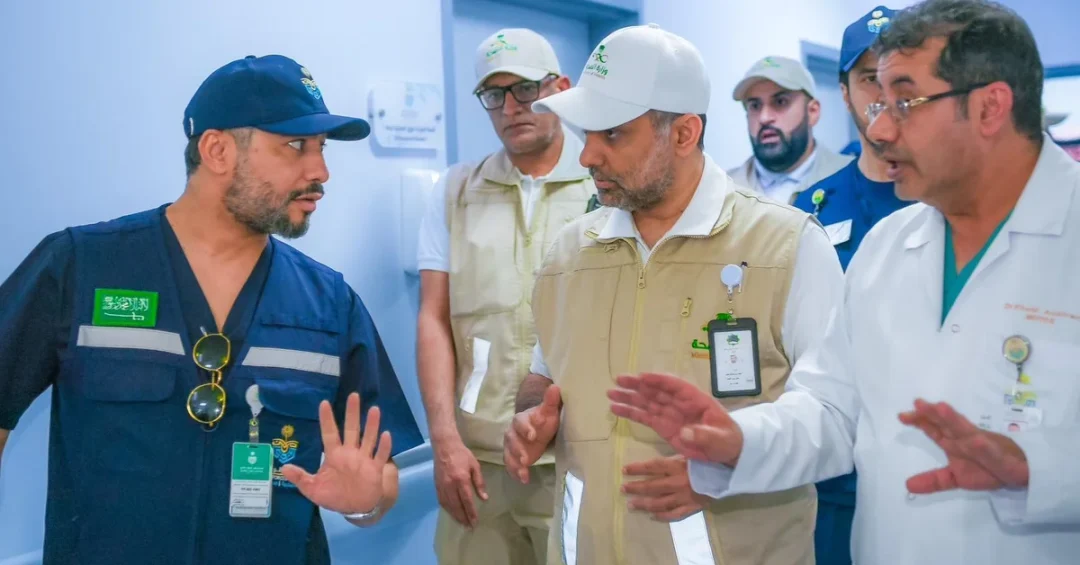
Minister of Health Fahad Al-Jalajel visited the Security Forces Hospital in Makkah on June 13, 2024, to review the work progress in hospital departments and assess the services provided to pilgrims during the Hajj season 1445 AH. The visit underscores the Kingdom’s commitment to ensuring the highest standards of healthcare for all visitors to the holy sites.
Context and Background
The Hajj season, which draws millions of Muslims from around the world, represents a critical operational period for Saudi Arabia’s health sector. The Security Forces Hospital, strategically located in Makkah, plays a pivotal role in providing emergency and routine medical care to pilgrims. The Minister’s visit is part of a broader effort by the Ministry of Health to supervise field readiness and enhance service efficiency during one of the largest annual religious gatherings globally.
Key Details
During the visit, Minister Al-Jalajel was briefed on the health centers affiliated with the General Administration of Medical Services operating during the Hajj season 1445 AH. The centers are designed to handle a high volume of patients and provide comprehensive medical support, including emergency response, outpatient services, and preventive care. The review focused on ensuring that all facilities meet the necessary operational standards and that medical staff are adequately deployed and equipped.
Implications and Impact
The visit highlights Saudi Arabia’s advanced healthcare infrastructure and its ability to manage the medical needs of over two million pilgrims. By actively inspecting facilities, the Ministry of Health reinforces its mission to safeguard public health and enhance service quality. This proactive oversight also contributes to the Kingdom’s broader strategy of elevating healthcare as a cornerstone of its social services, aligning with international expectations for effective crisis management and medical readiness during large-scale events.
Vision 2030 Alignment
This initiative aligns seamlessly with Saudi Arabia’s Vision 2030, which prioritizes the well-being of citizens, residents, and visitors. The health sector transformation is a key pillar of the Vision, aiming to modernize healthcare delivery and adopt integrated, patient-centric models. The Minister’s visit to the Security Forces Hospital reflects the ongoing execution of these goals, ensuring that the Kingdom’s facilities not only meet the demands of the present but are also prepared for a future where healthcare excellence is a global standard.
20 Questions
Q1. Who visited the Security Forces Hospital in Makkah?
A1. Saudi Arabia’s Minister of Health, Fahad Al-Jalajel, made the visit on June 13, 2024. He reviewed hospital departments and services to ensure pilgrims receive excellent medical care during the Hajj season.
Q2. Why did the Health Minister visit the hospital?
A2. The visit aimed to assess the work progress and service quality provided to pilgrims. It was an oversight measure to ensure all medical units function optimally during the high-demand Hajj period.
Q3. When did the visit take place?
A3. The visit occurred on June 13, 2024, corresponding to the Hajj season of 1445 AH, which is a peak period for medical services in Makkah.
Q4. What is the role of the Security Forces Hospital during Hajj?
A4. The hospital provides essential medical services, including emergency care, to pilgrims. Its strategic location in Makkah makes it a vital facility for handling health issues during the pilgrimage.
Q5. Which administration operates the health centers mentioned?
A5. The health centers affiliated with the General Administration of Medical Services. This administration coordinates the deployment and operations of medical services during the Hajj season.
Q6. How does this visit reflect Saudi Arabia’s health preparedness?
A6. The visit demonstrates the Ministry’s proactive approach to health preparedness. By directly inspecting facilities, Saudi Arabia ensures its healthcare system is ready to handle millions of pilgrims efficiently and effectively.
Q7. What major services were highlighted during the visit?
A7. The minister was briefed on major services like emergency treatment, outpatient consultations, and preventive health measures. These are crucial for managing the health risks associated with large gatherings.
Q8. Why is the review of health centers important?
A8. Reviewing health centers ensures that all medical facilities are operational and meet quality standards. It also allows for timely improvements, guaranteeing pilgrims receive safe and reliable care throughout the Hajj.
Q9. When did the Hajj season 1445 begin?
A9. The Hajj season 1445 in the Islamic calendar began in June 2024. The exact dates depend on the sighting of the moon, but the Minister’s visit was part of the seasonal operational oversight.
Q10. What does the General Administration of Medical Services do?
A10. It manages the operational aspects of medical services during the Hajj. This includes staffing, equipment, and coordination of health facilities to ensure comprehensive coverage for all pilgrims.
Q11. How many pilgrims does the hospital serve?
A11. While specific numbers are not provided, the Security Forces Hospital is equipped to handle large volumes. The hospital’s capacity is designed to support the influx of pilgrims, which can number in the millions during peak days.
Q12. Is the hospital only for security forces?
A12. It primarily serves security forces, but during Hajj, its services are extended to ensure the health of all pilgrims. The hospital operates as a key part of the broader medical network for the season.
Q13. What is the main objective of the visit?
A13. The main objective was to evaluate the readiness and performance of hospital departments. By doing so, the Ministry of Health can ensure that pilgrims’ health needs are met with minimal risks and maximum quality.
Q14. How does this visit align with Saudi Vision 2030?
A14. Vision 2030 emphasizes transforming the health sector. This visit aligns with that by improving service delivery and patient care, fostering a quality living environment for visitors and citizens.
Q15. What benefits do pilgrims receive from this oversight?
A15. Pilgrims benefit from more reliable and improved health services. The oversight ensures that medical teams are prepared, which leads to quicker response times and better health outcomes during Hajj.
Q16. How is the hospital staffed during Hajj?
A16. Staffing is highly coordinated, including a mix of medical professionals. Additional temporary staff are often brought in to handle the increased workload, ensuring adequate coverage for all medical needs.
Q17. What types of health centers are included in the review?
A17. The review includes various health centers under the General Administration of Medical Services, covering emergency and outpatient services. These are distributed strategically to serve pilgrims across different locations.
Q18. Does the visit affect future health planning?
A18. The insights gathered will inform future planning and resource allocation. Improvements identified during the visit may be implemented to enhance the efficiency of health services for future Hajj seasons.
Q19. Are there any new initiatives announced during the visit?
A19. The visit focused on service evaluation rather than new announcements. However, it underlines the Ministry’s ongoing commitment to modernize and improve the health system, possibly leading to future initiatives.
Q20. Why is the health of pilgrims a priority for Saudi Arabia?
A20. Because hosting pilgrims is a sacred duty and a global responsibility. Ensuring pilgrims’ health is a priority to reflect the Kingdom’s dedication to safety and welfare for all visitors, enhancing the spiritual experience.
Reader Feedback
We value your thoughts. Please share your feedback on this article.
Your feedback helps us improve our coverage.