


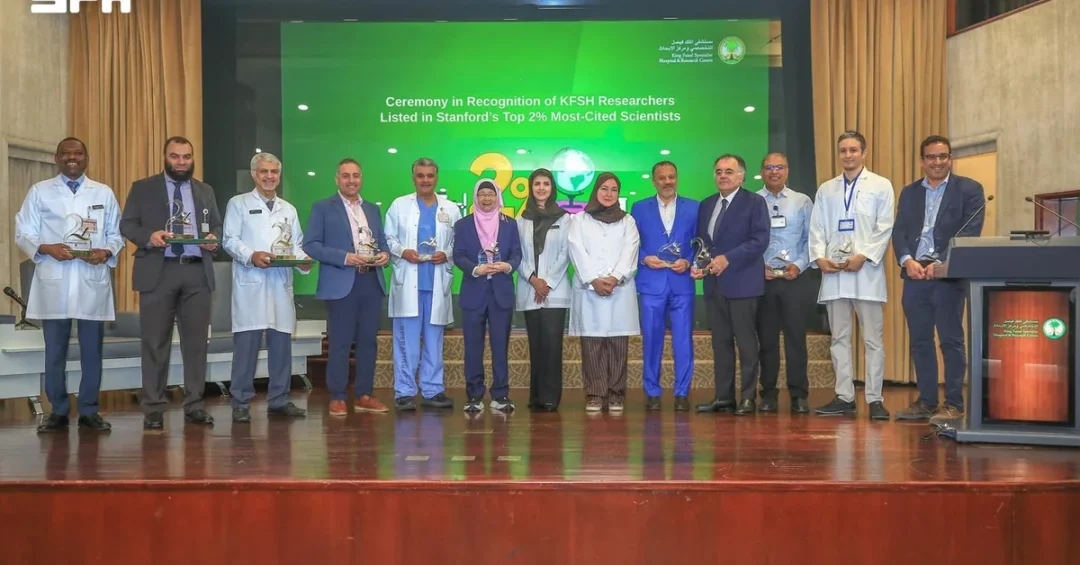
King Faisal Specialist Hospital and Research Centre (KFSH) honored 41 of its scientists and researchers on Monday for being named to Stanford University’s list of the world’s top 2% most-cited scientists, an increase of six researchers over last year and the hospital’s seventh consecutive year on the prestigious list. The recognition, announced via the Saudi Press Agency (SPA), underscores KFSH’s growing contributions to scientific research on the international stage and reflects the Kingdom’s broader ambitions in healthcare innovation and knowledge creation.
The Stanford list, compiled annually by researchers at Stanford University, uses a range of citation-based indicators to assess the impact of researchers’ work, both over the course of their careers and within a single year. These measures provide insight into the influence of their research and its contribution to advancing knowledge in their respective fields. For KFSH, the inclusion of 41 researchers represents a significant milestone, highlighting the hospital’s commitment to fostering a robust research environment that attracts and retains top talent. It also aligns with Saudi Arabia’s Vision 2030 goals of diversifying the economy, improving healthcare outcomes, and positioning the Kingdom as a global leader in science and innovation. As Saudi Arabia continues to invest in research and development, the achievements of institutions like KFSH serve as a testament to the nation’s progress and its potential to shape the future of medicine.
Context and Background
How did KFSH emerge as a powerhouse of scientific research in the Middle East? King Faisal Specialist Hospital and Research Centre, based in Riyadh, has a long-standing reputation for excellence in clinical care, research, and education. Established in 1975, it has grown into a leading academic medical center, with a mission to provide world-class healthcare and advance medical knowledge. Over the years, KFSH has invested heavily in research infrastructure, including state-of-the-art laboratories, clinical trials, and partnerships with international institutions. This sustained focus on research has enabled its scientists to publish in high-impact journals and contribute to groundbreaking discoveries in areas such as oncology, cardiovascular disease, genetics, and infectious diseases. The hospital’s seventh consecutive appearance on Stanford’s list is not an isolated success but the result of a deliberate strategy to integrate research into its core activities.
The Stanford list itself is a widely respected metric of scientific impact. It ranks scientists based on citations to their published work, using data from Scopus, a comprehensive abstract and citation database. The list includes both career-long impact and single-year impact, capturing researchers who are at the forefront of their fields. Being named to this list is a significant honor, as it places researchers among the top 2% globally. For KFSH, having 41 researchers on the list—up from 35 last year—demonstrates a deepening bench of scientific talent. It also reflects the hospital’s ability to produce research that is not only prolific but also highly influential, as evidenced by the citations it receives from peers around the world. This recognition comes amid a broader push by Saudi Arabia to enhance its research ecosystem, with increased funding for science and technology, and a growing emphasis on innovation as a driver of economic growth.
Moreover, KFSH’s achievements are part of a larger national trend. Saudi Arabia has been steadily climbing international rankings in research output and quality. The Kingdom’s Vision 2030 reform plan includes specific targets for research and development, aiming to increase spending to 2.5% of GDP and to boost the number of scientific publications. Institutions like KFSH are at the forefront of this effort, serving as models for other hospitals and universities. The recognition from Stanford thus not only celebrates individual researchers but also validates the national strategy of investing in human capital and knowledge creation. As the Kingdom seeks to diversify its economy away from oil, high-value sectors such as healthcare and biotechnology are seen as key pillars. KFSH’s success in research is a clear indication that Saudi Arabia is making strides in these areas, and it sets a benchmark for other institutions in the region to follow.
Key Details
What exactly does it mean for a scientist to be named among the world’s top 2%? The Stanford list is based on a composite indicator that includes citations, h-index, co-authorship-adjusted hm-index, and citations to papers in different authorship positions. It covers all scientific fields and is updated annually. For KFSH researchers, inclusion on this list signifies that their work is among the most cited in their respective disciplines, reflecting both the quantity and quality of their research output. The 41 honorees represent a diverse range of specialties, from cancer research to genomics and public health. Their achievements have not only advanced medical knowledge but also contributed to improving patient care at KFSH and beyond. The hospital’s research portfolio includes clinical trials, translational studies, and basic science, all aimed at addressing pressing health challenges in Saudi Arabia and globally.
In addition to the Stanford recognition, KFSH has garnered other notable accolades that underscore its research excellence. The hospital ranked first among healthcare institutions in Saudi Arabia in the 2025 Nature Index, which tracks research published in 145 leading journals across the natural and health sciences. The journals are selected by an independent panel of researchers and experts based on their scientific reputation and impact. This ranking further solidifies KFSH’s position as a leader in health research within the Kingdom. Furthermore, KFSH ranked first in the Middle East and Africa and 12th globally among the world’s top 250 academic medical centers for 2026, according to a ranking by a leading international organization. This places KFSH among the elite academic medical centers worldwide, alongside institutions like Mayo Clinic and Johns Hopkins. Such recognition is a testament to the hospital’s comprehensive approach to healthcare, which integrates cutting-edge research with clinical excellence.
Brand Finance also named KFSH the most valuable healthcare brand in Saudi Arabia and the Middle East in 2026, reflecting its strong reputation and trust among patients and stakeholders. Additionally, the hospital was included in Newsweek’s World’s Best Hospitals 2026 ranking and its World’s Best Smart Hospitals and World’s Best Specialized Hospitals rankings for 2027. These accolades highlight KFSH’s leadership in adopting advanced technologies, such as artificial intelligence and telemedicine, to enhance patient outcomes. The combination of research impact, brand value, and technological innovation paints a picture of an institution that is not resting on its laurels but continuously striving for improvement. For the international audience, these recognitions signal that Saudi Arabia is home to world-class healthcare and research capabilities, which can be a draw for medical tourism, international collaborations, and investment in the health sector.
International and Regional Impact
How does KFSH’s success resonate beyond Saudi Arabia’s borders? The recognition of its researchers on Stanford’s list enhances the Kingdom’s standing in the global scientific community. It positions Saudi Arabia as a rising star in research, particularly in the health sciences, and can attract international partnerships and collaborations. For instance, KFSH already collaborates with leading institutions such as Harvard University, Johns Hopkins University, and the University of Toronto. These partnerships facilitate the exchange of knowledge, joint research projects, and training opportunities for Saudi scientists. As more KFSH researchers gain international recognition, the hospital becomes an even more attractive partner for global research initiatives, which can lead to breakthroughs that benefit patients worldwide. Moreover, the presence of Saudi scientists on the Stanford list helps to counter stereotypes and showcases the Kingdom’s commitment to excellence and innovation.
On a regional level, KFSH’s achievements serve as an inspiration for other healthcare institutions in the Middle East and North Africa. The hospital’s ranking as first in the Middle East and Africa among academic medical centers sets a benchmark for others to aspire to. It also fosters a sense of pride and healthy competition within the region, encouraging investment in research and development. For Saudi Arabia, this aligns with its goal of being a leader in the Arab world and a bridge between East and West. The Kingdom has been hosting numerous international conferences and forums, such as the Future Investment Initiative (FII), which bring together global leaders in health, technology, and finance. KFSH’s researchers often participate in these events, sharing their findings and contributing to global dialogues on health challenges. Thus, the hospital’s success is not just a local achievement but a regional and international one, enhancing Saudi Arabia’s soft power and diplomatic reach.
Economic and Strategic Significance
What are the economic implications of KFSH’s research excellence? In an era where knowledge economies drive growth, research and innovation are critical for sustainable development. Saudi Arabia’s Vision 2030 aims to diversify the economy away from oil, and healthcare and biotechnology are identified as key sectors with high growth potential. KFSH’s research activities contribute to this by generating intellectual property, fostering startups, and attracting investment. For example, discoveries made at KFSH can lead to patents and commercial products, creating revenue streams and jobs. The hospital also plays a role in training the next generation of Saudi scientists and healthcare professionals, thereby building human capital. As the Kingdom seeks to increase its research and development spending, institutions like KFSH will be pivotal in translating investments into tangible outcomes. The recognition from Stanford and other rankings validates the effectiveness of this strategy and can help attract further funding from both public and private sources.
Strategically, KFSH’s achievements bolster Saudi Arabia’s position as a regional hub for healthcare and life sciences. The Kingdom has been investing in medical cities and specialized centers, such as the King Faisal Specialist Hospital, to reduce the need for citizens to travel abroad for advanced treatment. By offering world-class care and research, KFSH helps retain talent and patients within the country, while also attracting medical tourists from the region and beyond. This aligns with the Health Sector Transformation Program, part of Vision 2030, which aims to improve the quality and efficiency of healthcare services. Moreover, the hospital’s research on diseases prevalent in the region, such as diabetes, cardiovascular diseases, and genetic disorders, addresses specific local needs and can lead to tailored treatments. The economic benefits extend to the broader ecosystem, as collaborations between KFSH and private sector companies can spur innovation and commercialization. Overall, KFSH’s research excellence is a strategic asset for Saudi Arabia, contributing to both economic diversification and improved healthcare outcomes.
Vision 2030 Alignment
How does KFSH’s recognition align with Saudi Arabia’s Vision 2030? The Vision, launched in 2016 by Crown Prince Mohammed bin Salman, sets out a comprehensive plan to transform the Kingdom’s economy and society. Among its goals are to increase the contribution of the private sector, to improve government effectiveness, and to enhance the quality of life for citizens. In the healthcare sector, Vision 2030 aims to shift the focus from treatment to prevention, to improve access to care, and to foster innovation. KFSH’s research achievements directly support these objectives by advancing medical knowledge, developing new treatments, and training skilled professionals. The hospital’s success in international rankings also enhances the Kingdom’s reputation as a destination for high-quality healthcare and research, which can attract investment and talent. Furthermore, the emphasis on research and development is a key pillar of the Vision, as it seeks to build a knowledge-based economy. KFSH’s seven consecutive years on Stanford’s list demonstrate a sustained commitment to excellence that is essential for achieving these long-term goals.
Looking ahead, KFSH is poised to continue its trajectory of growth and innovation. The hospital has announced plans to expand its research facilities, including a new genomics center and a center for precision medicine. These initiatives will further enhance its capacity to conduct cutting-edge research and translate findings into clinical practice. Additionally, KFSH is investing in digital health technologies, such as artificial intelligence and big data analytics, to improve patient care and research efficiency. As Saudi Arabia hosts major global events, such as Expo 2030 in Riyadh, the world’s attention will be on the Kingdom’s achievements, and KFSH will be a shining example of its progress. The recognition of its researchers on Stanford’s list is not just an honor but a validation of the path Saudi Arabia has chosen—one of openness, innovation, and excellence. With continued support from the government and a clear strategic vision, KFSH is well-positioned to remain at the forefront of medical research, contributing to the health and well-being of people in Saudi Arabia and around the world.
20 Questions
Q1. What is the Stanford list of the world’s top 2% most-cited scientists?
A1. It is an annual ranking compiled by Stanford University that identifies scientists whose published work is most frequently cited by peers, using indicators like citations and h-index. It covers all fields and is widely respected as a measure of research impact.
Q2. How many KFSH researchers were honored this year?
A2. King Faisal Specialist Hospital and Research Centre honored 41 of its scientists and researchers for being named to Stanford’s list, an increase of six over last year’s total of 35.
Q3. How many consecutive years has KFSH been represented on the Stanford list?
A3. This marks the seventh consecutive year that KFSH researchers have been included on the Stanford list, demonstrating sustained excellence in research.
Q4. What other ranking did KFSH top in Saudi Arabia for healthcare institutions?
A4. KFSH ranked first among healthcare institutions in Saudi Arabia in the 2025 Nature Index, which tracks research published in 145 leading journals across natural and health sciences.
Q5. Where did KFSH rank in the Middle East and Africa among academic medical centers?
A5. KFSH ranked first in the Middle East and Africa and 12th globally among the world’s top 250 academic medical centers for 2026.
Q6. What brand recognition did KFSH receive from Brand Finance?
A6. Brand Finance named KFSH the most valuable healthcare brand in Saudi Arabia and the Middle East in 2026.
Q7. Which Newsweek rankings included KFSH for 2026 and 2027?
A7. KFSH was included in Newsweek’s World’s Best Hospitals 2026 ranking and its World’s Best Smart Hospitals and World’s Best Specialized Hospitals rankings for 2027.
Q8. What does the Nature Index measure?
A8. The Nature Index tracks research published in 145 leading journals across the natural and health sciences, selected by an independent panel based on scientific reputation and impact.
Q9. How does Stanford’s list assess researchers’ impact?
A9. It uses citation-based indicators to assess impact over a researcher’s career and within a single year, providing insight into the influence of their work.
Q10. What is the significance of KFSH’s increase from 35 to 41 researchers on the list?
A10. The increase reflects KFSH’s growing research capacity and its ability to produce highly cited scientists, reinforcing its position as a leading academic medical center.
Q11. How does KFSH’s research contribute to Saudi Arabia’s Vision 2030?
A11. KFSH’s research supports Vision 2030’s goals of economic diversification, healthcare improvement, and knowledge-based development by advancing medical science and training professionals.
Q12. What are some areas of research at KFSH?
A12. KFSH conducts research in oncology, cardiovascular disease, genetics, infectious diseases, and public health, among other fields, with a focus on translational and clinical studies.
Q13. Does KFSH collaborate with international institutions?
A13. Yes, KFSH collaborates with leading institutions such as Harvard University, Johns Hopkins University, and the University of Toronto, facilitating knowledge exchange and joint research.
Q14. What is the Health Sector Transformation Program?
A14. It is a Vision 2030 initiative aimed at improving the quality and efficiency of healthcare services in Saudi Arabia, with a focus on prevention, access, and innovation.
Q15. How does KFSH’s recognition benefit Saudi Arabia’s economy?
A15. It attracts investment, fosters innovation, and supports the growth of the healthcare and biotechnology sectors, contributing to economic diversification and job creation.
Q16. What is the significance of KFSH ranking 12th globally among academic medical centers?
A16. It places KFSH among the world’s elite academic medical centers, enhancing Saudi Arabia’s reputation as a hub for high-quality healthcare and research.
Q17. What is the Stanford list’s methodology?
A17. The list uses a composite indicator including citations, h-index, co-authorship-adjusted hm-index, and citations to papers in different authorship positions, based on Scopus data.
Q18. How does KFSH’s success impact medical tourism in Saudi Arabia?
A18. It enhances the Kingdom’s attractiveness as a destination for advanced medical care, drawing patients from the region and beyond, and supporting the growth of medical tourism.
Q19. What future plans does KFSH have for research expansion?
A19. KFSH plans to expand research facilities, including a genomics center and a precision medicine center, and invest in digital health technologies like AI and big data.
Q20. How does KFSH’s achievement reflect on Saudi Arabia’s global standing?
A20. It showcases the Kingdom’s commitment to excellence and innovation, enhancing its soft power and positioning it as a leader in science and healthcare on the world stage.
Reader Feedback
We value your thoughts. Please share your feedback on this article.
Your feedback helps us improve our coverage.
Related articles
 KFSH&RC Treats 288 Patients with CAR-T Therapy
 Qassim Health Cluster Introduces Robotic Knee Replacement Surgery
 Jazan Health Cluster Sets Guinness World Record for Early Diabetes Detection
 Al-Shifa Hospital in Unaizah Accredited as Age-Friendly
 KFSH Doubles Robotic Surgeries in Three Years, Expands Applications
 Riyadh Season Hosts Zahra Walk 2026 at Boulevard City