


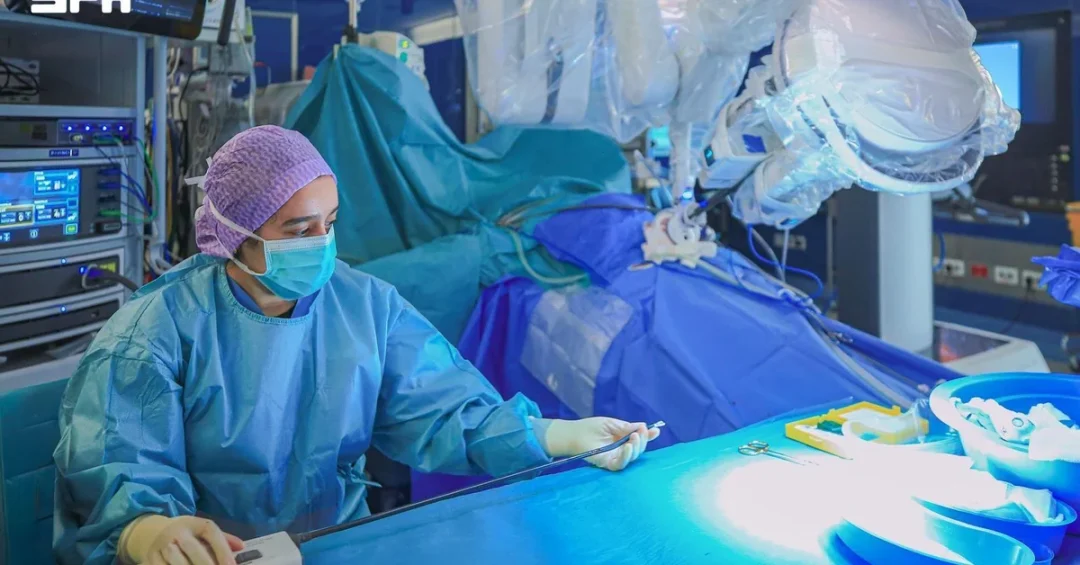
King Faisal Specialist Hospital and Research Centre (KFSH) in Riyadh has achieved a global medical milestone by performing the world’s first single-port robotic liver transplant on a six-year-old child. The groundbreaking procedure, conducted using advanced robotic technology, marks a significant advancement in pediatric organ transplantation and reinforces Saudi Arabia’s leadership in medical innovation.
Context and Background
The young patient suffered from Wolcott-Rallison syndrome, a rare genetic disorder causing early-onset diabetes and recurrent liver failure. His father donated part of his liver, enabling the life-saving transplant. The single-port robotic system allowed surgeons to perform the complex procedure through one small incision, minimizing surgical impact and accelerating recovery.
Key Details
The surgical team, led by Prof. Dieter Broering, Executive Director of the Organ Transplant Center of Excellence at KFSH, emphasized the importance of meticulous planning and expertise in achieving this milestone. The child is recovering well, with the liver graft functioning optimally and no complications observed.
Implications and Impact
This achievement builds on KFSH’s pioneering work in robotic liver transplants, which began in 2023. The hospital has since performed 165 such procedures, supported by over 1,700 robotic living-donor liver resections. This success highlights Saudi Arabia’s growing reputation as a hub for cutting-edge medical research and healthcare excellence.
Vision 2030 Alignment
This breakthrough aligns with Saudi Arabia’s Vision 2030 goals of advancing healthcare innovation and positioning the Kingdom as a global leader in medical technology. KFSH’s achievements contribute to the transformation of Saudi Arabia’s healthcare sector, ensuring world-class treatment options for patients locally and internationally.
20 Questions
Q1. What is the significance of this liver transplant?
A1. It is the world’s first single-port robotic liver transplant on a child, showcasing Saudi Arabia’s advancements in minimally invasive surgery.
Q2. Who performed the transplant?
A2. The procedure was led by Prof. Dieter Broering and his team at KFSH’s Organ Transplant Center of Excellence.
Q3. What condition did the child have?
A3. The child had Wolcott-Rallison syndrome, a rare genetic disorder causing liver failure and diabetes.
Q4. How does single-port robotic surgery differ from traditional methods?
A4. It uses one small incision instead of multiple ports, reducing surgical impact and recovery time.
Q5. Who donated the liver for the transplant?
A5. The child’s father donated the left lobe of his liver.
Q6. What are the benefits of robotic liver transplants?
A6. They offer greater precision, less pain, shorter hospital stays, and faster recovery.
Q7. How many robotic liver transplants has KFSH performed?
A7. KFSH has performed 165 robotic liver transplants since 2023.
Q8. What is KFSH’s global ranking in healthcare?
A8. KFSH ranks 12th globally among the top 250 academic medical centers.
Q9. How does this achievement align with Vision 2030?
A9. It supports Vision 2030’s goals of healthcare innovation and global medical leadership.
Q10. What awards has KFSH received?
A10. KFSH was named the most valuable healthcare brand in the Middle East by Brand Finance.
Q11. What is Wolcott-Rallison syndrome?
A11. A rare genetic disorder causing liver failure and diabetes in early childhood.
Q12. How does this transplant impact pediatric surgery?
A12. It sets a new standard for minimally invasive, high-precision pediatric organ transplants.
Q13. What role did technology play in this procedure?
A13. Advanced robotic systems enabled precise surgery through a single small incision.
Q14. How is the child recovering?
A14. The child is recovering well, with the liver graft functioning optimally.
Q15. What is the future of robotic surgery at KFSH?
A15. KFSH aims to expand robotic surgery for complex transplants, improving patient outcomes.
Q16. How does this achievement benefit Saudi Arabia?
A16. It enhances the Kingdom’s reputation as a leader in medical innovation and healthcare.
Q17. What other recognitions has KFSH received?
A17. KFSH was listed among Newsweek’s World’s Best Hospitals and Smart Hospitals.
Q18. Why is patient selection critical for such procedures?
A18. Careful selection ensures the best outcomes and minimizes risks for patients and donors.
Q19. How does this transplant ease the family’s burden?
A19. It offers the child a chance at a stable life, reducing medical and emotional stress.
Q20. What is the long-term impact of this milestone?
A20. It paves the way for more robotic transplants, improving global healthcare standards.
Reader Feedback
We value your thoughts. Please share your feedback on this article.
Your feedback helps us improve our coverage.