


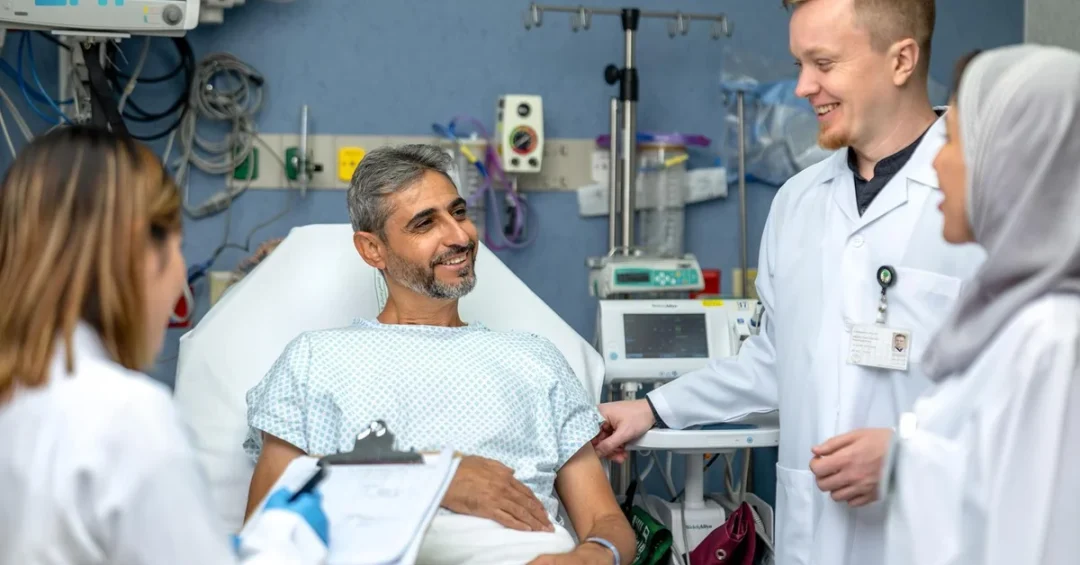
The King Faisal Specialist Hospital and Research Centre (KFSHRC) has reinforced Saudi Arabia’s emergence as a global healthcare hub by providing specialized medical care to patients from 17 countries during 2024, with 77 percent of those international patients arriving from other Gulf Cooperation Council (GCC) nations. The announcement, released through the Saudi Press Agency (SPA), underscores the institution’s role in positioning the Kingdom as a destination for advanced medical treatment rather than solely a source of outbound medical tourism. Is Saudi Arabia ready to compete with the world’s most established medical destinations? The hospital’s growing international patient base suggests the answer is already taking shape.
The Riyadh-based KFSHRC described itself as a “premier destination” for international patients seeking specialized care, citing its medical innovations, cutting-edge technologies, and deep expertise in rare medical specialties. The hospital’s International Patient Care Center manages a comprehensive journey for each visitor, beginning with initial communication and medical diagnosis assessment, continuing through travel and accommodation arrangements in Riyadh, and concluding with post-treatment evaluations and follow-up consultations. What does it take to build a healthcare system that attracts patients from across the region and beyond? The KFSHRC model offers a compelling case study in coordinated, patient-centered international care.
Context and Background
For decades, patients from the Gulf region and wider Middle East frequently traveled to Europe, North America, or Asia for complex medical procedures, particularly in oncology, organ transplantation, and pediatric cardiac surgery. This pattern of outbound medical travel represented a significant economic outflow and, in many cases, delayed care for patients who faced logistical, linguistic, and cultural barriers abroad. How has Saudi Arabia begun to reverse this long-standing trend? The answer lies in sustained investment in specialized medical infrastructure, international accreditation, and the recruitment of world-class clinical talent.
The KFSHRC, established as a specialist institution under the Saudi government, has evolved into a multi-center academic medical complex that combines clinical care, research, and education. Its Centers of Excellence span heart care, organ transplantation, oncology, neuroscience, and genomic medicine, each designed to deliver outcomes comparable to leading international hospitals. The hospital’s participation as a Platinum Sponsor at the Global Health Exhibition in Riyadh, which commenced on October 21, 2024, provided a platform to showcase the International Patient Care Center’s end-to-end service model to a global audience of healthcare leaders, investors, and policymakers.
The broader context is one of rapid transformation in Saudi Arabia’s health sector, guided by the Health Sector Transformation Program under Vision 2030. This program aims to improve quality, accessibility, and efficiency while fostering medical tourism as a new economic pillar. The KFSHRC’s ability to attract patients from 17 countries is not an isolated achievement but a signal that the Kingdom’s healthcare ecosystem is maturing into a regional referral hub. What does this mean for patients who might otherwise have traveled thousands of miles for treatment? It means access to advanced care closer to home, delivered within a familiar cultural and linguistic environment.
Key Details of KFSHRC’s International Patient Services
The data released by KFSHRC reveals a clear concentration of demand across several Centers of Excellence. The Oncology Center cares for 37 percent of the hospital’s international patients, offering novel treatments such as CAR-T cell therapy, advanced radiation therapy, and pioneering 3D printing technologies that enhance the patient experience and alleviate radiation therapy side effects. These are not incremental improvements but frontier-level interventions that place KFSHRC among a small group of global institutions capable of delivering them at scale.
The Neuroscience Center, described as the region’s largest, treats approximately 30 percent of KFSHRC’s international patients. It provides specialized procedures including epilepsy surgeries, tumor removal, and brain stimulation therapies. The Organ Transplant Center, which pioneered significant innovations in transplantation practices and is known for achieving some of the highest survival rates globally, served 20 percent of the hospital’s international patients last year. How does a single institution sustain such breadth of high-complexity care across multiple specialties? The answer lies in its Centers of Excellence model, which concentrates expertise, technology, and research in dedicated units rather than dispersing resources thinly across general services.
The Heart Center is globally renowned for pediatric cardiac surgeries and advanced robotic surgeries, attracting patients from across the GCC and beyond. The Genomic Medicine Center offers advanced genetic testing and tailored consultations to international patients, addressing rare and undiagnosed conditions that often require sophisticated molecular analysis. Together, these centers form a comprehensive destination for patients whose needs cannot be met locally. The International Patient Care Center coordinates every stage of the visit, from the first telemedicine consultation to post-treatment follow-up, ensuring continuity of care that international patients frequently cite as a decisive factor in choosing KFSHRC.
International and Regional Impact
The fact that 77 percent of KFSHRC’s international patients come from GCC countries highlights the hospital’s role as a regional referral center. Patients from neighboring Gulf states are choosing Riyadh over distant alternatives, a shift that reflects growing confidence in Saudi medical expertise, shorter travel times, and cultural alignment. What are the implications for regional healthcare cooperation? Increased patient mobility within the GCC can foster shared standards, clinical collaboration, and the exchange of medical knowledge, ultimately raising the quality of care across the entire region.
Beyond the Gulf, the remaining 23 percent of international patients originate from a diverse set of countries, indicating that KFSHRC’s reputation extends beyond its immediate neighborhood. This broader reach matters for Saudi Arabia’s soft power and diplomatic engagement, as healthcare becomes a channel for building people-to-people ties and demonstrating the Kingdom’s capacity for advanced service delivery. The Global Health Exhibition in Riyadh, where KFSHRC is a Platinum Sponsor, serves as a strategic venue for presenting these capabilities to an international audience, including hospital administrators, health technology companies, and government delegations seeking partnerships.
The hospital’s transition from a provider of outbound medical tourism to an attractor of international patients also carries symbolic weight. It signals that Saudi Arabia is not only investing in healthcare for its own citizens but is also creating exportable medical services that generate revenue, enhance international standing, and support the diversification of the national economy. How quickly can this model scale? The answer depends on continued investment in capacity, workforce development, and international marketing, but the foundation is clearly in place.
Economic and Strategic Significance
Medical tourism is a multi-billion-dollar global industry, and Saudi Arabia’s ambition to capture a share of it aligns directly with Vision 2030’s economic diversification goals. Every international patient treated at KFSHRC contributes to foreign exchange earnings, supports employment for Saudi healthcare professionals, and stimulates ancillary sectors such as hospitality, translation services, and medical travel logistics. The hospital’s target of attracting 5 percent of global patients seeking treatment abroad is ambitious but grounded in measurable progress, as evidenced by the 17-country footprint achieved in 2024.
Strategically, a strong domestic healthcare sector reduces the need for Saudi citizens to seek care overseas, retaining spending within the Kingdom and improving patient convenience. It also strengthens national resilience by ensuring that complex care is available locally during global health emergencies or travel disruptions. The KFSHRC’s emphasis on rare specialties and advanced technologies positions it at the high-value end of the medical tourism market, where competition is based on outcomes and innovation rather than price alone. What makes this positioning sustainable? Continuous investment in research, clinical trials, and partnerships with leading global institutions ensures that KFSHRC remains at the forefront of medical science.
Furthermore, the hospital’s success reinforces Saudi Arabia’s broader strategy to become a hub for health technology, pharmaceuticals, and clinical research. The presence of advanced genomic medicine and CAR-T cell therapy capabilities creates opportunities for collaboration with biotechnology firms and research organizations, potentially leading to local manufacturing and innovation. The economic ripple effects extend beyond direct patient care, contributing to a knowledge-based economy that Vision 2030 seeks to build.
Vision 2030 Alignment
The KFSHRC’s achievement of treating patients from 17 countries is a tangible expression of Vision 2030’s Health Sector Transformation Program, which aims to elevate the quality and competitiveness of Saudi healthcare. By attracting international patients, the hospital demonstrates that Saudi Arabia can compete globally in specialized medicine, a key objective of the national strategy to diversify revenue and enhance the Kingdom’s international reputation. The hospital’s Centers of Excellence serve as pillars of this transformation, combining clinical excellence with research and education.
Looking ahead, the KFSHRC is positioned to expand its international reach, deepen partnerships across the GCC and beyond, and continue innovating in fields such as genomic medicine and robotic surgery. The hospital’s role in the Global Health Exhibition reflects its commitment to sharing knowledge and shaping the future of healthcare in the region. As Saudi Arabia advances toward its Vision 2030 goals, institutions like KFSHRC will remain central to the Kingdom’s emergence as a global leader in health and wellness, offering world-class care to patients from every corner of the world.
20 Questions
Q1. How many countries were represented among KFSHRC’s international patients in 2024?
A1. KFSHRC treated patients from 17 countries in 2024, according to the Saudi Press Agency. This reflects the hospital’s growing global reach and its ability to attract patients seeking specialized care from beyond Saudi Arabia’s borders.
Q2. What percentage of KFSHRC’s international patients came from GCC countries?
A2. Approximately 77 percent of KFSHRC’s international patients in 2024 came from other Gulf Cooperation Council countries. This highlights the hospital’s role as a leading regional referral center for advanced medical care.
Q3. Which center treated the largest share of KFSHRC’s international patients?
A3. The Oncology Center cared for 37 percent of KFSHRC’s international patients, making it the largest recipient of global patients. It offers advanced treatments such as CAR-T cell therapy and 3D printing technologies.
Q4. What innovative technologies does the Oncology Center use for international patients?
A4. The Oncology Center employs CAR-T cell therapy, advanced radiation therapy, and pioneering 3D printing technologies. These innovations enhance patient experience and help alleviate side effects associated with radiation therapy.
Q5. How does the Neuroscience Center serve international patients?
A5. The Neuroscience Center, the region’s largest, treats about 30 percent of KFSHRC’s international patients. It provides specialized procedures including epilepsy surgeries, tumor removal, and brain stimulation therapies.
Q6. What is the role of the Organ Transplant Center in KFSHRC’s international care?
A6. The Organ Transplant Center pioneered innovations in transplantation and is known for high survival rates. It served 20 percent of KFSHRC’s international patients last year, offering life-saving procedures.
Q7. What services does the Heart Center provide to international patients?
A7. The Heart Center is globally renowned for pediatric cardiac surgeries and advanced robotic surgeries. It attracts patients from across the GCC and beyond seeking complex cardiac interventions.
Q8. How does the Genomic Medicine Center support international patients?
A8. The Genomic Medicine Center offers advanced genetic testing and tailored consultations. It addresses rare and undiagnosed conditions requiring sophisticated molecular analysis for international patients.
Q9. What is the International Patient Care Center’s process for treating foreign patients?
A9. The center manages initial communication, assesses medical diagnosis, arranges travel and accommodation in Riyadh, oversees treatment, and concludes with post-treatment evaluations and follow-up consultations. This ensures comprehensive care for international visitors.
Q10. Why is the Global Health Exhibition important for KFSHRC?
A10. KFSHRC is a Platinum Sponsor at the Global Health Exhibition in Riyadh, showcasing its International Patient Care Center’s journey. The event connects the hospital with global healthcare leaders and partners.
Q11. What is KFSHRC’s goal regarding global medical tourism?
A11. KFSHRC aims to attract 5 percent of global patients seeking treatment abroad. This goal supports Saudi Arabia’s transition from outbound medical tourism to becoming a premier destination for international care.
Q12. How does KFSHRC’s work align with Vision 2030?
A12. KFSHRC’s international patient services align with Vision 2030’s Health Sector Transformation Program, which seeks to elevate healthcare quality, diversify revenue, and enhance Saudi Arabia’s global standing in specialized medicine.
Q13. What makes KFSHRC a premier destination for international patients?
A13. KFSHRC offers medical innovations, cutting-edge technologies, and expertise in rare specialties through its Centers of Excellence. These attributes make it attractive for patients seeking precise diagnoses and innovative treatments.
Q14. How does KFSHRC’s care model benefit patients from GCC countries?
A14. GCC patients benefit from shorter travel times, cultural and linguistic alignment, and access to advanced care closer to home. This reduces the need for long-distance travel to Europe or North America.
Q15. What economic benefits does medical tourism bring to Saudi Arabia?
A15. Medical tourism generates foreign exchange earnings, supports healthcare employment, and stimulates sectors like hospitality and medical travel logistics. It contributes to Vision 2030’s economic diversification goals.
Q16. How does KFSHRC ensure continuity of care for international patients?
A16. The International Patient Care Center coordinates every stage, from initial telemedicine consultation to post-treatment follow-up. This ensures seamless care and patient satisfaction throughout the treatment journey.
Q17. What rare specialties are available at KFSHRC for international patients?
A17. KFSHRC offers rare specialties including pediatric cardiac surgery, organ transplantation, epilepsy surgery, brain stimulation, CAR-T cell therapy, and genomic medicine. These are delivered through dedicated Centers of Excellence.
Q18. How does KFSHRC’s success impact Saudi Arabia’s global reputation?
A18. Treating patients from 17 countries enhances Saudi Arabia’s reputation as a global healthcare hub. It demonstrates the Kingdom’s capacity for advanced medical service delivery and soft power diplomacy.
Q19. What role does research play in KFSHRC’s international patient care?
A19. Research underpins KFSHRC’s clinical innovations, enabling treatments like CAR-T cell therapy and 3D printing for radiation therapy. It ensures the hospital remains at the forefront of medical science.
Q20. What future plans does KFSHRC have for expanding international services?
A20. KFSHRC aims to expand its international reach, deepen GCC partnerships, and continue innovating in genomic medicine and robotic surgery. It remains central to Saudi Arabia’s Vision 2030 healthcare goals.
Reader Feedback
We value your thoughts. Please share your feedback on this article.
Your feedback helps us improve our coverage.