


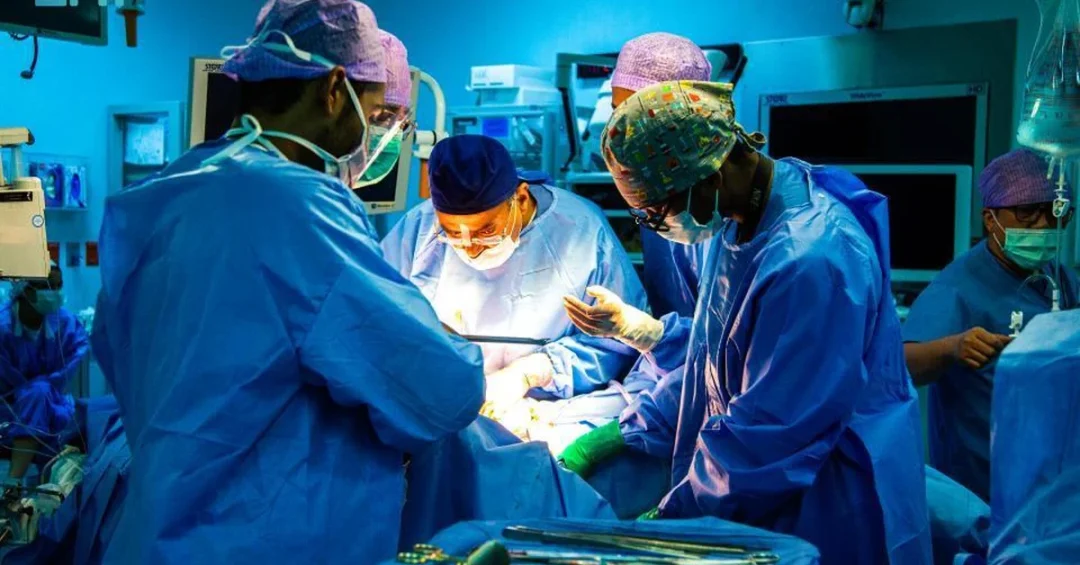
King Faisal Specialist Hospital & Research Centre (KFSHRC) in Riyadh has successfully performed a groundbreaking procedure to reconstruct the lower limb of an 8-year-old child after removing a malignant bone tumor, preventing amputation and restoring normal walking ability. This innovative medical achievement marks a significant advancement in pediatric orthopedic oncology in the Middle East, offering new hope for children with similar conditions.
Context and Background
Pediatric bone cancer, particularly malignant bone tumors, often poses significant treatment challenges, with amputation being a common outcome. However, KFSHRC’s multidisciplinary team of oncology, orthopedic, and rehabilitation specialists has pioneered a novel approach that combines advanced surgical techniques and cutting-edge technology to preserve limb functionality and ensure natural growth.
Key Details
The procedure involved the removal of the malignant tumor followed by a complex reconstruction of the child’s lower limb. The medical team employed advanced 3D imaging and precise surgical planning to minimize complications and optimize recovery. Techniques from sports medicine and ligament surgery were integrated to ensure balanced bone development and limb stability, allowing the child to regain mobility without relying on prosthetics.
Implications and Impact
This breakthrough has far-reaching implications for pediatric oncology, providing an alternative to amputation for children with bone cancer. It also highlights Saudi Arabia’s growing leadership in medical innovation and specialized care. The success of this procedure sets a precedent for similar cases globally, encouraging international collaboration in advancing pediatric orthopedic oncology.
Vision 2030 Alignment
This achievement aligns with Saudi Arabia’s Vision 2030 goals of fostering innovation, improving healthcare quality, and positioning the Kingdom as a global leader in medical research and treatment. KFSHRC’s commitment to pioneering medical solutions underscores Saudi Arabia’s dedication to enhancing the well-being of its citizens and contributing to global healthcare advancements.
20 Questions
Q1. What is the significance of KFSHRC’s recent medical achievement?
A1. KFSHRC successfully reconstructed a child’s lower limb after tumor removal, preventing amputation and restoring walking ability, marking a major advancement in pediatric orthopedic oncology.
Q2. How old was the patient who underwent this procedure?
A2. The patient was an 8-year-old child.
Q3. What condition did the child have?
A3. The child had a malignant bone tumor in the lower limb.
Q4. Why was this procedure considered groundbreaking?
A4. It prevented amputation and restored limb functionality using advanced surgical techniques and technology.
Q5. What techniques were used in the procedure?
A5. The team used 3D imaging, precise surgical planning, and integrated sports medicine and ligament surgery techniques.
Q6. What role did 3D imaging play in the procedure?
A6. 3D imaging enabled precise surgical planning, minimizing complications and optimizing recovery.
Q7. How does this procedure benefit pediatric oncology?
A7. It provides an alternative to amputation, preserving limb functionality and improving quality of life for children.
Q8. What is the significance of integrating sports medicine techniques?
A8. These techniques ensured balanced bone development and limb stability, allowing natural growth and mobility recovery.
Q9. What are the long-term benefits for the patient?
A9. The patient can regain normal walking ability without relying on prosthetics.
Q10. How does this achievement impact Saudi Arabia’s healthcare system?
A10. It reinforces Saudi Arabia’s leadership in medical innovation and specialized care.
Q11. What is KFSHRC’s role in this achievement?
A11. KFSHRC led the multidisciplinary team that performed the groundbreaking procedure.
Q12. How does this procedure align with Vision 2030?
A12. It supports Vision 2030 goals of fostering innovation, improving healthcare, and positioning Saudi Arabia as a global medical leader.
Q13. What is the international significance of this achievement?
A13. It sets a precedent for pediatric orthopedic oncology, encouraging global collaboration in medical advancements.
Q14. What are the next steps for KFSHRC following this success?
A14. KFSHRC aims to expand this technique to similar cases and collaborate with international medical centers.
Q15. How does this procedure enhance the patient’s quality of life?
A15. It prevents amputation, restores mobility, and ensures natural limb growth.
Q16. What challenges does pediatric bone cancer present?
A16. It often requires amputation, significantly impacting a child’s mobility and quality of life.
Q17. How does this achievement contribute to medical research?
A17. It introduces innovative techniques that can be applied to other complex pediatric cases.
Q18. What is the role of rehabilitation in this procedure?
A18. Rehabilitation specialists ensured the patient’s gradual recovery and restored mobility.
Q19. How does this procedure reflect Saudi Arabia’s healthcare priorities?
A19. It highlights Saudi Arabia’s commitment to advancing medical innovation and improving patient outcomes.
Q20. What message does this achievement send to the global medical community?
A20. It demonstrates Saudi Arabia’s capability to lead in complex medical procedures and contribute to global healthcare advancements.
Reader Feedback
We value your thoughts. Please share your feedback on this article.
Your feedback helps us improve our coverage.