


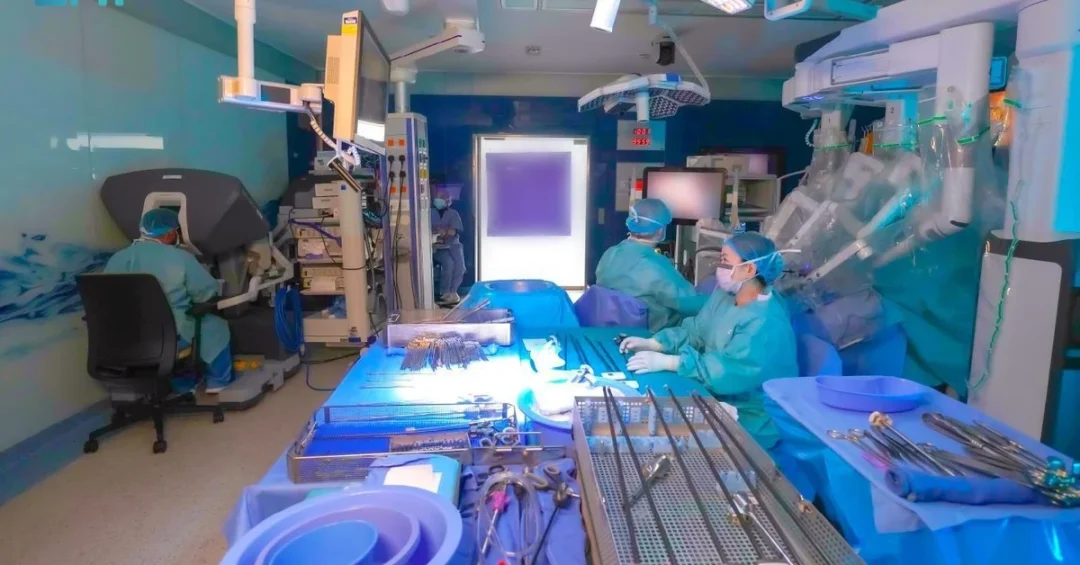
King Faisal Specialist Hospital and Research Centre (KFSHRC) in Riyadh has successfully performed the first robotic Ivor Lewis esophagectomy in the Middle East, marking a significant milestone in the region’s surgical capabilities. The procedure, announced by the Saudi Press Agency on July 28, 2025, was conducted on a 46-year-old male patient diagnosed with gastroesophageal junction adenocarcinoma, a cancer located at the junction of the esophagus and stomach.
Context and Background
The Ivor Lewis esophagectomy is a complex, two-phase surgery used to remove cancerous parts of the esophagus and reconstruct the digestive tract. Traditionally performed as open surgery, it involves significant recovery time and risks. KFSHRC’s adoption of robotic technology for this procedure underscores Saudi Arabia’s commitment to advancing healthcare through innovation, aligning with the Kingdom’s Vision 2030 goals of improving quality of life and healthcare outcomes.
Key Details
The surgery was led by Dr. Khalid Aldaghri, a consultant in bariatric, upper gastrointestinal, and robotic surgery at KFSHRC. The robotic system provided three-dimensional high-definition visualization, stable instrument control, and superior access to confined anatomical spaces, enabling precise dissection and preservation of surrounding structures. According to the KFSHRC press release, the patient regained mobility within two days, began oral intake by day five, and was discharged within 10 days—a testament to the reduced pain, fewer complications, and accelerated recovery associated with robotic surgery.
The procedure involved two phases: the abdominal phase, where the stomach was mobilized and a gastric conduit was created, and the thoracic phase, where the diseased esophagus was resected and the conduit was robotically connected within the chest. This precision minimized the need for large incisions, enhancing safety and improving outcomes in one of the most challenging cancer surgeries.
Implications and Impact
The success of this procedure opens the door to broader applications of robotic surgery at KFSHRC, enabling more patients to benefit from advanced surgical techniques. It reinforces the institution’s commitment to clinical innovation, safety, and effective alternatives to traditional surgical approaches. The multidisciplinary collaboration among surgical, anesthesia, nursing, and technical teams was pivotal, reflecting KFSHRC’s model of care that prioritizes patient outcomes and clinical efficiency. This milestone positions Saudi Arabia as a regional leader in robotic surgery, with potential to attract medical tourism and foster international partnerships in healthcare technology.
Vision 2030 Alignment
This achievement directly supports Saudi Arabia’s Vision 2030, which emphasizes the development of a world-class healthcare system and the enhancement of citizens’ quality of life. By integrating cutting-edge technology and expertise, KFSHRC exemplifies the Kingdom’s dedication to medical excellence. As KFSHRC continues to rank among the top academic medical centers globally—first in the Middle East and Africa, and 15th worldwide in 2025—it serves as a beacon of innovation, contributing to the realization of Vision 2030’s goals of a thriving, healthy society and a diversified, knowledge-based economy.
20 Questions
Q1. What is an Ivor Lewis esophagectomy?
A1. An Ivor Lewis esophagectomy is a complex surgical procedure to remove part of the esophagus, typically for cancer, involving two phases: abdominal surgery to prepare the stomach, and chest surgery to remove the esophagus and reconnect the stomach.
Q2. Why is the robotic Ivor Lewis esophagectomy significant?
A2. This is the first such procedure performed in the Middle East, showcasing advanced robotic surgery capabilities that reduce invasiveness, pain, and recovery time, while improving surgical precision and patient outcomes.
Q3. Who performed the surgery?
A3. The surgery was performed by Dr. Khalid Aldaghri, a consultant in bariatric, upper gastrointestinal, and robotic surgery at King Faisal Specialist Hospital and Research Centre (KFSHRC) in Riyadh.
Q4. What was the patient’s condition?
A4. The 46-year-old male patient was diagnosed with gastroesophageal junction adenocarcinoma, a type of cancer located at the junction where the esophagus meets the stomach.
Q5. What are the benefits of robotic surgery compared to traditional surgery?
A5. Robotic surgery offers three-dimensional high-definition visualization, stable instrument control, and superior access to confined areas, leading to more precise dissection, reduced blood loss, less pain, and faster recovery.
Q6. How long did it take for the patient to recover?
A6. The patient regained mobility within two days, began oral intake by day five, and was discharged within 10 days, which is significantly faster than recovery from conventional open surgery.
Q7. What does the Ivor Lewis technique involve?
A7. The Ivor Lewis technique involves two phases: the abdominal phase for stomach mobilization and gastric conduit creation, and the thoracic phase for esophageal resection and conduit connection within the chest.
Q8. What is gastroesophageal junction adenocarcinoma?
A8. It is a type of cancer that arises at the junction of the esophagus and stomach, often linked to chronic acid reflux and Barrett’s esophagus.
Q9. How did robotic technology enhance the surgery?
A9. Robotic technology provided enhanced dexterity, tremor filtration, and high-definition 3D visualization, enabling surgeons to perform precise maneuvers in difficult-to-reach areas with minimal collateral damage.
Q10. What role did the multidisciplinary team play?
A10. Close collaboration among surgical, anesthesia, nursing, and technical teams at every stage, from planning to recovery, was crucial to the procedure’s success, exemplifying KFSHRC’s integrated care model.
Q11. What is KFSHRC’s ranking?
A11. KFSHRC is ranked first in the Middle East and Africa, and 15th globally, among the world’s top 250 Academic Medical Centers for 2025.
Q12. What recognitions has KFSHRC received?
A12. KFSHRC was named the most valuable healthcare brand in the Kingdom and the Middle East by Brand Finance in 2024 and included in Newsweek’s World’s Best Smart Hospitals for 2025.
Q13. How does this procedure align with Vision 2030?
A13. It supports Vision 2030’s healthcare goals by advancing medical technology, improving patient outcomes, and positioning Saudi Arabia as a hub for medical excellence and innovation.
Q14. What is the significance of performing the first such surgery in the region?
A14. It establishes Saudi Arabia as a leader in robotic surgery in the Middle East, potentially attracting medical tourists and international collaboration.
Q15. Are there any risks associated with robotic esophagectomy?
A15. As with any major surgery, risks include bleeding, infection, and anesthesia-related complications, but robotic assistance reduces risks of nerve and vessel damage due to enhanced precision.
Q16. How does this procedure impact the future of cancer treatment in Saudi Arabia?
A16. It opens doors for broader robotic applications, offering patients less invasive options for complex cancers, improving survival rates and quality of life.
Q17. What training did the surgeons undergo?
A17. Dr. Aldaghri’s expertise in robotic surgery, gained through specialized training and experience, was critical; KFSHRC likely provides ongoing education to stay at the forefront.
Q18. What is the cost difference between robotic and conventional surgery?
A18. Robotic surgery may have higher upfront costs due to technology, but reduced complications, shorter hospital stays, and faster recovery can lower overall healthcare costs over time.
Q19. Can this technique be applied to other types of cancer?
A19. Yes, robotic surgery is adaptable for various cancers, including gastric, colorectal, and urological, potentially expanding its use in the future.
Q20. Where can patients access robotic surgery in Saudi Arabia?
A20. KFSHRC in Riyadh offers this advanced procedure, with plans to expand robotic capabilities across other Saudi hospitals, increasing patient access nationwide.
Reader Feedback
We value your thoughts. Please share your feedback on this article.
Your feedback helps us improve our coverage.