


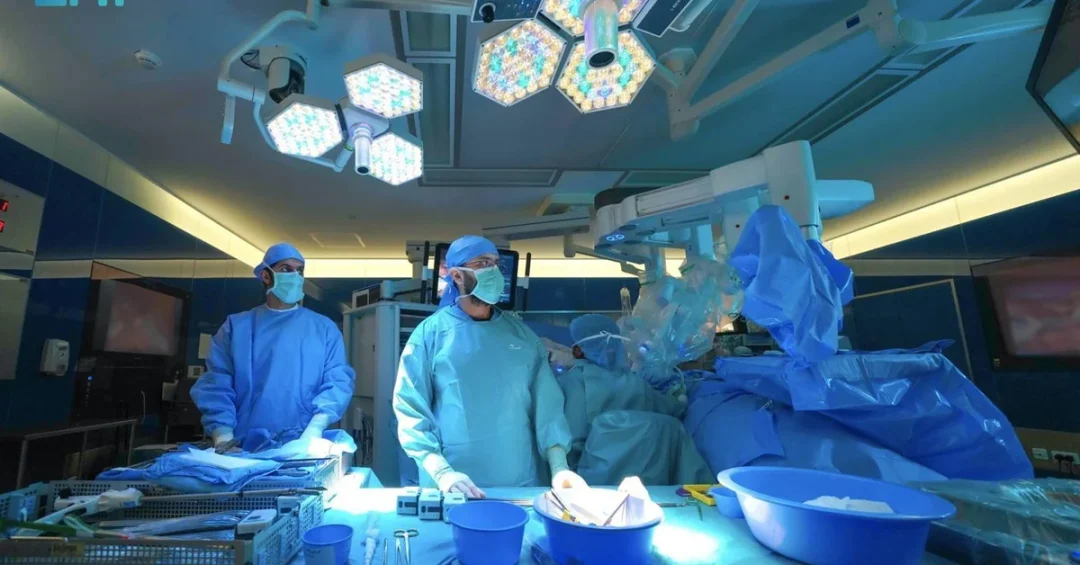
King Faisal Specialist Hospital & Research Centre (KFSHRC) has performed the region’s first robotic pancreas transplantation, ending a young man’s years-long dependence on insulin and marking another milestone in Saudi Arabia’s emergence as a global hub for healthcare innovation. The procedure, announced by KFSHRC in a press release issued on December 30, 2024, and carried by the Saudi Press Agency (SPA), offered a definitive solution for a patient whose type 1 diabetes had produced severe, treatment-resistant complications. The successful operation represents a significant advance for transplant medicine across the Middle East and reinforces the Kingdom’s growing reputation for pioneering robotic surgical techniques.
For millions of people living with type 1 diabetes worldwide, the news carries particular weight. The condition requires lifelong management, and for patients who develop complex secondary complications, conventional therapies can eventually prove insufficient. By combining robotic precision with organ transplantation, KFSHRC has demonstrated that even deeply entrenched disease pathways can be interrupted — and that patients once facing a future defined by insulin dependency may now have another path forward. Could this procedure signal a new era in how the region treats one of its most persistent chronic diseases?
Context and Background
Type 1 diabetes is an autoimmune condition in which the body’s immune system attacks the insulin-producing cells of the pancreas. Patients depend on exogenous insulin to regulate blood glucose, and while modern insulin therapy has improved dramatically, it does not replicate the fine-tuned hormonal control of a healthy pancreas. Over years or decades, poorly controlled blood sugar can damage the kidneys, eyes, nerves, and cardiovascular system. For a subset of patients, these complications become severe enough that standard treatments — including insulin pumps and intensive monitoring — no longer deliver adequate control. That was precisely the situation facing the young patient treated at KFSHRC.
According to the hospital’s press release, the patient had lived with type 1 diabetes for many years, accompanied by serious complications. Among the most grave was kidney failure, which had already required a kidney transplant performed at KFSHRC. That transplant succeeded, but the underlying diabetic condition continued to pose challenges, and its complex complications proved unresponsive to conventional treatments. In such cases, pancreas transplantation becomes the most viable option to halt the progression of the disease and substantially improve quality of life. The decision to proceed reflected both the severity of the patient’s condition and the hospital’s confidence in its robotic surgical platform.
The procedure itself was carried out using robotic technologies, with the pancreas transplanted into the recipient without direct human intervention at the operating table. Robotic systems allow surgeons to achieve unparalleled precision, minimize surgical risks, and reduce recovery periods — advantages that are especially consequential in complex transplant operations involving multiple organ systems. Why does this level of precision matter so much in transplant surgery? Because in procedures where millimetre-level accuracy determines outcomes, robotic assistance can mean the difference between a smooth recovery and serious complications.
Key Details of the Procedure
The robotic pancreas transplant is the latest in a series of firsts for KFSHRC. Earlier in 2024, the hospital performed the world’s first fully robotic heart transplant, and in 2023 it conducted the world’s first fully robotic liver transplant. Together, these achievements underscore the institution’s advanced surgical and technical capabilities and establish Saudi Arabia as a global hub for healthcare innovation. Each procedure builds on the last, expanding the boundaries of what robotic surgery can accomplish in transplant medicine and giving patients access to interventions that would have been unimaginable a generation ago.
For the young man at the centre of this story, the outcome was transformative. The transplant freed him from years of insulin dependency, directly addressing the root cause of his disease rather than managing its symptoms. The hospital’s press release framed the operation as a story filled with hope — a description that reflects the human stakes involved. Patients with type 1 diabetes and severe complications often face a future of escalating medical interventions, diminishing quality of life, and shortened life expectancy. A successful pancreas transplant can change that trajectory entirely, restoring metabolic stability and allowing patients to resume normal daily activities.
The use of robotic technology in this context is not merely a technical flourish. Transplant surgery demands extraordinary precision: blood vessels must be connected with exacting care, and the organ must be positioned to function optimally within the recipient’s anatomy. Robotic systems give surgeons enhanced visualization, dexterity, and control, which can reduce blood loss, lower infection risk, and shorten hospital stays. The hospital’s ability to perform such procedures without direct human intervention at the operating table also demonstrates the maturity of its robotic programme and its capacity to train future surgical teams in these techniques.
International and Regional Impact
The significance of this achievement extends well beyond a single patient. Across the Middle East and North Africa, type 1 diabetes prevalence is among the highest in the world, and complications such as kidney failure impose a heavy burden on healthcare systems and families. A regional first in robotic pancreas transplantation signals that patients in the region no longer need to travel abroad for the most advanced transplant procedures. That shift has implications for medical tourism, for the development of local expertise, and for the broader goal of making Saudi Arabia a destination for world-class healthcare. Who benefits most from this development? Patients across the region who previously faced limited options — and the healthcare systems that serve them.
Internationally, the procedure adds to a growing body of evidence that robotic surgery can be safely and effectively applied to increasingly complex transplant operations. KFSHRC’s sequence of world-first and region-first procedures — liver, heart, and now pancreas — positions the Kingdom as a contributor to global surgical knowledge, not merely a consumer of it. Medical teams from other countries are likely to study these outcomes, and the techniques refined in Riyadh may inform practice elsewhere. For a country pursuing a diversified, knowledge-based economy, that kind of intellectual export is a strategic asset as much as a medical one.
Economic and Strategic Significance
Healthcare innovation sits at the intersection of several of Saudi Arabia’s strategic priorities. A robust domestic transplant programme reduces the need for costly overseas treatment, retains medical talent within the Kingdom, and attracts investment in research and development. KFSHRC’s achievements also support the growth of a medical tourism sector that can draw patients from across the region and beyond, contributing to non-oil revenue streams. Each successful high-complexity procedure strengthens the hospital’s brand and the country’s reputation as a centre of excellence — intangible assets that translate into tangible economic activity over time.
Beyond economics, the strategic value lies in capability. Advanced surgical robotics requires specialized training, maintenance ecosystems, and a culture of continuous improvement. By performing procedures at the frontier of what is technically possible, KFSHRC builds institutional knowledge that can be diffused across the Kingdom’s healthcare network. That diffusion matters for equity: innovations pioneered at a flagship hospital can eventually be adopted more widely, raising standards of care for patients throughout Saudi Arabia. How does a single operation translate into system-wide benefit? Through training, replication, and the gradual normalization of techniques that once seemed extraordinary.
Vision 2030 Alignment
This achievement aligns directly with the health sector transformation objectives of Saudi Vision 2030, which seeks to build a world-class healthcare system, improve quality of life, and position the Kingdom as a leader in medical innovation. The Vision’s emphasis on privatization, digitalization, and public-private partnership has created an environment in which institutions like KFSHRC can invest in advanced technologies and compete on a global stage. The robotic pancreas transplant is a concrete demonstration that these ambitions are being realized — not in the distant future, but today, with measurable benefits for individual patients.
As Saudi Arabia continues to expand its healthcare capabilities, stories like this one will become increasingly familiar. The young man who no longer depends on insulin is both a beneficiary of the Kingdom’s vision and a symbol of what it can achieve. His recovery reflects the combined efforts of surgeons, engineers, nurses, and administrators who have built one of the region’s most sophisticated transplant programmes. For international observers, the message is clear: Saudi Arabia is not only participating in the future of medicine — it is helping to define it. And for patients everywhere living with type 1 diabetes and its complications, that is genuinely new hope.
20 Questions
Q1. What procedure did King Faisal Specialist Hospital & Research Centre perform?
A1. KFSHRC performed the region’s first robotic pancreas transplantation, ending a young man’s years-long dependence on insulin. The procedure was announced in a press release on December 30, 2024, and reported by the Saudi Press Agency.
Q2. Who was the patient in this groundbreaking operation?
A2. The patient was a young man who had suffered from type 1 diabetes for many years, along with severe complications including kidney failure. He had previously received a successful kidney transplant at KFSHRC before undergoing the pancreas transplant.
Q3. Why was pancreas transplantation necessary for this patient?
A3. The patient’s diabetes and its complex complications were unresponsive to conventional treatments. Pancreas transplantation was deemed the most viable option to end his suffering and significantly enhance his quality of life.
Q4. How was the robotic pancreas transplant performed?
A4. The procedure used robotic technologies to transplant the pancreas without direct human intervention at the operating table. This approach enabled unparalleled precision, minimized surgical risks, and reduced the recovery period for the patient.
Q5. What is the significance of this procedure for the region?
A5. It is the first robotic pancreas transplantation performed in the region, demonstrating that advanced transplant procedures are now available locally. This reduces the need for patients to travel abroad for complex care.
Q6. What other robotic surgery milestones has KFSHRC achieved?
A6. Earlier in 2024, KFSHRC performed the world’s first fully robotic heart transplant. In 2023, it conducted the world’s first fully robotic liver transplant, establishing a pattern of pioneering achievements in robotic surgery.
Q7. How does this achievement reflect on Saudi Arabia’s healthcare sector?
A7. It underscores Saudi Arabia’s advanced surgical and technical capabilities and reinforces the Kingdom’s position as a global hub for healthcare innovation, attracting attention from international medical institutions and professionals.
Q8. What are the benefits of robotic surgery in transplant procedures?
A8. Robotic systems provide surgeons with enhanced precision, reduced surgical risks, and shorter recovery times. These advantages are especially important in complex transplants involving multiple organ systems and delicate vascular connections.
Q9. What is type 1 diabetes and why is it challenging to treat?
A9. Type 1 diabetes is an autoimmune condition where the body attacks insulin-producing pancreas cells. Patients require lifelong insulin therapy, and over time, poor glucose control can lead to severe complications affecting kidneys, eyes, and nerves.
Q10. How does pancreas transplantation differ from insulin therapy?
A10. Insulin therapy manages blood sugar externally but does not replicate natural pancreatic function. Pancreas transplantation addresses the root cause by restoring the body’s ability to produce insulin, potentially freeing patients from lifelong dependency on injections.
Q11. What complications did the patient experience before the transplant?
A11. The patient suffered from type 1 diabetes with severe complications, most notably kidney failure, which required a kidney transplant. Despite that successful transplant, his diabetes continued to pose serious challenges.
Q12. How does this achievement support medical tourism in Saudi Arabia?
A12. By offering advanced procedures like robotic pancreas transplantation, Saudi Arabia becomes an attractive destination for patients across the region seeking world-class care. This supports the growth of the medical tourism sector and diversifies revenue streams.
Q13. What role does KFSHRC play in Saudi Arabia’s healthcare system?
A13. KFSHRC is a flagship institution known for advanced research and specialized care. Its achievements in robotic surgery set benchmarks for other hospitals and contribute to the Kingdom’s broader healthcare transformation goals.
Q14. How does this procedure align with Vision 2030?
A14. Vision 2030 aims to build a world-class healthcare system and improve quality of life. This robotic pancreas transplant demonstrates progress toward those goals by advancing medical innovation and patient outcomes within the Kingdom.
Q15. What does the term ‘robotic surgery’ mean in this context?
A15. Robotic surgery involves using advanced robotic systems to assist surgeons in performing complex procedures with high precision. In this case, the pancreas was transplanted without direct human intervention at the operating table.
Q16. What is the expected recovery for the patient?
A16. The robotic approach minimized surgical risks and reduced the recovery period. The patient is now free from insulin dependency, marking a significant improvement in his quality of life and long-term health outlook.
Q17. Are there risks associated with pancreas transplantation?
A17. Like all major surgeries, pancreas transplantation carries risks, including infection and organ rejection. However, robotic techniques help minimize these risks by enhancing precision and reducing trauma during the procedure.
Q18. How might this achievement influence other hospitals in the region?
A18. It sets a precedent for adopting robotic surgery in complex transplants. Other institutions may seek to develop similar programmes, raising the overall standard of care and fostering collaboration in medical innovation.
Q19. What message does this send to patients with type 1 diabetes?
A19. It offers hope that even severe cases with complications can be treated effectively. Patients may now have access to advanced options that were previously unavailable in the region, improving their chances for a better life.
Q20. What is the broader significance of this milestone for Saudi Arabia?
A20. It reinforces Saudi Arabia’s emergence as a leader in healthcare innovation, supports economic diversification, and demonstrates the Kingdom’s commitment to improving lives through advanced medical care, in line with Vision 2030.
Reader Feedback
We value your thoughts. Please share your feedback on this article.
Your feedback helps us improve our coverage.
Related articles
 Health Endowment Fund Finances 26 NGOs in Kingdom
 Saudi Neuromonitoring Surgery Saves Yemeni Umrah Pilgrim
 Saudi Health Program Highlights 2024 Achievements
 Tarshid Launches Energy Efficiency Project at Irada Hospital
 SFDA Warns Against SHTINE Bottled Water Over Bromate Levels
 Eastern Region Heart Center Pioneers Advanced BPA Treatment