


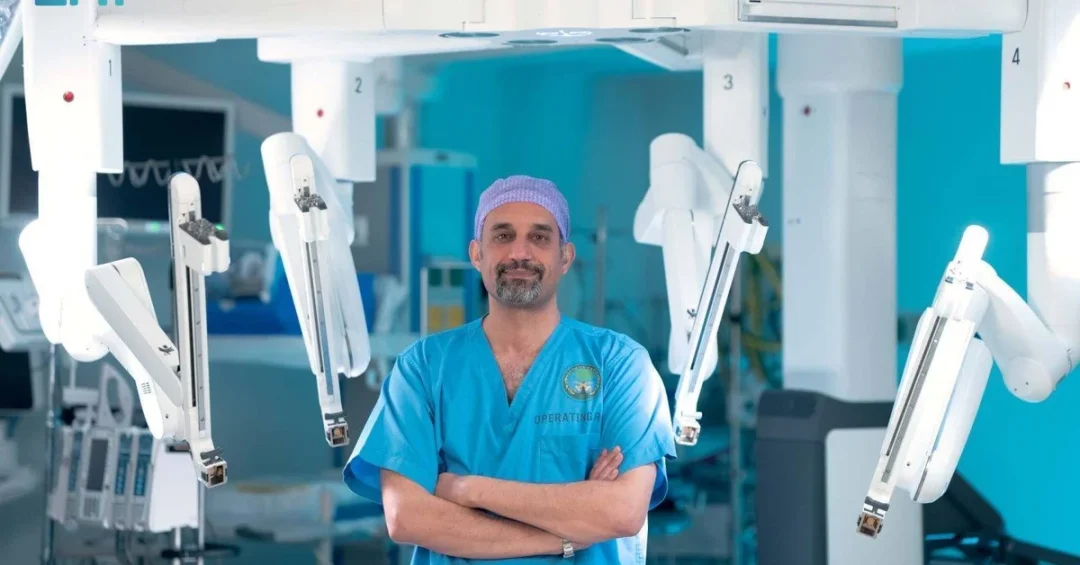
Professor Feras Khaliel, Head of Cardiac Surgery and Director of the Robotics and Minimally Invasive Surgery Program at King Faisal Specialist Hospital & Research Centre (KFSHRC), was honored with the Health Research Excellence: Applied Innovation Award at the inaugural day of the Global Health Exhibition (GHE) in Riyadh. The award recognizes his exceptional contributions to advancing research, enhancing knowledge, and fostering innovation in healthcare, and commemorates his successful completion of the world’s first fully robotic heart transplant on a 16-year-old patient suffering from end-stage (Class IV) heart failure. This achievement marks a turning point in heart transplant surgery, demonstrating a medical approach that relies on minimal surgical intervention, thereby reducing pain, shortening recovery times, and minimizing the risks of complications.
Have you ever imagined a heart transplant performed entirely by robotic arms, guided by a surgeon’s precise movements? The successful procedure at KFSHRC not only showcases Saudi Arabia’s growing prowess in advanced healthcare but also signals a new era in cardiac care. According to an official KFSHRC press release, the center continues to set itself apart by providing innovative specialized healthcare services, particularly through its robotic heart surgery program that has experienced accelerated success since its establishment in 2019. In its first year, the program performed 105 robotic heart surgeries, rising to 400 and culminating in its leadership in conducting the world’s first fully robotic heart transplant. This pioneering achievement not only bolsters Saudi Arabia’s standing in healthcare but also highlights KFSHRC’s ability to innovate medical practices that enhance treatment outcomes and patient experience.
Context and Background
What does it take to pioneer a procedure that has never been done before? The journey to the world’s first fully robotic heart transplant began with KFSHRC’s visionary commitment to minimally invasive cardiac surgery. Established in 2019, the robotic heart surgery program at KFSHRC has rapidly evolved, performing 105 robotic heart surgeries in its first year alone. By integrating cutting-edge technologies and fostering a culture of innovation, the program has grown exponentially, reaching 400 surgeries annually. This growth trajectory reflects the center’s dedication to pushing the boundaries of what is possible in cardiac care.
The program’s success is built on a foundation of advanced techniques and technologies. It has introduced innovative cardiac procedures such as robotic multi-valve surgeries and robotic aortic valve replacement. Additionally, it has integrated cutting-edge technologies related to mechanical circulatory support (MCS) systems, including ventricular assist devices (VADs), which aid the heart in pumping blood. These devices serve as either a bridge to heart transplantation or a permanent solution for patients who are not eligible for transplants. This comprehensive approach has resulted in significantly improved patient outcomes, with survival rates of up to 98%, recovery times reduced by 30%, and a reduction in blood transfusions, mechanical ventilation, and hospital stay by over 50% while cutting costs by 40% compared to traditional methods.
How did a hospital in Riyadh become a global leader in robotic heart surgery? The answer lies in KFSHRC’s relentless pursuit of excellence and its ability to attract top talent like Professor Feras Khaliel. The program is renowned for performing robotic surgeries on a wide age range of patients, from 14 to 78 years old, and for its ability to handle complex, high-risk cases, including patients with severe obesity and those requiring repeat surgeries. Notably, the program excels in performing robotic surgeries on heart patients who have undergone three previous operations, a feat in which KFSHRC has surpassed its counterparts in American hospitals. This level of expertise has positioned KFSHRC as a unique offering in the Middle East and among the top five programs globally for complex robotic multi-valve heart surgeries.
Key Details
What exactly does a fully robotic heart transplant entail? The procedure performed by Professor Khaliel involved the use of robotic systems to conduct the entire transplant, from the removal of the diseased heart to the implantation of the donor organ. This approach minimizes the invasiveness of the surgery, resulting in less pain, shorter recovery times, and fewer complications. The patient, a 16-year-old with end-stage heart failure, represents the first successful case of its kind, marking a significant milestone in cardiac surgery. The award from the Global Health Exhibition underscores the importance of this achievement and its potential to transform heart transplant practices worldwide.
The Global Health Exhibition, held in Riyadh, serves as a platform for showcasing the latest advancements in healthcare. As a Platinum Healthcare Sponsor, KFSHRC is highlighting the transformative impact of its robotic heart surgery program. The exhibition brings together healthcare professionals, innovators, and policymakers from around the world to discuss and collaborate on the future of health. Professor Khaliel’s award on the inaugural day of the event draws international attention to Saudi Arabia’s contributions to medical innovation and positions the Kingdom as a leader in healthcare research and application.
How does this achievement impact patients in Saudi Arabia and beyond? The success of the fully robotic heart transplant offers new hope for patients with end-stage heart failure. By reducing the physical trauma of surgery, patients can recover faster and return to their daily lives sooner. The program’s high survival rates and cost reductions also make advanced cardiac care more accessible and sustainable. Furthermore, the techniques developed at KFSHRC are being shared with the global medical community, potentially raising the standard of care for heart patients worldwide. This aligns with Saudi Arabia’s Vision 2030 goals of enhancing healthcare quality and promoting medical innovation.
International and Regional Impact
Why does a medical breakthrough in Riyadh matter to the rest of the world? The world’s first fully robotic heart transplant is a testament to Saudi Arabia’s growing capabilities in advanced healthcare. It challenges the traditional notion that cutting-edge medical procedures are only performed in Western countries. By achieving this milestone, KFSHRC has demonstrated that Saudi Arabia can compete on a global scale in medical research and innovation. This not only enhances the Kingdom’s reputation but also attracts international patients and partnerships, fostering knowledge exchange and collaboration.
How does this position Saudi Arabia in the global healthcare landscape? The recognition at the Global Health Exhibition, a major international event, underscores the global relevance of KFSHRC’s work. The award to Professor Khaliel is not just a personal honor but a national achievement that highlights the Kingdom’s investment in healthcare infrastructure and human capital. It also supports the objectives of Vision 2030 by diversifying the economy and promoting Saudi Arabia as a hub for medical tourism and innovation. As other countries take note, Saudi Arabia emerges as a leader in the application of robotics and minimally invasive techniques in cardiac surgery.
Economic and Strategic Significance
What are the economic benefits of pioneering robotic heart surgery? The program’s efficiency gains are substantial. With recovery times reduced by 30% and hospital stays cut by over 50%, the cost of care is lowered by 40% compared to traditional methods. This not only saves resources for the healthcare system but also allows more patients to be treated. The high survival rate of 98% further reduces the need for costly follow-up care. These economic advantages make the program a model for sustainable healthcare delivery, aligning with Vision 2030’s goal of enhancing the efficiency and quality of public services.
Strategically, the success of the robotic heart surgery program strengthens Saudi Arabia’s position as a center of excellence in the region. It attracts medical talent and patients from neighboring countries, contributing to the growth of the healthcare sector. The program’s achievements also support the localization of advanced medical technologies and the development of a knowledge-based economy. By leading in this field, Saudi Arabia can export its expertise and technologies, creating new opportunities for collaboration and investment. This is a clear example of how innovation in healthcare can drive economic diversification and global influence.
Vision 2030 Alignment
How does this achievement reflect the goals of Saudi Vision 2030? Vision 2030 aims to transform Saudi Arabia into a global leader in various fields, including healthcare. The world’s first fully robotic heart transplant is a concrete example of how the Kingdom is advancing in medical innovation and improving the quality of life for its citizens and residents. It showcases the success of investing in cutting-edge technology and specialized talent, which are key pillars of the Vision. Furthermore, it enhances the Kingdom’s reputation as a destination for advanced medical care, supporting the goal of increasing medical tourism.
What does the future hold for robotic cardiac surgery in Saudi Arabia? With the foundation laid by KFSHRC, the future is promising. The program is expected to expand its capabilities, performing more complex procedures and training surgeons from around the world. As technology evolves, the integration of artificial intelligence and other innovations will further improve outcomes. This continuous pursuit of excellence will not only benefit patients but also contribute to Saudi Arabia’s long-term vision of becoming a hub for healthcare innovation and a model for other nations. The honor bestowed upon Professor Khaliel is a beacon of what is possible when vision, talent, and determination converge.
20 Questions
Q1. Who is Professor Feras Khaliel?
A1. Professor Feras Khaliel is the Head of Cardiac Surgery and Director of the Robotics and Minimally Invasive Surgery Program at King Faisal Specialist Hospital & Research Centre (KFSHRC). He was honored with the Health Research Excellence: Applied Innovation Award for his contributions to healthcare innovation.
Q2. What award did Professor Khaliel receive?
A2. He received the Health Research Excellence: Applied Innovation Award at the Global Health Exhibition (GHE) inaugural day. The award recognizes his exceptional contributions to advancing research, enhancing knowledge, and fostering innovation in healthcare.
Q3. What significant medical achievement is associated with this award?
A3. The award commemorates Professor Khaliel’s successful completion of the world’s first fully robotic heart transplant on a 16-year-old patient with end-stage heart failure. This procedure represents a major breakthrough in cardiac surgery.
Q4. What is a fully robotic heart transplant?
A4. A fully robotic heart transplant is a surgical procedure where robotic systems perform the entire transplant, guided by a surgeon. It minimizes invasiveness, reducing pain, shortening recovery times, and lowering the risk of complications compared to traditional open-heart surgery.
Q5. When was the robotic heart surgery program at KFSHRC established?
A5. The program was established in 2019. In its first year, it performed 105 robotic heart surgeries, and it has since grown to perform 400 annually, culminating in the world’s first fully robotic heart transplant.
Q6. What are some innovative procedures offered by the program?
A6. The program offers robotic multi-valve surgeries and robotic aortic valve replacement. It also integrates mechanical circulatory support systems, including ventricular assist devices (VADs), which help the heart pump blood and serve as a bridge to transplant or a permanent solution.
Q7. What are the patient outcomes of the robotic heart surgery program?
A7. The program has achieved survival rates of up to 98%, reduced recovery times by 30%, and decreased blood transfusions, mechanical ventilation, and hospital stays by over 50%. It also cuts costs by 40% compared to traditional methods.
Q8. What age range of patients does the program treat?
A8. The program performs robotic surgeries on patients from 14 to 78 years old. It is known for handling complex, high-risk cases, including patients with severe obesity and those requiring repeat surgeries.
Q9. Has KFSHRC surpassed American hospitals in any aspect?
A9. Yes, KFSHRC excels in performing robotic surgeries on heart patients who have undergone three previous operations, a feat in which it has surpassed its counterparts in American hospitals.
Q10. What is the Global Health Exhibition?
A10. The Global Health Exhibition is a major international healthcare event held in Riyadh. It brings together professionals, innovators, and policymakers to discuss advancements in health. KFSHRC is a Platinum Healthcare Sponsor at the event.
Q11. How does this achievement benefit Saudi Arabia’s healthcare standing?
A11. It bolsters Saudi Arabia’s standing in healthcare by showcasing its ability to innovate medical practices. It highlights the Kingdom’s advanced capabilities in robotic surgery and positions it as a leader in medical research and innovation.
Q12. What is the significance of the award for KFSHRC?
A12. The award recognizes KFSHRC’s commitment to excellence and innovation. It underscores the center’s role in advancing healthcare and its contribution to enhancing patient outcomes, aligning with Saudi Arabia’s Vision 2030 goals.
Q13. How does the robotic program reduce healthcare costs?
A13. By reducing recovery times, hospital stays, and complications, the program cuts costs by 40% compared to traditional methods. This makes advanced cardiac care more sustainable and accessible.
Q14. What are ventricular assist devices (VADs)?
A14. VADs are mechanical circulatory support devices that help the heart pump blood. They can be used as a bridge to heart transplantation or as a permanent solution for patients ineligible for transplants, improving survival and quality of life.
Q15. How does this achievement align with Vision 2030?
A15. It aligns with Vision 2030 by advancing healthcare innovation, improving quality of life, and enhancing Saudi Arabia’s global reputation. It supports economic diversification through medical tourism and knowledge-based industries.
Q16. What makes KFSHRC’s program unique in the Middle East?
A16. KFSHRC’s program is a unique offering in the Middle East, applying the latest technologies in robotic heart surgery. It ranks among the top five programs globally for complex robotic multi-valve heart surgeries.
Q17. What future developments can be expected from the program?
A17. The program is expected to expand its capabilities, perform more complex procedures, and train international surgeons. Integration of AI and other innovations will further improve outcomes, benefiting patients worldwide.
Q18. How does the program handle high-risk cases?
A18. The program is renowned for handling complex, high-risk cases, including patients with severe obesity and those who have had multiple previous surgeries. Its expertise in these areas has led to successful outcomes and global recognition.
Q19. What is the role of KFSHRC in Saudi Arabia’s healthcare system?
A19. KFSHRC is a leading medical institution in Saudi Arabia, providing specialized healthcare services and advancing medical research. It plays a key role in driving innovation and improving patient care in line with Vision 2030.
Q20. How can other countries benefit from this achievement?
A20. Other countries can benefit through knowledge sharing and collaboration. KFSHRC’s techniques and research are shared globally, potentially raising the standard of care for heart patients worldwide and fostering international partnerships in medical innovation.
Reader Feedback
We value your thoughts. Please share your feedback on this article.
Your feedback helps us improve our coverage.