


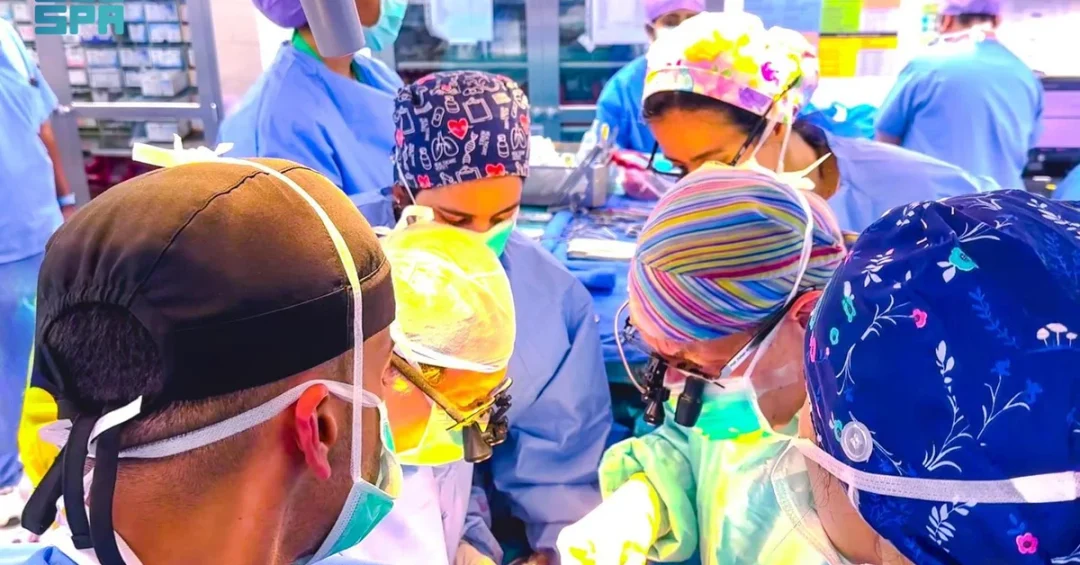
King Faisal Specialist Hospital & Research Centre (KFSHRC) successfully transplanted three donor hearts into three patients—two men and a child—within 24 hours, saving the lives of individuals suffering from heart failure and weakened heart muscles. The hearts were procured from donors in Abu Dhabi, Jeddah, and Riyadh and transported to Riyadh for the transplants, showcasing KFSHRC’s exceptional capabilities in complex cardiac procedures.
Context and Background
Heart transplantation is a critical intervention for patients with end-stage heart disease, but its success hinges on precise timing and coordination. Medical standards require that the interval between heart procurement and transplantation not exceed five hours. This poses significant logistical challenges, especially when donors are located across different regions or countries.
KFSHRC, a leading medical institution in Saudi Arabia, has a distinguished history of performing advanced cardiac surgeries. Its Heart Center is renowned for its expertise in heart transplants and mechanical circulatory support. The hospital’s ability to swiftly mobilize medical teams, secure organ donations, and execute transplants underscores its commitment to saving lives.
This recent achievement involved collaboration with multiple entities, including the Saudi Center for Organ Transplantation, the National Program for Donation and Transplantation of Human Organs and Tissue (HAYAT), Cleveland Clinic Abu Dhabi, King Abdulaziz Medical City (KAMC) in Riyadh and Jeddah, and the Riyadh Traffic Department. Such partnerships are vital for the success of organ transplantation, which relies on seamless coordination across geographical boundaries.
Key Details
The first patient, a nine-year-old girl with heart muscle weakness, had been surviving on an artificial pump since March but required a matching donor heart. A suitable donor was identified in Abu Dhabi through coordination with the UAE’s Saudi Center for Organ Transplantation and HAYAT. A KFSHRC medical team traveled to Cleveland Clinic Abu Dhabi to procure the heart, which was then flown to King Khalid International Airport (KKIA) and transported by ambulance to KFSHRC. The transplant was performed by a team led by Dr. Zuhair Al-Halees, senior consultant cardiac surgeon. The child is currently under continuous medical observation.
Simultaneously, another team went to KAMC in Jeddah to retrieve a heart for a 40-year-old man with end-stage heart disease. He had previously received a temporary pump and later a durable artificial pump that lasted seven years. The donor heart was transported to Riyadh and transplanted by a team led by Dr. Feras Khaliel, consultant cardiac surgeon and head of the Heart Transplant Program at KFSHRC. The patient is now in stable condition, mobilizing well, eating, and communicating with his family.
The third patient, a 41-year-old man with fourth-degree heart muscle failure, had an artificial pump implanted a year ago. A matching donor was found at KAMC in Riyadh, and the heart was procured and transported to KFSHRC, where Dr. Khaliel led another successful transplant. The patient is under medical observation and in stable condition.
Implications and Impact
This triple transplant within 24 hours demonstrates KFSHRC’s logistical prowess and medical expertise. It highlights the importance of international cooperation in organ donation and transplantation, as the heart for the child came from Abu Dhabi. The swift transportation of organs by private aircraft and ambulances, supported by the Riyadh Traffic Department, ensured that the critical five-hour window was met.
The success also underscores the vital role of organ donation programs like HAYAT in raising awareness and facilitating donations. It brings hope to countless patients awaiting transplants and sets a benchmark for healthcare institutions worldwide.
Furthermore, this achievement enhances Saudi Arabia’s reputation as a leader in advanced healthcare and medical innovation. It aligns with the Kingdom’s Vision 2030 goals of improving healthcare quality and accessibility, and positioning Saudi Arabia as a global hub for medical excellence.
Vision 2030 Alignment
KFSHRC’s accomplishment exemplifies Saudi Arabia’s Vision 2030 objective to transform the healthcare sector into a world-class system. By performing complex, life-saving procedures and fostering international collaborations, KFSHRC contributes to the Kingdom’s broader mission of enhancing quality of life and promoting medical tourism. This success not only saves lives but also reinforces Saudi Arabia’s standing as a pioneer in healthcare innovation, inspiring confidence in the nation’s ability to achieve its ambitious Vision 2030 targets.
20 Questions
Q1. What did KFSHRC achieve recently?
A1. KFSHRC successfully transplanted three donor hearts into three patients—two men and a child—within 24 hours, saving them from heart failure.
Q2. Where did the donor hearts come from?
A2. The hearts were procured from donors in Abu Dhabi, Jeddah, and Riyadh, demonstrating international and regional coordination.
Q3. Who led the transplant surgeries?
A3. Dr. Zuhair Al-Halees led the transplant for the child, while Dr. Feras Khaliel led the transplants for the two men.
Q4. What was the condition of the first patient?
A4. A nine-year-old girl with heart muscle weakness had been on an artificial pump since March and needed a matching donor heart.
Q5. How was the donor heart for the child transported?
A5. The heart was procured in Abu Dhabi, flown to Riyadh, and transported by ambulance to KFSHRC with support from the Riyadh Traffic Department.
Q6. What was the condition of the second patient?
A6. A 40-year-old man with end-stage heart disease had previously received a durable artificial pump that lasted seven years.
Q7. What was the condition of the third patient?
A7. A 41-year-old man with fourth-degree heart muscle failure had an artificial pump implanted a year before the transplant.
Q8. What is the maximum time allowed between heart procurement and transplantation?
A8. Medical standards require that the interval not exceed five hours to ensure the transplant’s success.
Q9. Which organizations collaborated in this effort?
A9. The Saudi Center for Organ Transplantation, HAYAT, Cleveland Clinic Abu Dhabi, KAMC, and the Riyadh Traffic Department were key partners.
Q10. How did KFSHRC coordinate the transports?
A10. KFSHRC used private aircraft for long-distance transport and ambulances for ground transport, with traffic department support for expedited transfers.
Q11. What is the significance of this achievement?
A11. It demonstrates KFSHRC’s logistical and medical excellence, highlights international cooperation, and brings hope to patients awaiting transplants.
Q12. How does this align with Vision 2030?
A12. It supports Vision 2030’s healthcare goals by showcasing world-class medical capabilities and enhancing Saudi Arabia’s reputation as a healthcare leader.
Q13. What role did HAYAT play?
A13. HAYAT, the National Program for Donation and Transplantation of Human Organs and Tissue, facilitated coordination and approvals for organ donation.
Q14. What challenges were overcome?
A14. Logistical challenges included transporting hearts across regions within the critical five-hour window and coordinating between multiple hospitals and authorities.
Q15. What is the current status of the patients?
A15. The child is under continuous observation; the 40-year-old man is stable and mobilizing; the 41-year-old man is stable and under observation.
Q16. How does this impact organ donation awareness?
A16. It highlights the life-saving potential of organ donation and encourages more people to register as donors, supporting programs like HAYAT.
Q17. What rankings has KFSHRC received?
A17. KFSHRC was ranked first in the Middle East and Africa and 20th globally among top academic medical centers, and recognized as the most valuable healthcare brand in the region.
Q18. Who is Dr. Zuhair Al-Halees?
A18. Dr. Zuhair Al-Halees is a senior consultant cardiac surgeon at KFSHRC who led the transplant for the nine-year-old girl.
Q19. Who is Dr. Feras Khaliel?
A19. Dr. Feras Khaliel is a consultant cardiac surgeon and head of the Heart Transplant Program at KFSHRC, who led the transplants for the two men.
Q20. What does this mean for future transplants?
A20. It sets a precedent for efficient multi-organ procurement and transplantation, potentially increasing the number of successful transplants in the region.
Reader Feedback
We value your thoughts. Please share your feedback on this article.
Your feedback helps us improve our coverage.