


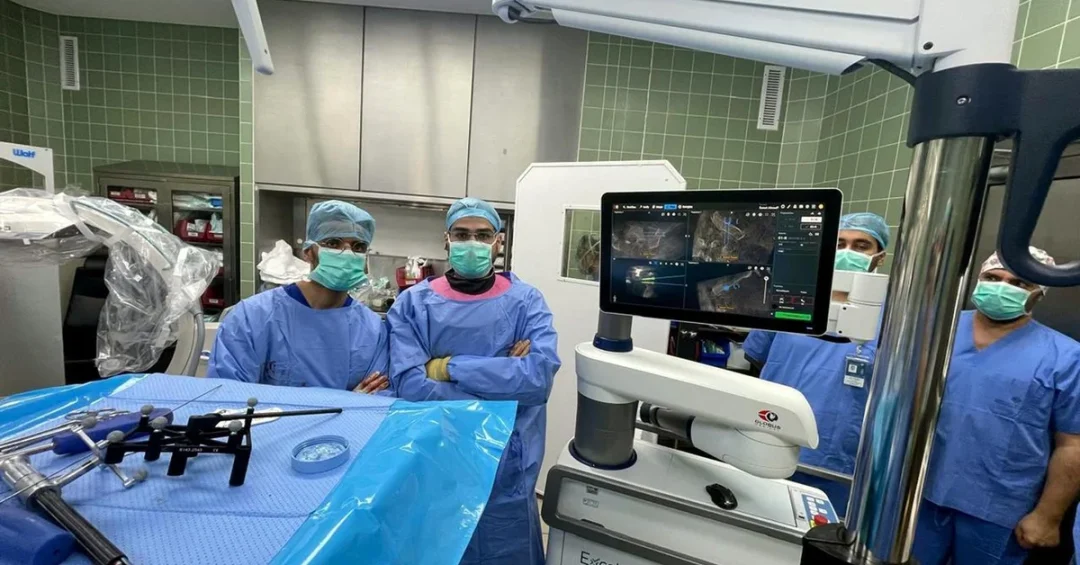
King Fahd University Hospital (KFUH), part of Imam Abdulrahman Bin Faisal University’s Academic Medical City in Al-Khobar, has successfully performed a complex robotic-assisted surgical procedure to stabilize spinal and pelvic fractures in a patient injured in a motor vehicle accident, the Saudi Press Agency reported on March 12, 2025. The milestone achievement, carried out entirely by a Saudi medical team, underscores the Kingdom’s rapid advancement in adopting cutting-edge surgical technologies, including robotics and artificial intelligence, to elevate patient outcomes and reinforce the quality of healthcare services across the Eastern Region and beyond.
The procedure involved the precise stabilization of both spinal and pelvic fractures — among the most challenging orthopedic injuries to treat — using robotic surgical systems that enhance accuracy, reduce complication rates, and accelerate post-operative recovery. According to the hospital, the integration of robotic technology into complex trauma care represents a significant leap forward in Saudi Arabia’s medical capabilities. The success of this operation reflects KFUH’s ongoing commitment to advanced medical technologies and AI integration, positioning the institution as a leader in medical innovation within the Kingdom. How often do we hear of a single surgery addressing such delicate, life-altering injuries with robotic precision? This achievement not only highlights the skill of Saudi medical professionals but also signals the broader transformation of the Kingdom’s healthcare sector under Vision 2030.
Context and Background
King Fahd University Hospital has long been recognized as a cornerstone of advanced medical care in Saudi Arabia’s Eastern Province. Established within the Academic Medical City of Imam Abdulrahman Bin Faisal University, the hospital serves as both a tertiary care center and a teaching institution, training the next generation of Saudi physicians and surgeons. Its location in Al-Khobar places it at the heart of a region known for its industrial vitality and growing population, making its role in delivering high-complexity care all the more critical. The hospital’s successful robotic surgery marks another step in its evolution as a hub for medical excellence, building on years of investment in specialized units, state-of-the-art equipment, and highly trained personnel.
Robotic-assisted surgery has emerged globally as a transformative approach in orthopedics, neurosurgery, and trauma care. Unlike traditional open surgery, robotic systems allow surgeons to operate with sub-millimeter precision through smaller incisions, reducing blood loss, tissue damage, and infection risk. In cases involving spinal and pelvic fractures — where nearby nerves, blood vessels, and organs demand extreme caution — such precision can mean the difference between full recovery and long-term disability. Saudi Arabia has been steadily embracing these technologies as part of a broader national push to modernize healthcare infrastructure, improve clinical outcomes, and attract medical tourism. The Kingdom’s Vision 2030 reform agenda explicitly identifies healthcare as a key pillar, aiming to increase private sector participation, enhance quality, and adopt digital and AI-driven solutions. Isn’t it remarkable how technology is reshaping the very fabric of medical care in the Kingdom?
The March 2025 surgery also highlights the growing capabilities of Saudi medical teams to handle complex cases independently. While robotic systems are tools, their effectiveness depends entirely on the expertise of the surgeons and support staff who wield them. The fact that a Saudi team executed this procedure from start to finish speaks volumes about the depth of local talent and the effectiveness of the Kingdom’s medical training programs. It also reinforces the hospital’s reputation as a center where innovation meets compassionate care.
Key Details of the Robotic Procedure
The patient, whose identity has not been disclosed for privacy reasons, sustained severe spinal and pelvic fractures in a motor vehicle accident. Such injuries are notoriously difficult to manage because the pelvis and spine are interconnected structures that bear the body’s weight and protect vital neural pathways. Traditional surgical stabilization often requires large incisions, extensive muscle dissection, and prolonged recovery periods. In this case, the medical team at KFUH opted for a robotic-assisted approach, which allowed them to plan the surgery in three dimensions, guide instruments with real-time imaging, and place screws and rods with extraordinary accuracy. The result was a successful stabilization of both fracture sites in a single operation, minimizing the need for multiple procedures.
The hospital emphasized that the use of robotic surgery significantly reduces the rate of complications and speeds up recovery, thereby improving the overall quality of healthcare provided. This aligns with global evidence showing that robotic-assisted orthopedic and trauma surgeries can lead to shorter hospital stays, less post-operative pain, and faster return to normal function. For a patient with combined spinal and pelvic trauma, these benefits are especially meaningful. The integration of artificial intelligence further enhances the system’s capabilities, offering surgeons predictive analytics and intraoperative feedback that can help avoid nerve damage and optimize implant placement. Could this be the new standard for complex trauma care in the region? The success at KFUH suggests that Saudi Arabia is not just keeping pace with global advances but actively contributing to them.
Behind the scenes, the procedure required meticulous coordination among orthopedic surgeons, neurosurgeons, anesthesiologists, radiologists, and nursing staff. The hospital’s investment in a dedicated robotic surgery program — including training, simulation, and technology upgrades — has been instrumental in making such interventions possible. This case also demonstrates the value of a multidisciplinary team approach, where each specialist contributes to a shared plan tailored to the patient’s unique anatomy and injury pattern. The outcome underscores KFUH’s commitment to patient safety and clinical excellence, setting a benchmark for other hospitals in the Kingdom.
International and Regional Impact
The successful robotic surgery at King Fahd University Hospital carries implications that extend well beyond the Eastern Region. For Saudi Arabia, it reinforces the Kingdom’s growing stature as a destination for advanced medical care, not only for its own citizens but also for patients from neighboring Gulf countries and beyond. As the region’s healthcare market expands, Saudi hospitals are increasingly competing with established centers in Europe, North America, and Asia. Demonstrating proficiency in robotic trauma surgery sends a clear signal that Saudi Arabia possesses the infrastructure, expertise, and ambition to be a leader in this field. This can attract medical tourists, foster collaborations with international institutions, and enhance the Kingdom’s soft power.
Regionally, the achievement contributes to a broader narrative of technological self-reliance in the Gulf. Countries across the Middle East are investing heavily in healthcare innovation, but Saudi Arabia’s scale, resources, and Vision 2030-driven reforms give it a unique advantage. By sharing knowledge and best practices through academic channels — Imam Abdulrahman Bin Faisal University is a key player here — the Kingdom can help raise standards across the region. International medical device companies and robotics firms are also likely to take note, potentially leading to partnerships, research collaborations, and local manufacturing opportunities. How will this success influence the next generation of Saudi surgeons and innovators? It is likely to inspire them to push boundaries even further.
Economic and Strategic Significance
From an economic perspective, the adoption of robotic surgery aligns with Saudi Arabia’s goals of diversifying revenue streams and building a knowledge-based economy. Healthcare is a major employer and a growing sector under Vision 2030, with the government aiming to increase private sector involvement and reduce reliance on oil. Advanced medical technologies create high-skilled jobs, stimulate local research and development, and can reduce the need for citizens to travel abroad for treatment — thereby retaining spending within the Kingdom. The Public Investment Fund (PIF) and other state entities have been investing in healthcare infrastructure, including specialized centers and digital health platforms, to support this transformation. The success at KFUH is a tangible example of how these investments translate into real-world clinical outcomes.
Strategically, the surgery reinforces the Kingdom’s commitment to AI integration across key sectors. Healthcare is one of the most promising areas for AI application, from diagnostic imaging to surgical robotics. By embracing these tools, Saudi Arabia positions itself as a regional hub for health technology and innovation. This can attract foreign direct investment, encourage startups, and create a ecosystem where Saudi entrepreneurs and engineers collaborate with clinicians to solve pressing health challenges. The hospital’s achievement also supports the broader goal of enhancing quality of life for citizens and residents, a central pillar of Vision 2030. Isn’t it encouraging to see how a single operation can symbolize a nation’s forward momentum?
Vision 2030 Alignment
The robotic spinal and pelvic surgery at King Fahd University Hospital is a clear reflection of Vision 2030’s healthcare objectives. The Vision seeks to transform the Kingdom’s health system into a comprehensive, world-class model that prioritizes patient-centered care, innovation, and sustainability. Key initiatives include expanding digital health, promoting preventive care, and fostering public-private partnerships. KFUH’s use of robotic and AI-assisted surgery directly supports these aims by demonstrating how advanced technology can improve clinical outcomes, reduce costs over time, and enhance the patient experience. It also aligns with the Health Sector Transformation Program, which is designed to restructure healthcare delivery, improve access, and elevate quality across the Kingdom.
Moreover, this achievement contributes to the Vision’s human capital development goals. By performing complex procedures locally, Saudi hospitals create opportunities for continuous learning and specialization among Saudi medical professionals. This not only retains talent within the Kingdom but also attracts Saudi physicians working abroad to return and contribute to the national health ecosystem. The collaboration between KFUH and Imam Abdulrahman Bin Faisal University exemplifies the integration of academic research, clinical practice, and technological innovation that Vision 2030 champions. As Saudi Arabia continues to invest in robotics, AI, and precision medicine, successes like this will become more common, further solidifying the Kingdom’s reputation as a global leader in healthcare innovation. The future of Saudi medicine is being written today, one groundbreaking procedure at a time.
20 Questions
Q1. What procedure did King Fahd University Hospital successfully perform?
A1. King Fahd University Hospital performed a complex robotic-assisted surgery to stabilize spinal and pelvic fractures in a patient injured in a motor vehicle accident.
Q2. Where is King Fahd University Hospital located?
A2. It is located in Al-Khobar, in the Eastern Region of Saudi Arabia, within Imam Abdulrahman Bin Faisal University’s Academic Medical City.
Q3. When was this achievement reported?
A3. The Saudi Press Agency reported the achievement on March 12, 2025.
Q4. What technology was used in the surgery?
A4. The surgical team used robotic surgery technology, which enhances precision, reduces complications, and speeds up patient recovery.
Q5. Who performed the surgery?
A5. A Saudi medical team at King Fahd University Hospital performed the surgery.
Q6. What were the patient’s injuries?
A6. The patient sustained severe spinal and pelvic fractures from a motor vehicle accident, requiring complex stabilization.
Q7. Why is robotic surgery beneficial for such injuries?
A7. Robotic surgery offers sub-millimeter precision, smaller incisions, less blood loss, and faster recovery, which is crucial for delicate spinal and pelvic areas.
Q8. How does this reflect KFUH’s commitment to innovation?
A8. It demonstrates KFUH’s ongoing investment in advanced medical technologies and AI integration to improve safety, accuracy, and patient outcomes.
Q9. What is the significance of this surgery for Saudi healthcare?
A9. It highlights the Kingdom’s growing capabilities in advanced medicine, aligning with Vision 2030 goals to enhance healthcare quality and innovation.
Q10. Does this surgery support medical tourism in Saudi Arabia?
A10. Yes, it showcases the Kingdom’s ability to offer world-class complex care, which can attract patients from the region and beyond.
Q11. How does AI play a role in this surgery?
A11. AI integration in robotic systems provides predictive analytics and intraoperative feedback, helping surgeons avoid complications and optimize results.
Q12. What are the recovery benefits for the patient?
A12. The patient can expect a faster recovery, reduced pain, shorter hospital stay, and lower risk of complications compared to traditional surgery.
Q13. Is this the first such surgery in Saudi Arabia?
A13. While the report does not specify if it is the first, it represents a significant achievement in the Kingdom’s adoption of robotic surgery for complex trauma.
Q14. How does this align with Vision 2030?
A14. It directly supports Vision 2030’s Health Sector Transformation Program by promoting advanced technology, quality care, and local expertise.
Q15. What role did Imam Abdulrahman Bin Faisal University play?
A15. The university’s Academic Medical City houses KFUH, fostering an environment of research, education, and clinical innovation.
Q16. Will this technology be expanded to other hospitals?
A16. As Vision 2030 progresses, advanced surgical technologies are expected to be adopted more widely across Saudi healthcare institutions.
Q17. What does this mean for Saudi medical professionals?
A17. It demonstrates their high skill level and creates opportunities for training, specialization, and retention of top talent within the Kingdom.
Q18. How does robotic surgery reduce complications?
A18. It minimizes tissue damage, reduces infection risk, and allows for more accurate implant placement, leading to fewer post-operative issues.
Q19. What economic benefits does such innovation bring?
A19. It creates high-skilled jobs, stimulates local R&D, reduces outbound medical travel, and attracts investment in health technology.
Q20. What is the broader impact of this achievement?
A20. It reinforces Saudi Arabia’s position as a leader in healthcare innovation, inspires future generations, and supports the Kingdom’s journey toward a diversified, knowledge-based economy.
Reader Feedback
We value your thoughts. Please share your feedback on this article.
Your feedback helps us improve our coverage.