


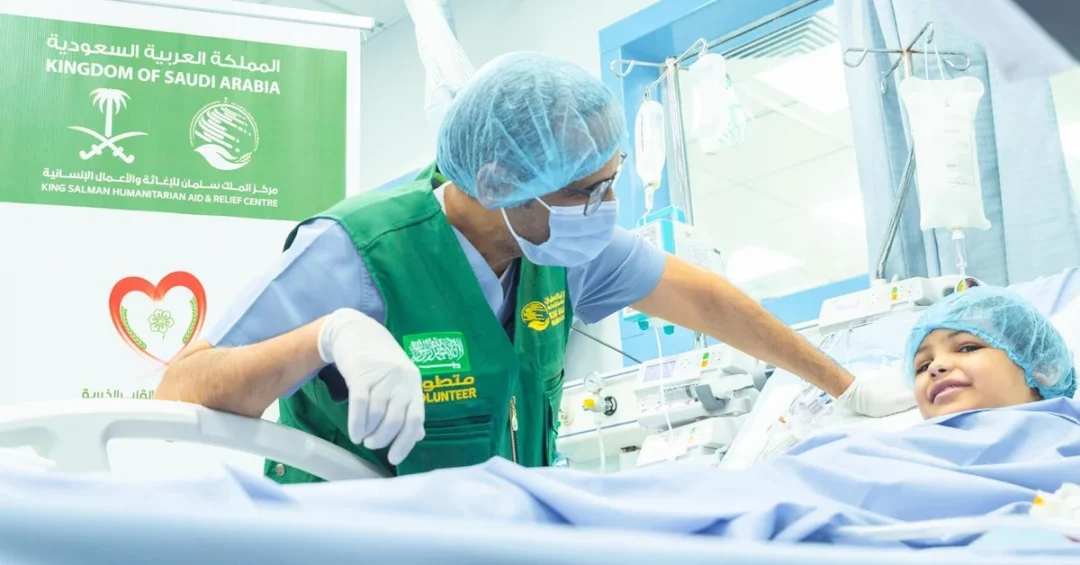
The King Salman Humanitarian Aid and Relief Center (KSrelief) concluded the 21st Saudi Pulse voluntary program for pediatric heart diseases and surgeries in Mukalla District, Hadramawt Governorate, Yemen, on May 12, 2024. The 8-day medical campaign, which ran from May 5 to 12, was carried out by a team of 15 volunteers specializing in various medical fields, according to the Saudi Press Agency (SPA).
Context and Background
Yemen has been facing a severe humanitarian crisis for years, with a deteriorating healthcare system struggling to meet the needs of the population. Congenital heart defects are a significant health challenge among children in Yemen, and access to specialized cardiac care is extremely limited. The Saudi Pulse program, initiated by KSrelief, is part of Saudi Arabia’s broader humanitarian efforts to provide medical assistance to Yemeni patients. This program specifically addresses the critical need for pediatric cardiac surgeries and catheterizations, offering life-saving procedures that would otherwise be unavailable to many.
Key Details
During the campaign, the KSrelief volunteer medical team successfully performed 13 open-heart surgeries, 43 therapeutic cardiac catheterizations, and 34 diagnostic catheterizations. The procedures were conducted at a local hospital in Mukalla, with the team working under challenging conditions to deliver high-quality care. This is the 21st such mission by KSrelief, highlighting the ongoing commitment of Saudi Arabia to support Yemen’s health sector. The program is a tangible demonstration of the Kingdom’s humanitarian role, aligning with its Vision 2030 goals of promoting regional stability and well-being.
Implications and Impact
The immediate impact of this program is the successful treatment of nearly 90 children with heart conditions, significantly improving their chances of survival and quality of life. In the long term, such missions help reduce the burden on Yemen’s strained healthcare system and build local capacity by working alongside local medical staff. Internationally, this initiative showcases Saudi Arabia’s proactive approach to humanitarian aid, which is particularly important in a region often affected by conflict and instability. By providing advanced medical care, the Kingdom is not only saving lives but also contributing to the stability and future of Yemen.
Vision 2030 Alignment
This mission underscores Saudi Arabia’s commitment to its Vision 2030 objectives, which emphasize the Kingdom’s role as a leading humanitarian and medical aid provider. Through KSrelief, Saudi Arabia continues to extend its support to neighboring countries, embodying the values of compassion and solidarity that are central to the Vision. The success of the 21st Saudi Pulse program is a testament to the Kingdom’s dedication to improving lives across the region, and it sets a precedent for future initiatives that will further strengthen its global humanitarian standing.
20 Questions
Q1. What is KSrelief?
A1. KSrelief is the King Salman Humanitarian Aid and Relief Center, a Saudi Arabian humanitarian organization that provides aid and relief to countries in need, operating under the directives of King Salman bin Abdulaziz Al Saud.
Q2. What was the 21st Saudi Pulse voluntary program?
A2. It was a specialized medical mission conducted by KSrelief in Yemen, focusing on pediatric heart diseases and surgeries. The program involved a team of volunteers who performed cardiac procedures for children in need.
Q3. When and where did the program take place?
A3. The program took place from May 5 to 12, 2024, in Mukalla District, Hadramawt Governorate, Yemen, as announced by the Saudi Press Agency.
Q4. How many volunteers participated in the program?
A4. The program was carried out by 15 volunteers from various medical specialties, including cardiologists, surgeons, nurses, and technicians.
Q5. What was the main objective of this program?
A5. The main objective was to provide surgical and interventional treatment for children suffering from congenital heart diseases in Yemen, where access to such care is limited.
Q6. What procedures were performed during the campaign?
A6. The medical team performed 13 open-heart surgeries, 43 therapeutic cardiac catheterizations, and 34 diagnostic catheterizations, totaling 90 procedures.
Q7. What is the significance of these procedures?
A7. These are advanced cardiac procedures that are essential for treating congenital heart defects. Without them, many children would face severe health complications or death.
Q8. Is this the first such program in Yemen?
A8. No, this was the 21st iteration of the program, indicating an ongoing commitment by Saudi Arabia to support Yemen’s healthcare system.
Q9. How does KSrelief choose the locations for its programs?
A9. KSrelief selects locations based on the needs assessment and requests from local health authorities, prioritizing areas where medical care is most scarce.
Q10. What is the broader context of this initiative?
A10. Yemen is experiencing a humanitarian crisis, and this initiative is part of Saudi Arabia’s efforts to provide medical relief and improve the health infrastructure in the country.
Q11. How does this program benefit the local healthcare system?
A11. The program works with local staff, providing training and knowledge transfer, thereby strengthening the capacity of Yemeni medical professionals.
Q12. What role does Saudi Arabia play in humanitarian aid in Yemen?
A12. Saudi Arabia is a major donor of humanitarian aid to Yemen, providing billions of dollars in assistance, including medical care, food, and emergency relief.
Q13. Is the program supported by the Saudi government?
A13. Yes, KSrelief is a government-funded organization, and its programs are part of Saudi Arabia’s official humanitarian efforts.
Q14. Are the volunteers professionals?
A14. Yes, the volunteers are highly qualified medical professionals from Saudi Arabia and other countries, offering their expertise on a voluntary basis.
Q15. How was the program received by the Yemeni community?
A15. The local community has welcomed the program, as it provides free, high-quality cardiac care that is otherwise inaccessible to most families.
Q16. What is the success rate of the surgeries performed?
A16. All surgeries and procedures were reported as successful, with patients recovering under the care of the medical team and local staff.
Q17. Are there future plans for more such programs?
A17. While specific plans are not announced, KSrelief regularly conducts such programs in Yemen and other countries, indicating a likelihood of future missions.
Q18. How does this program align with Saudi Vision 2030?
A18. Vision 2030 emphasizes the Kingdom’s role in humanitarian work and regional stability; this program exemplifies those goals by providing vital healthcare to those in need.
Q19. What is the financial cost of such a program?
A19. The exact cost is not disclosed, but it involves significant funding for medical supplies, travel, and logistics, all covered by the Saudi government.
Q20. How can more international support be encouraged?
A20. By highlighting the success of such programs, the international community can be encouraged to increase support for humanitarian efforts in crisis-affected regions like Yemen.
Reader Feedback
We value your thoughts. Please share your feedback on this article.
Your feedback helps us improve our coverage.