


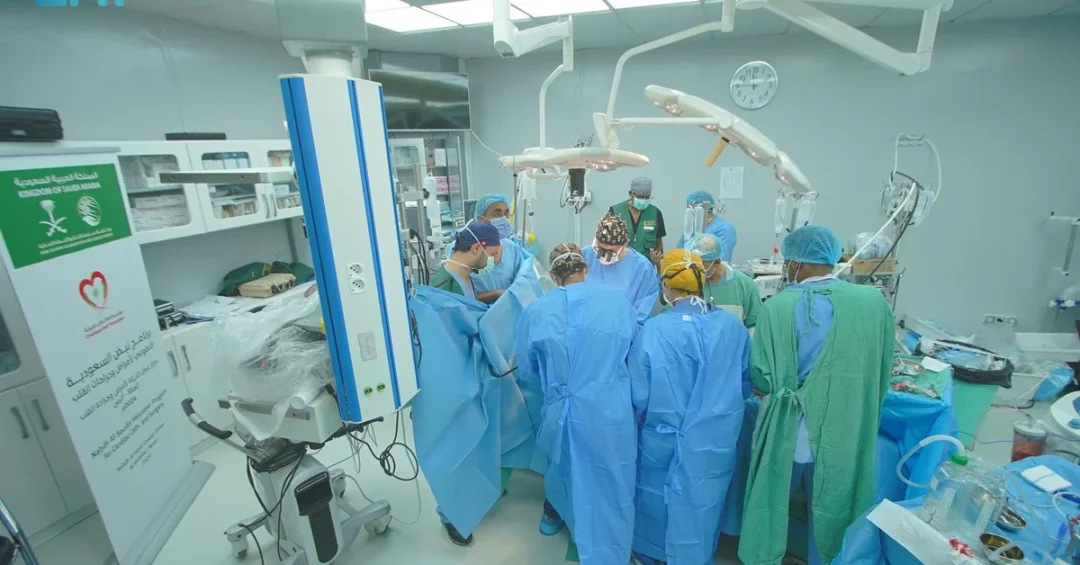
The King Salman Humanitarian Aid and Relief Center (KSrelief) concluded its Nabdh AlSaudia Volunteer Program for open-heart surgery and catheterization in Al Mukalla, Hadhramaut, Yemen, on September 9, 2024, successfully performing 44 open-heart surgeries, 48 diagnostic catheterizations, and 53 therapeutic catheterizations. The initiative, carried out by a specialized medical team, reflects Saudi Arabia’s ongoing commitment to providing essential healthcare to patients with limited financial resources in Yemen and beyond.
Context and Background
Yemen has faced a protracted humanitarian crisis, with its healthcare system severely strained by years of conflict and economic challenges. In response, Saudi Arabia, through KSrelief, has been at the forefront of providing medical assistance, including cardiac care, which is often unavailable or unaffordable for many Yemenis. The Nabdh AlSaudia Volunteer Program is part of a broader series of volunteer initiatives that Saudi Arabia conducts globally, aiming to alleviate suffering and improve health outcomes in underserved communities.
KSrelief, established in 2015, is the humanitarian arm of Saudi Arabia and operates under the guidance of the Kingdom’s leadership. It has implemented thousands of projects in health, food security, education, and shelter across more than 80 countries, with a particular focus on Yemen. These efforts are aligned with Saudi Arabia’s Vision 2030, which emphasizes humanitarian responsibility and global solidarity.
Key Details
The Nabdh AlSaudia Volunteer Program in Al Mukalla was executed by a team of Saudi medical volunteers specializing in cardiac surgery and interventional cardiology. Over the course of the program, the team performed 44 open-heart surgeries, 48 diagnostic catheterizations, and 53 therapeutic catheterizations. These procedures were provided free of charge to patients who could not afford them, directly addressing a critical need in the region.
The program is one of many volunteer medical campaigns organized by KSrelief, which often deploy Saudi medical professionals to crisis-affected areas. Such initiatives not only save lives but also build local capacity by training healthcare workers and transferring knowledge. The conclusion of this program marks another milestone in Saudi Arabia’s humanitarian efforts in Yemen, where it has been a leading donor and provider of aid.
Implications and Impact
The successful completion of the cardiac program in Al Mukalla has immediate and long-term implications for the local community. In the short term, it has provided life-saving treatments to over 140 patients, many of whom would have otherwise gone without care. This directly improves their quality of life and reduces the burden on Yemen’s fragile healthcare infrastructure.
In the broader context, such initiatives strengthen Saudi-Yemeni ties and demonstrate Saudi Arabia’s role as a responsible regional power. They also contribute to stability by addressing health emergencies that can exacerbate social and economic challenges. The program’s success underscores the effectiveness of Saudi Arabia’s humanitarian diplomacy and its commitment to international humanitarian principles.
Vision 2030 Alignment
This volunteer program exemplifies Saudi Arabia’s Vision 2030 objectives, particularly in the areas of humanitarian aid and global engagement. Vision 2030 seeks to position the Kingdom as a global leader in humanitarian and development work, leveraging its resources and expertise to make a positive impact worldwide. Through KSrelief, Saudi Arabia is not only providing immediate relief but also fostering sustainable health solutions and building partnerships that align with the vision’s emphasis on social responsibility and international cooperation.
As Saudi Arabia continues to expand its humanitarian reach, programs like Nabdh AlSaudia highlight the Kingdom’s dedication to improving lives and promoting health equity. They also reinforce the values of compassion and generosity that are central to Saudi society and its leadership’s vision for a prosperous and peaceful world.
20 Questions
Q1. What was the name of the volunteer program concluded by KSrelief in Al Mukalla?
A1. The program was called the Nabdh AlSaudia Volunteer Program, which focused on open-heart surgery and catheterization.
Q2. When did KSrelief conclude the cardiac volunteer program in Al Mukalla?
A2. KSrelief concluded the program on September 9, 2024, as reported by the Saudi Press Agency.
Q3. How many open-heart surgeries were performed during the program?
A3. The medical team successfully performed 44 open-heart surgeries during the program.
Q4. How many diagnostic catheterizations were conducted?
A4. There were 48 diagnostic catheterizations performed as part of the initiative.
Q5. How many therapeutic catheterizations were carried out?
A5. The team conducted 53 therapeutic catheterizations, providing essential treatment to patients.
Q6. Where exactly did the program take place?
A6. The program took place in Al Mukalla, the capital city of Hadhramaut Governorate in Yemen.
Q7. Which organization implemented the volunteer program?
A7. The program was implemented by the King Salman Humanitarian Aid and Relief Center (KSrelief), Saudi Arabia’s humanitarian arm.
Q8. What is the primary goal of KSrelief’s volunteer programs?
A8. The primary goal is to provide medical treatment and humanitarian assistance to patients and individuals with limited financial resources in various countries.
Q9. Why is cardiac care particularly important in Yemen?
A9. Cardiac care is crucial because Yemen’s healthcare system is severely strained, and many patients cannot afford or access specialized heart treatments.
Q10. How does this program align with Saudi Arabia’s Vision 2030?
A10. It aligns with Vision 2030’s objectives of enhancing humanitarian aid, global engagement, and social responsibility, showcasing Saudi Arabia’s role as a global humanitarian leader.
Q11. Who funded the Nabdh AlSaudia Volunteer Program?
A11. The program was funded by Saudi Arabia through KSrelief, as part of its humanitarian initiatives.
Q12. What types of medical procedures were offered?
A12. The program offered open-heart surgeries, diagnostic catheterizations, and therapeutic catheterizations, all provided free of charge.
Q13. How many total patients benefited from the program?
A13. A total of 145 patients benefited from the program, receiving either surgery or catheterization procedures.
Q14. Were the medical procedures provided free of charge?
A14. Yes, all procedures were provided free of charge to patients with limited financial resources.
Q15. What is the significance of KSrelief’s work in Yemen?
A15. KSrelief’s work in Yemen is significant as it addresses critical health needs, saves lives, and strengthens Saudi-Yemeni ties through humanitarian support.
Q16. How does this program reflect Saudi Arabia’s humanitarian diplomacy?
A16. It demonstrates Saudi Arabia’s commitment to international humanitarian principles and its role as a responsible regional power.
Q17. What other sectors does KSrelief support in Yemen?
A17. KSrelief supports various sectors in Yemen, including health, food security, education, shelter, and water sanitation.
Q18. Who were the medical professionals involved in the program?
A18. The program involved Saudi medical volunteers specializing in cardiac surgery and interventional cardiology.
Q19. How does this initiative contribute to Saudi Arabia’s global image?
A19. It enhances Saudi Arabia’s global image as a compassionate and proactive humanitarian leader, aligned with Vision 2030.
Q20. What message does this program send to the international community?
A20. It sends a message of solidarity and generosity, highlighting Saudi Arabia’s dedication to alleviating human suffering worldwide.
Reader Feedback
We value your thoughts. Please share your feedback on this article.
Your feedback helps us improve our coverage.