


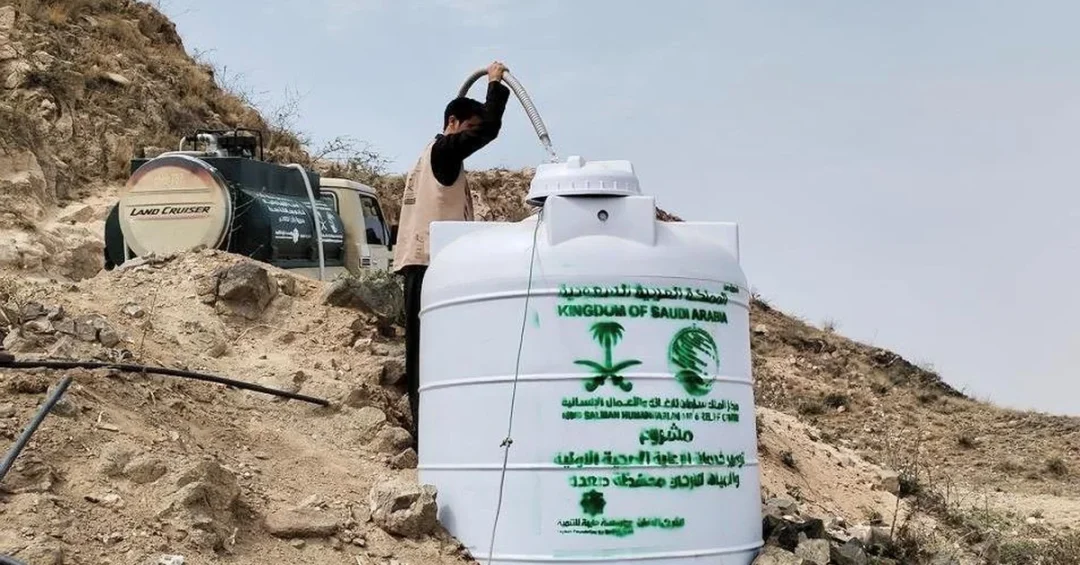
The King Salman Humanitarian Aid and Relief Center (KSrelief) has continued its vital project to deliver primary health care and water services to displaced individuals in the Razih District of Yemen’s Saada Governorate, benefiting 340 people during July 2024, as reported by the Saudi Press Agency (SPA). This ongoing initiative underscores the Kingdom of Saudi Arabia’s unwavering commitment to alleviating the humanitarian crisis in Yemen and supporting vulnerable populations in need.
Context and Background
Yemen has been grappling with a protracted conflict that has severely impacted its healthcare infrastructure, leaving millions without access to basic medical services. In response, KSrelief, a leading humanitarian organization established by Saudi Arabia, has been at the forefront of providing emergency relief and developmental aid. The Razih District in Saada Governorate, particularly affected by displacement, has been a focal point of KSrelief’s efforts to restore dignity and health to those uprooted by violence. This project is part of Saudi Arabia’s broader humanitarian strategy, which aligns with international aid principles and the Kingdom’s Vision 2030 goal of fostering global stability and prosperity.
Key Details
During July, KSrelief’s mobile clinics and water services in Razih District delivered essential care to 340 beneficiaries. The internal medicine clinic treated 171 individuals, addressing chronic and acute conditions, while the epidemic control clinic served 85 beneficiaries, focusing on preventing and managing infectious diseases. The emergency clinic handled 56 cases, providing critical interventions for urgent health issues. Additionally, the reproductive health clinic assisted 11 cases, offering maternal and child health services. The awareness and education clinic received 17 visitors, promoting health education and disease prevention.
Accompanying services were equally robust: nursing services attended to 170 patients, ensuring continuous care and monitoring. Medications were dispensed to 322 individuals, alleviating financial burdens and ensuring treatment adherence. Furthermore, 13 waste disposal procedures were carried out, highlighting KSrelief’s commitment to environmental hygiene and infection control. These efforts reflect KSrelief’s comprehensive approach, integrating medical care with public health measures to maximize impact.
Implications and Impact
The continuation of this project has significant implications for the displaced communities in Saada, who face heightened vulnerability due to limited access to healthcare and clean water. By providing these services, KSrelief not only saves lives but also reduces the burden on Yemen’s fragile health system. Regionally, this initiative reinforces Saudi Arabia’s role as a humanitarian leader, fostering goodwill and stability in conflict-affected areas. Internationally, it demonstrates the Kingdom’s adherence to global humanitarian standards and its partnership with UN agencies and NGOs in delivering aid.
Vision 2030 Alignment
This project exemplifies Saudi Arabia’s Vision 2030 objectives, particularly in promoting global peace, security, and sustainable development. Through KSrelief, the Kingdom is translating its humanitarian values into action, enhancing its international standing and contributing to a more stable and prosperous region. As Saudi Arabia continues to expand its humanitarian footprint, initiatives like this in Yemen underscore its commitment to supporting the world’s most vulnerable populations and achieving lasting impact in line with its long-term vision.
20 Questions
Q1. What is the primary focus of KSrelief’s project in Saada, Yemen?
A1. The project focuses on delivering primary health care and water services to displaced individuals in the Razih District of Saada Governorate, Yemen, aiming to address urgent medical and sanitation needs.
Q2. How many people benefited from KSrelief’s services in July 2024?
A2. A total of 340 people benefited from the project in July 2024, receiving essential health care and water services in the Razih District of Saada.
Q3. Which clinics were part of KSrelief’s health care services?
A3. The clinics included internal medicine, epidemic control, emergency, reproductive health, and awareness and education, each providing specialized care to displaced individuals.
Q4. How many individuals were treated in the internal medicine clinic?
A4. The internal medicine clinic treated 171 individuals, addressing various chronic and acute medical conditions during the reporting period.
Q5. What was the role of the epidemic control clinic?
A5. The epidemic control clinic served 85 beneficiaries, focusing on preventing, detecting, and managing infectious diseases to curb outbreaks among displaced populations.
Q6. How many emergency cases were handled by KSrelief?
A6. The emergency clinic handled 56 cases, providing immediate medical interventions for urgent health issues and injuries.
Q7. What services did the reproductive health clinic offer?
A7. The reproductive health clinic assisted 11 cases, offering maternal and child health services, including prenatal and postnatal care.
Q8. How many visitors received awareness and education services?
A8. The awareness and education clinic received 17 visitors, providing health education and disease prevention information to promote community well-being.
Q9. What accompanying services were provided by KSrelief?
A9. Accompanying services included nursing care for 170 patients, medication dispensing to 322 individuals, and 13 waste disposal procedures to ensure hygiene.
Q10. How many patients received nursing services?
A10. Nursing services were provided to 170 patients, ensuring continuous care, monitoring, and support for their recovery and health maintenance.
Q11. How many individuals received medications?
A11. Medications were dispensed to 322 individuals, helping to alleviate financial burdens and ensure adherence to prescribed treatments.
Q12. Why are waste disposal procedures important in this context?
A12. Waste disposal procedures are crucial for maintaining environmental hygiene, preventing disease spread, and ensuring a safe health care environment for displaced individuals.
Q13. What is the significance of KSrelief’s work in Yemen?
A13. KSrelief’s work in Yemen is significant as it addresses critical humanitarian needs, saves lives, and supports stability in a conflict-affected region, reflecting Saudi Arabia’s commitment to global aid.
Q14. How does this project align with Saudi Arabia’s Vision 2030?
A14. The project aligns with Vision 2030 by promoting global peace, security, and sustainable development, enhancing Saudi Arabia’s role as a humanitarian leader and contributing to regional stability.
Q15. Which district in Saada Governorate is the focus of this project?
A15. The project focuses on the Razih District in Saada Governorate, an area significantly affected by displacement and in need of humanitarian assistance.
Q16. What challenges do displaced individuals in Saada face?
A16. Displaced individuals in Saada face limited access to health care, clean water, and sanitation, exacerbating their vulnerability to diseases and other health risks.
Q17. How does KSrelief ensure the sustainability of its health care services?
A17. KSrelief ensures sustainability by integrating medical care with public health measures, training local staff, and coordinating with partners to build resilient health systems.
Q18. What is the role of the Saudi Press Agency in reporting this news?
A18. The Saudi Press Agency (SPA) serves as the official news outlet, disseminating accurate and timely information about KSrelief’s humanitarian activities to the public and international community.
Q19. How can other organizations support similar humanitarian efforts?
A19. Other organizations can support by partnering with KSrelief, donating resources, and implementing complementary projects to address the multifaceted needs of displaced populations.
Q20. What future plans does KSrelief have for Yemen?
A20. KSrelief plans to continue and expand its humanitarian projects in Yemen, focusing on health, water, food security, and education to improve the lives of affected communities.
Reader Feedback
We value your thoughts. Please share your feedback on this article.
Your feedback helps us improve our coverage.