


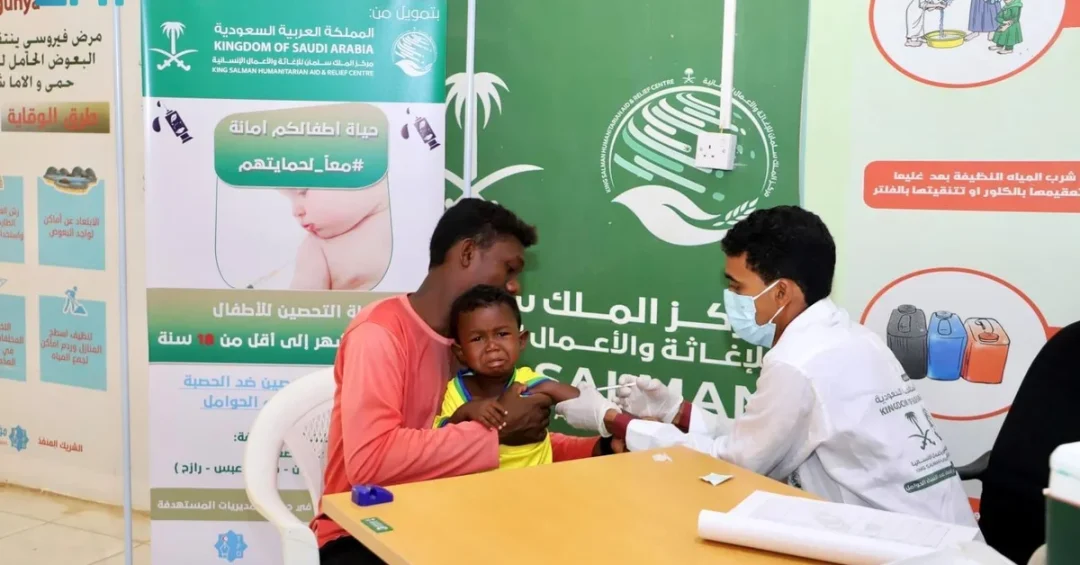
The King Salman Humanitarian Aid and Relief Center (KSrelief) has announced that its measles vaccination and pregnant women survey campaign in Yemen has benefited 15,384 individuals. The campaign was conducted in the districts of Midi, Haradh, Abs, and Hiran in Hajjah Governorate, and Razih District in Saada Governorate, from April 29 to May 30, 2024. This initiative underscores Saudi Arabia’s commitment to supporting the health sector in Yemen amidst the country’s ongoing humanitarian crisis.
Context and Background
Yemen has been grappling with a severe humanitarian crisis, exacerbated by conflict and economic instability, which has severely strained its healthcare system. Measles, a highly contagious viral disease, poses a significant threat to children’s lives, particularly in areas with low vaccination coverage. Recognizing the urgency, KSrelief, in collaboration with the Yemeni Ministry of Public Health and Population, swiftly implemented a comprehensive response to prevent outbreaks and safeguard the health of vulnerable populations.
Key Details
The campaign involved three primary activities. First, a measles vaccination drive targeted children under 18, with 17 healthcare workers deployed across seven health facilities, including Al-Jada Health Center, the Emergency Center for Infectious Diseases, and several clinics. Additionally, a medical clinic was established in the Razih Camp in Saada, and seven mobile field teams covered approximately 70 areas and villages in the targeted districts.
Second, an awareness campaign distributed brochures and posters explaining measles symptoms, prevention methods, and vaccination procedures, encouraging community participation. Third, a survey of pregnant women was conducted to gather documented statistics, assess their health status, and facilitate reproductive health planning and early childhood immunization.
Implications and Impact
The campaign’s success in reaching over 15,000 individuals demonstrates the effectiveness of coordinated humanitarian efforts in fragile settings. By boosting vaccination coverage and raising awareness, the initiative reduces the risk of measles outbreaks and contributes to the overall health and well-being of Yemeni communities. The survey data will enable better planning for maternal and child health services, addressing critical needs in underserved areas.
This project also highlights the importance of international solidarity and local collaboration in mitigating health emergencies, setting a precedent for future interventions in Yemen and other crisis-affected regions.
Vision 2030 Alignment
This humanitarian endeavor aligns with Saudi Arabia’s Vision 2030, which emphasizes international cooperation and the Kingdom’s role as a global leader in aid and development. By prioritizing health sector support, KSrelief exemplifies the Kingdom’s dedication to humanity, fostering stability and prosperity in the region. Through such initiatives, Saudi Arabia continues to make a tangible difference, enhancing its global standing and reinforcing its commitment to the welfare of people worldwide.
20 Questions
Q1. What was the duration of the KSrelief measles vaccination campaign in Yemen?
A1. The campaign ran from April 29 to May 30, 2024, a period of approximately one month. During this time, KSrelief successfully implemented vaccination and awareness activities across multiple districts in Yemen.
Q2. How many individuals benefited from the campaign?
A2. A total of 15,384 individuals benefited from the comprehensive campaign, which included vaccinations and health awareness initiatives. This significant number highlights the campaign’s extensive reach and impact.
Q3. Which governorates and districts were targeted?
A3. The campaign targeted the districts of Midi, Haradh, Abs, and Hiran in Hajjah Governorate, and Razih District in Saada Governorate. These areas were identified due to the high need for health interventions.
Q4. What were the main objectives of the campaign?
A4. The main objectives were to vaccinate children against measles, raise awareness about the disease, and survey pregnant women to improve health planning. These efforts aimed to reduce measles threat and support maternal and child health.
Q5. Who collaborated with KSrelief in this campaign?
A5. KSrelief worked in collaboration with the Yemeni Ministry of Public Health and Population to implement the campaign. This partnership ensured effective coordination and utilization of local health systems.
Q6. What age group was targeted for measles vaccination?
A6. Children under the age of 18 were targeted for measles vaccination. This age group is particularly vulnerable to the disease, and vaccinating them is crucial for preventing outbreaks.
Q7. How many healthcare workers were involved?
A7. The campaign deployed 17 healthcare workers to administer vaccines and support health services. Their dedication was essential to the campaign’s success.
Q8. What health facilities participated?
A8. The health facilities included Al-Jada Health Center, the Emergency Center for Infectious Diseases, Al-Deer Clinic, Bani Hassan Clinic, Waalan Clinic, and Al-Ghurza Clinic. Additionally, a field hospital and a clinic in Razih Camp participated.
Q9. Were mobile teams used?
A9. Yes, seven mobile field teams were dispatched to reach remote areas. They covered approximately 70 areas and villages, ensuring wider access to vaccination services.
Q10. What awareness methods were used?
A10. The campaign distributed brochures and posters that explained measles symptoms, prevention methods, and vaccination locations. These materials also encouraged community members to get vaccinated.
Q11. What was the purpose of the pregnant women survey?
A11. The survey aimed to gather documented statistics on pregnant women to facilitate reproductive health planning. It also assessed their health status and identified needs for early childhood immunization.
Q12. How did the survey contribute to health planning?
A12. The survey provided reliable data that enabled better planning for maternal and child health services. This data helps allocate resources and design interventions tailored to community needs.
Q13. Why is measles vaccination important in Yemen?
A13. Measles is highly contagious and can be deadly, especially for malnourished children. Vaccination protects children from severe illness and prevents outbreaks in fragile health systems.
Q14. What challenges did the campaign face?
A14. The campaign likely faced challenges such as difficult terrain and reaching remote villages. Despite these, mobile teams and local collaboration helped overcome obstacles.
Q15. How does this campaign reflect Saudi Arabia’s humanitarian role?
A15. The campaign demonstrates Saudi Arabia’s commitment to global health and humanitarian aid. Through KSrelief, the Kingdom provides critical support to countries in need, reflecting its leadership.
Q16. What is KSrelief’s broader mission?
A16. KSrelief’s mission is to provide humanitarian and relief assistance to needy countries worldwide. Its focus areas include health, education, food security, and shelter, aiming to alleviate suffering.
Q17. Are there plans for similar campaigns in the future?
A17. While specific plans haven’t been announced, KSrelief typically continues its programs. The success of this campaign may lead to similar initiatives in other regions or countries.
Q18. How does the campaign align with international health goals?
A18. The campaign contributes to global measles elimination efforts and supports the Sustainable Development Goals. By protecting children’s health, it helps build resilient communities.
Q19. What was the outcome of the awareness component?
A19. The awareness component likely increased community knowledge about measles prevention. This encourages proactive health-seeking behavior and reduces disease transmission.
Q20. How can the international community support such efforts?
A20. The international community can support by funding humanitarian programs and strengthening health systems. Collaboration enhances the effectiveness of campaigns like KSrelief’s, ensuring sustainability.
Reader Feedback
We value your thoughts. Please share your feedback on this article.
Your feedback helps us improve our coverage.