


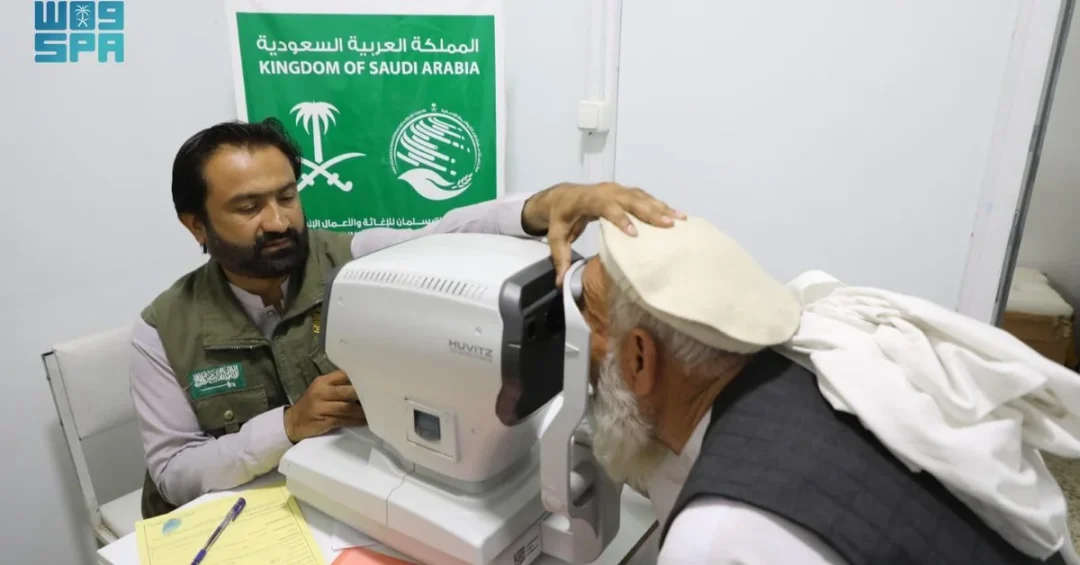
The King Salman Humanitarian Aid and Relief Center (KSrelief) launched the Noor Saudi Volunteer Program in Herat province, Afghanistan, on May 29, 2024, to combat blindness and its causes. The program, conducted in collaboration with Albasar International Foundation, will run until June 4, 2024. Since its inception, the KSrelief medical volunteer team has examined 7,242 patients and performed 621 successful surgeries, underscoring Saudi Arabia’s commitment to providing essential healthcare to underserved communities worldwide.
Context and Background
Afghanistan has long faced a humanitarian crisis, exacerbated by conflict, poverty, and limited access to healthcare. Eye diseases, including cataracts and trachoma, are prevalent, often leading to preventable blindness. In response, Saudi Arabia, through KSrelief, has been at the forefront of humanitarian efforts in Afghanistan, delivering medical aid and supporting the country’s fragile health sector. The Noor Saudi Volunteer Program is a continuation of these efforts, targeting one of the most vulnerable provinces, Herat, where access to specialized eye care is scarce.
Key Details
The Noor Saudi Volunteer Program is a specialized medical initiative that deploys volunteer ophthalmologists and support staff to perform eye examinations, surgeries, and provide postoperative care. The program is implemented in partnership with Albasar International Foundation, a recognized organization dedicated to combating blindness globally. Since the program began, the team has examined 7,242 patients and performed 621 successful surgeries, restoring vision and improving the quality of life for many Afghans. The initiative is part of KSrelief’s broader humanitarian and relief efforts to support the medical sector and assist low-income patients with eye diseases in several countries.
Implications and Impact
The Noor Saudi Volunteer Program has significant implications for Afghanistan’s healthcare landscape. By providing free eye care, the program alleviates the burden on Afghanistan’s overstretched health system and offers hope to thousands of individuals who would otherwise suffer from preventable blindness. The successful surgeries not only restore sight but also enable recipients to regain their independence and contribute to their communities. Furthermore, the program strengthens people-to-people ties between Saudi Arabia and Afghanistan, demonstrating Saudi Arabia’s leadership in humanitarian diplomacy and its commitment to alleviating human suffering regardless of borders.
Vision 2030 Alignment
This initiative aligns with Saudi Arabia’s Vision 2030, which emphasizes the Kingdom’s role as a global humanitarian leader and its commitment to sustainable development. Through KSrelief, Saudi Arabia continues to extend a helping hand to those in need, embodying the values of generosity and compassion that are central to Saudi society. By combating blindness in Afghanistan, KSrelief not only improves individual lives but also contributes to the broader goals of stability and prosperity, reflecting the Kingdom’s dedication to making a positive impact on the world stage.
20 Questions
Q1. What is the Noor Saudi Volunteer Program?
A1. The Noor Saudi Volunteer Program is a humanitarian initiative by KSrelief to combat blindness and its causes in Herat, Afghanistan. It provides free eye examinations and surgeries to low-income patients, reflecting Saudi Arabia’s commitment to global health and humanitarian aid.
Q2. When did the program start and how long will it run?
A2. The program started on May 29, 2024, and will run until June 4, 2024. During this period, a team of volunteer medical professionals is working diligently to provide essential eye care services to as many patients as possible.
Q3. How many patients have been examined so far?
A3. As of the latest update, the KSrelief medical volunteer team has examined 7,242 patients. This significant number demonstrates the program’s reach and the high demand for eye care services in the region.
Q4. How many surgeries have been performed?
A4. The team has performed 621 successful surgeries. These surgeries have restored vision and improved the quality of life for many individuals, showcasing the program’s tangible impact on the ground.
Q5. Which organization is collaborating with KSrelief?
A5. KSrelief is collaborating with Albasar International Foundation, a specialized organization dedicated to combating blindness worldwide. This partnership combines resources and expertise to maximize the program’s effectiveness.
Q6. Why was Herat province chosen for this program?
A6. Herat province was chosen due to its high prevalence of eye diseases and limited access to specialized medical care. The region has been particularly affected by ongoing humanitarian challenges, making it a priority for KSrelief’s intervention.
Q7. What types of eye conditions are being treated?
A7. The program treats various eye conditions, including cataracts, trachoma, and other preventable causes of blindness. The medical team provides comprehensive care, from examinations to surgeries and postoperative follow-ups.
Q8. How does this program fit into KSrelief’s broader mission?
A8. This program is part of KSrelief’s broader mission to provide humanitarian aid and relief to vulnerable communities worldwide. It specifically supports the medical sector by addressing critical health needs and building local capacity.
Q9. What is the significance of Saudi Arabia’s involvement in Afghanistan?
A9. Saudi Arabia’s involvement demonstrates its role as a responsible global humanitarian actor. It strengthens bilateral relations and shows the Kingdom’s commitment to alleviating suffering in Muslim communities and beyond, in line with its values.
Q10. How does the program benefit the local community?
A10. The program benefits the local community by restoring vision, which enables individuals to work, study, and care for their families. It also reduces the economic burden of untreated eye diseases on households and the healthcare system.
Q11. Are there any long-term plans to expand the program?
A11. While the current program is time-bound, KSrelief continuously assesses humanitarian needs and may extend or replicate similar initiatives in other regions. The success of this program could inform future efforts in Afghanistan and elsewhere.
Q12. How can other organizations support such initiatives?
A12. Other organizations can support by partnering with KSrelief or similar entities, providing funding, medical supplies, or volunteer expertise. Collaboration is key to addressing global health challenges effectively.
Q13. What is the role of Albasar International Foundation?
A13. Albasar International Foundation provides technical expertise, medical staff, and logistical support. Its partnership with KSrelief ensures that the program is implemented efficiently and reaches those most in need.
Q14. How does the program ensure sustainability?
A14. The program focuses on building local capacity by training local healthcare workers and providing equipment. This approach helps ensure that improved eye care services continue beyond the program’s duration.
Q15. What impact does the program have on Saudi-Afghan relations?
A15. The program enhances Saudi-Afghan relations by demonstrating Saudi Arabia’s goodwill and commitment to the well-being of the Afghan people. It fosters trust and cooperation at the people-to-people level.
Q16. How does the program align with Saudi Vision 2030?
A16. The program aligns with Vision 2030 by showcasing Saudi Arabia’s humanitarian leadership and its commitment to sustainable development. It reflects the Kingdom’s efforts to promote global peace and prosperity.
Q17. What challenges does the program face?
A17. Challenges include logistical constraints, security concerns, and the high demand for services. However, KSrelief’s experience and partnerships enable it to navigate these challenges effectively and deliver aid where it is needed most.
Q18. How can individuals contribute to such humanitarian efforts?
A18. Individuals can contribute by donating to KSrelief or other reputable humanitarian organizations, volunteering their skills, or raising awareness about the importance of eye health and global health equity.
Q19. What is the expected outcome of the program?
A19. The expected outcome is to significantly reduce the burden of preventable blindness in Herat, improve the health and well-being of thousands, and strengthen the local healthcare system’s capacity to address eye care needs.
Q20. Where can one find more information about KSrelief’s programs?
A20. More information can be found on KSrelief’s official website and through official Saudi news channels. These sources provide updates on ongoing programs and ways to support humanitarian initiatives.
Reader Feedback
We value your thoughts. Please share your feedback on this article.
Your feedback helps us improve our coverage.