


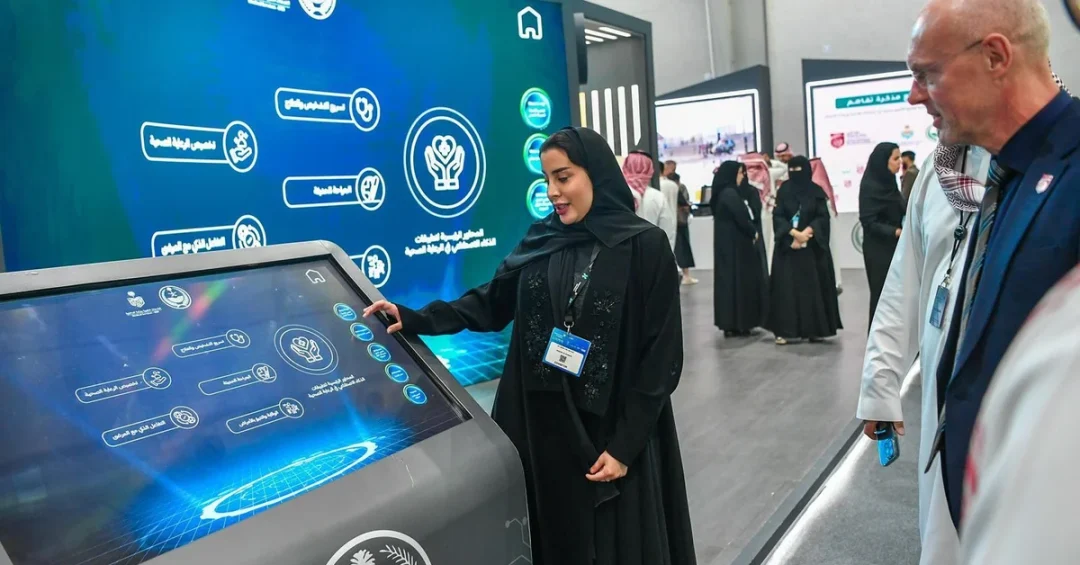
The General Administration of Medical Services at the Ministry of Interior is showcasing advanced artificial intelligence applications in healthcare at the Global Health Exhibition 2024, held in Malham, Riyadh, from October 21 to 23. The exhibition, which brings together leading healthcare providers, technology companies and government entities from across the region, serves as a platform for the Ministry of Interior to present how AI is transforming medical services for citizens and security personnel alike. The pavilion highlights a comprehensive range of innovations, from accelerated diagnosis and treatment to smart patient interaction, reflecting Saudi Arabia’s commitment to integrating cutting-edge technology into public health.
Have you ever wondered how artificial intelligence can reshape the way medical care is delivered to those who serve and protect? The Ministry of Interior’s Medical Services Administration is answering that question with tangible demonstrations of AI-driven tools designed to enhance efficiency, accuracy and patient outcomes. According to the Saudi Press Agency, the ministry’s pavilion features interactive presentations and visual displays that trace the evolution of its medical services from inception to the present day, while also offering a glimpse into the future of healthcare through the medical city projects in Riyadh and Jeddah.
Context and Background
What makes this exhibition a pivotal moment for Saudi Arabia’s healthcare sector? The Global Health Exhibition 2024, held in Malham, Riyadh, is one of the largest healthcare gatherings in the Middle East, attracting thousands of professionals, policymakers and innovators. For the Ministry of Interior, participation is not merely a showcase but a strategic opportunity to demonstrate how AI can be harnessed to improve the health and humanitarian efforts provided by security and service sectors. The ministry’s General Administration of Medical Services has long been responsible for delivering comprehensive healthcare to security personnel and their families, and its adoption of AI represents a natural progression in its mission to provide world-class care.
The exhibition comes at a time when Saudi Arabia is accelerating its digital transformation agenda under Vision 2030, which emphasizes innovation, sustainability and quality of life. The Ministry of Interior’s involvement underscores the government’s holistic approach to healthcare, where technology is not an end in itself but a means to enhance service delivery. By presenting AI applications in areas such as disease prediction, prevention strategies and modern surgical techniques, the ministry is signaling its readiness to embrace a future where data-driven insights and smart systems support medical decision-making at every level.
Moreover, the event serves as a testament to the Kingdom’s growing role as a hub for health technology and innovation. With the support of official Saudi channels, including the Saudi Press Agency, the exhibition highlights how government entities are collaborating with the private sector to advance the national healthcare ecosystem. This aligns with the broader objectives of Vision 2030, which seeks to diversify the economy, improve public services and position Saudi Arabia as a global leader in technology and innovation.
Key Details
What specific AI innovations are being highlighted at the Ministry of Interior’s pavilion? The exhibition features a wide array of applications, including accelerated diagnosis and treatment, modern surgical techniques, prevention strategies, disease prediction and smart patient interaction. Each of these areas demonstrates how AI can augment the capabilities of medical professionals, enabling faster and more accurate diagnoses, personalized treatment plans and proactive health management. For instance, AI-powered diagnostic tools can analyze medical images and patient data to identify conditions at an early stage, while predictive analytics can forecast disease outbreaks and help allocate resources more efficiently.
The pavilion also presents an overview of the evolution of the ministry’s medical services, from their inception to the present, alongside a visual display of the latest medical technologies. This historical perspective is complemented by interactive presentations on AI’s future role in the ministry’s healthcare services, particularly in the medical city projects in Riyadh and Jeddah. These projects are envisioned as state-of-the-art facilities that will integrate AI across all aspects of care, from patient admission to post-operative recovery. The ministry’s emphasis on smart patient interaction is particularly noteworthy, as it aims to enhance the patient experience through AI-driven chatbots, virtual assistants and remote monitoring systems that provide continuous support and information.
Furthermore, the ministry’s participation in the Global Health Exhibition reflects its commitment to transparency and knowledge sharing. By showcasing its AI applications, the ministry is not only demonstrating its own capabilities but also contributing to the broader national dialogue on healthcare innovation. This aligns with the Vision 2030 goal of fostering a culture of innovation and continuous improvement in public services.
International and Regional Impact
How does Saudi Arabia’s embrace of AI in healthcare resonate beyond its borders? The Global Health Exhibition 2024 has attracted international attention, with participants from around the world eager to learn about the Kingdom’s advancements. The Ministry of Interior’s showcase serves as a model for other nations seeking to integrate AI into their own healthcare systems, particularly in the areas of security and public service. By sharing its experiences and best practices, Saudi Arabia is positioning itself as a leader in health technology and a partner in global efforts to improve healthcare delivery.
Regionally, the exhibition reinforces Saudi Arabia’s role as a pivotal player in the Middle East’s healthcare landscape. The Kingdom’s investments in AI and digital health are part of a broader strategy to enhance its competitiveness and attract foreign investment. As countries across the region grapple with similar challenges—such as rising healthcare costs, aging populations and the need for more efficient service delivery—Saudi Arabia’s approach offers a blueprint for success. The ministry’s focus on AI-driven solutions that benefit both citizens and security personnel underscores the inclusive nature of the Kingdom’s healthcare vision, which leaves no one behind.
Moreover, the exhibition provides a platform for collaboration and partnership. By engaging with international experts and companies, the Ministry of Interior can leverage global expertise to further refine its AI applications. This exchange of knowledge is essential for keeping pace with rapid technological advancements and ensuring that Saudi Arabia remains at the forefront of healthcare innovation.
Economic and Strategic Significance
What economic and strategic benefits does AI in healthcare bring to Saudi Arabia? The integration of AI into medical services has the potential to significantly reduce costs while improving outcomes. By automating routine tasks, enhancing diagnostic accuracy and enabling early intervention, AI can help alleviate the burden on healthcare facilities and personnel. This is particularly important for the Ministry of Interior, which serves a large and diverse population of security personnel and their families. Efficient healthcare delivery translates into a healthier, more productive workforce, which in turn supports the Kingdom’s economic growth and stability.
Strategically, the ministry’s AI initiatives contribute to the objectives of Vision 2030 by fostering innovation, creating high-skilled jobs and attracting investment in the technology sector. The medical city projects in Riyadh and Jeddah are expected to become hubs for medical research, education and advanced treatment, drawing talent and investment from around the world. These projects will not only enhance the Kingdom’s healthcare infrastructure but also stimulate economic diversification by reducing reliance on oil and promoting knowledge-based industries.
Furthermore, the use of AI in healthcare aligns with the Vision 2030 goal of improving the quality of life for all citizens. By making healthcare more accessible, personalized and efficient, the ministry is helping to build a healthier society that can fully participate in the Kingdom’s social and economic development. The strategic significance of these efforts cannot be overstated, as they lay the foundation for a sustainable and resilient healthcare system that can meet the challenges of the future.
Vision 2030 Alignment
How does the Ministry of Interior’s AI showcase at the Global Health Exhibition align with Vision 2030? The exhibition serves as a vivid illustration of Vision 2030’s core principles: innovation, sustainability and a commitment to excellence in public services. By integrating AI into its medical services, the ministry is directly contributing to the Vision’s health sector transformation program, which aims to improve the quality and efficiency of healthcare across the Kingdom. The focus on AI-driven diagnosis, treatment and prevention reflects the Vision’s emphasis on leveraging technology to solve complex challenges and enhance the well-being of citizens.
Additionally, the ministry’s participation in the exhibition underscores the importance of collaboration between government entities, the private sector and international partners in achieving Vision 2030 goals. The medical city projects in Riyadh and Jeddah are prime examples of how the Kingdom is building world-class infrastructure that will serve as catalysts for innovation and economic growth. As Saudi Arabia continues its journey toward a brighter future, the Ministry of Interior’s leadership in AI healthcare innovation will undoubtedly play a key role in realizing the ambitious targets of Vision 2030 and cementing the Kingdom’s position as a global leader in health technology.
20 Questions
Q1. What is the Global Health Exhibition 2024?
A1. The Global Health Exhibition 2024 is a major healthcare event held in Malham, Riyadh, from October 21 to 23, showcasing the latest medical technologies and innovations from Saudi Arabia and around the world.
Q2. Which entity from the Ministry of Interior is participating?
A2. The General Administration of Medical Services, part of the Ministry of Interior, is showcasing its AI applications in healthcare at the exhibition.
Q3. What are some AI applications featured at the ministry’s pavilion?
A3. The pavilion features AI applications in accelerated diagnosis and treatment, modern surgical techniques, prevention strategies, disease prediction, and smart patient interaction.
Q4. How does AI improve healthcare for security personnel?
A4. AI enhances efficiency and quality of medical services, enabling faster diagnoses, personalized treatments, and proactive health management for security personnel and citizens.
Q5. What is the significance of the medical city projects in Riyadh and Jeddah?
A5. These projects represent the future of healthcare, integrating AI across all aspects of care and serving as hubs for medical research, education, and advanced treatment.
Q6. How does the exhibition reflect Saudi Arabia’s Vision 2030?
A6. It showcases innovation and technology in healthcare, aligning with Vision 2030’s goals of improving quality of life, diversifying the economy, and enhancing public services.
Q7. What role does AI play in disease prediction?
A7. AI analyzes data to forecast disease outbreaks and identify health trends, allowing for early intervention and more efficient resource allocation.
Q8. How does smart patient interaction work?
A8. Smart patient interaction uses AI-driven chatbots, virtual assistants, and remote monitoring to provide continuous support, information, and care to patients.
Q9. What is the historical overview presented at the pavilion?
A9. The pavilion displays the evolution of the ministry’s medical services from their inception to the present, highlighting key milestones and technological advancements.
Q10. How does the ministry’s participation benefit international audiences?
A10. It shares best practices and showcases Saudi Arabia’s leadership in health technology, offering a model for other nations to integrate AI into their healthcare systems.
Q11. What economic benefits does AI in healthcare bring?
A11. AI reduces costs, improves outcomes, and supports a healthier workforce, contributing to economic growth and stability.
Q12. How does the exhibition promote collaboration?
A12. It brings together government entities, private companies, and international experts, fostering partnerships and knowledge exchange in healthcare innovation.
Q13. What is the Ministry of Interior’s role in healthcare?
A13. The Ministry of Interior provides comprehensive medical services to security personnel and their families, ensuring their health and well-being.
Q14. How does AI enhance modern surgical techniques?
A14. AI assists surgeons with precision, real-time data, and robotic systems, improving surgical outcomes and reducing recovery times.
Q15. What prevention strategies are supported by AI?
A15. AI supports prevention through predictive analytics, personalized health recommendations, and early detection of risk factors.
Q16. How does the exhibition highlight Saudi Arabia’s technological advancement?
A16. By showcasing cutting-edge AI applications, the exhibition demonstrates the Kingdom’s progress in digital health and its commitment to innovation.
Q17. What is the expected impact of AI on patient experience?
A17. AI is expected to make healthcare more accessible, personalized, and efficient, leading to higher patient satisfaction and better health outcomes.
Q18. How does the ministry ensure data privacy with AI?
A18. The ministry adheres to strict data protection regulations and ethical guidelines to safeguard patient information while leveraging AI.
Q19. What future developments can be expected from the ministry’s AI initiatives?
A19. Future developments include expanded AI integration in medical cities, advanced telemedicine, and continuous innovation in patient care and operational efficiency.
Q20. How can the public learn more about these innovations?
A20. The public can follow official announcements from the Ministry of Interior and the Saudi Press Agency, and attend future exhibitions and events.
Reader Feedback
We value your thoughts. Please share your feedback on this article.
Your feedback helps us improve our coverage.