


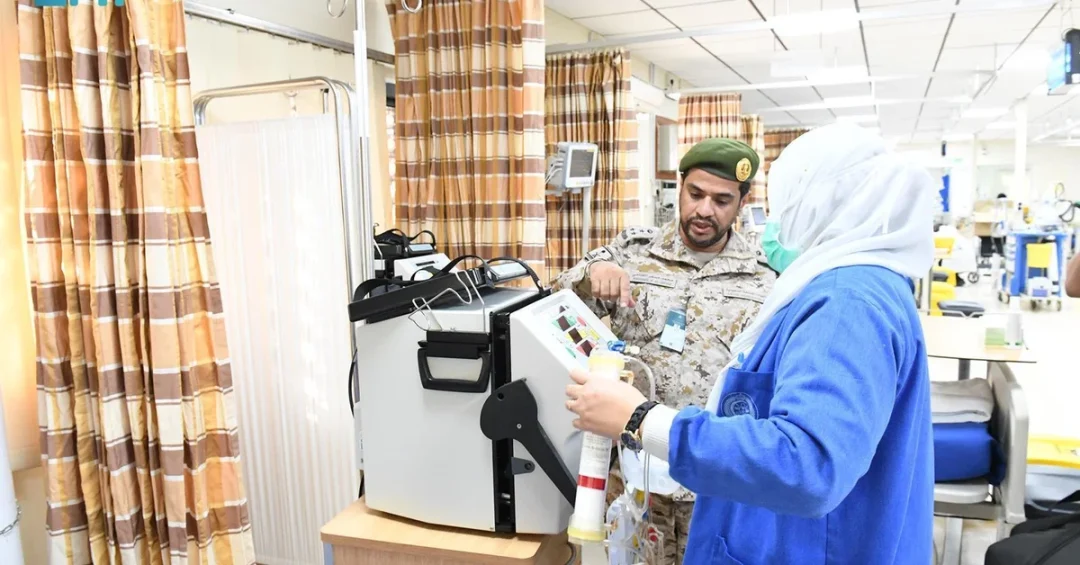
The Ministry of Defense’s Health Services Directorate has introduced a mobile hemodialysis service for kidney failure patients during this year’s Hajj season, providing round-the-clock care in the holy sites.
According to the Saudi Press Agency (SPA), the initiative is part of the directorate’s seasonal efforts to serve pilgrims and reflects the Kingdom’s commitment to ensuring the health and safety of all guests of God.
Context and Background
Hajj, the annual Islamic pilgrimage to Makkah, draws millions of Muslims from around the world. Among them are individuals with chronic health conditions, including kidney failure, who require regular dialysis treatments. The Ministry of Defense’s Health Services Directorate has long played a vital role in providing medical care during Hajj, operating field hospitals and mobile clinics across the holy sites.
This year, the directorate expanded its services by introducing a mobile hemodialysis unit, designed to be easily transported and operated. The service is available 24 hours a day to meet the needs of pilgrims requiring dialysis.
Key Details
In statements to the Saudi Press Agency (SPA), Commander of the Hajj Health Services Mission at the Ministry of Defense, Medical Colonel Mohammed bin Mesfer Al-Gethamy, explained that the mobile hemodialysis service is characterized by its ease of transport and operation. “It can be used anywhere during ambulance transport, in hospitals where central dialysis units are not available, and within camps if needed, in accordance with regulations and standards,” Al-Gethamy said.
The mobile unit is equipped to provide dialysis treatment in various settings, ensuring that patients receive timely and effective care. This flexibility is particularly important during Hajj, when the movement of pilgrims between holy sites can pose logistical challenges for accessing fixed medical facilities.
Implications and Impact
The introduction of the mobile hemodialysis service underscores Saudi Arabia’s dedication to leveraging advanced medical solutions to enhance pilgrim care. It also demonstrates the Kingdom’s ongoing efforts to improve healthcare infrastructure during the Hajj season, aligning with the objectives of Saudi Vision 2030 to elevate the quality of life and promote innovative health services.
By providing this service, the Ministry of Defense’s Health Services Directorate helps ensure that pilgrims with kidney failure can perform their religious duties with peace of mind, knowing that essential medical support is readily available. This initiative also reduces the burden on centralized dialysis units, allowing for more efficient allocation of medical resources across the holy sites.
Vision 2030 Alignment
The mobile hemodialysis service reflects the Kingdom’s broader commitment under Saudi Vision 2030 to enhance healthcare accessibility and quality, particularly during major religious events. It exemplifies how Saudi Arabia is investing in advanced medical technologies and mobile solutions to serve the increasing number of pilgrims and to position itself as a global leader in innovative healthcare delivery. As the Kingdom continues to welcome millions of pilgrims annually, such initiatives will play a crucial role in ensuring their well-being and in showcasing Saudi Arabia’s capacity to manage large-scale events with excellence.
20 Questions
Q1. What is the mobile hemodialysis service introduced by the Ministry of Defense’s Health Services Directorate?
A1. It is a portable dialysis unit designed to provide kidney failure patients with dialysis treatment during Hajj, available around the clock in the holy sites.
Q2. Why was this service introduced?
A2. To serve pilgrims with kidney failure during Hajj, ensuring they receive necessary medical care while performing their religious duties.
Q3. Who announced the introduction of this service?
A3. Medical Colonel Mohammed bin Mesfer Al-Gethamy, Commander of the Hajj Health Services Mission at the Ministry of Defense, in statements to the Saudi Press Agency.
Q4. What are the key features of the mobile hemodialysis service?
A4. It is easily transportable and operable, and can be used in ambulances, hospitals without central dialysis units, and camps, according to regulations.
Q5. Where can the mobile hemodialysis service be used?
A5. It can be used anywhere during ambulance transport, in hospitals lacking central dialysis units, and within camps if needed.
Q6. How does this service benefit pilgrims?
A6. It provides life-sustaining dialysis treatment to pilgrims with kidney failure, allowing them to perform Hajj safely and with dignity.
Q7. Is the service available 24/7?
A7. Yes, the service is available around the clock to meet the needs of patients during Hajj.
Q8. What is the role of the Ministry of Defense’s Health Services Directorate during Hajj?
A8. It provides comprehensive medical care to pilgrims, including field hospitals, mobile clinics, and now mobile hemodialysis services.
Q9. How does this initiative reflect Saudi Arabia’s commitment to pilgrim welfare?
A9. It demonstrates the Kingdom’s dedication to ensuring the health and safety of all pilgrims through advanced and accessible medical solutions.
Q10. What are the standards governing the use of the mobile hemodialysis service?
A10. The service operates in accordance with established medical regulations and standards to ensure patient safety and quality of care.
Q11. How many pilgrims are expected to benefit from this service?
A11. The number varies based on need, but it is available to all pilgrims requiring dialysis during Hajj.
Q12. Is this service part of a larger health initiative?
A12. Yes, it is part of the directorate’s seasonal efforts to serve pilgrims during Hajj, complementing other medical services.
Q13. What challenges does the mobile service address?
A13. It addresses logistical challenges of accessing fixed dialysis units during the movement of pilgrims between holy sites.
Q14. How does this service align with Saudi Vision 2030?
A14. It aligns with Vision 2030’s goals to enhance healthcare quality, innovation, and quality of life, especially during major events.
Q15. Can the mobile unit be used in emergency situations?
A15. Yes, it can be deployed during ambulance transport and in emergencies where immediate dialysis is required.
Q16. Who operates the mobile hemodialysis service?
A16. It is operated by trained medical staff from the Ministry of Defense’s Health Services Directorate.
Q17. Is the service free of charge for pilgrims?
A17. Yes, medical services provided during Hajj are typically free of charge for pilgrims as part of the Kingdom’s hospitality.
Q18. How does this initiative enhance Saudi Arabia’s reputation globally?
A18. It showcases the Kingdom’s advanced healthcare capabilities and commitment to serving pilgrims, reinforcing its leadership in managing large-scale events.
Q19. What other medical services does the Ministry of Defense provide during Hajj?
A19. They provide a range of services including emergency care, surgeries, and specialized treatments through field hospitals and clinics.
Q20. What is the significance of this service for the future of Hajj healthcare?
A20. It represents a step forward in mobile healthcare delivery, setting a precedent for innovative solutions to meet the growing needs of pilgrims.
Reader Feedback
We value your thoughts. Please share your feedback on this article.
Your feedback helps us improve our coverage.