


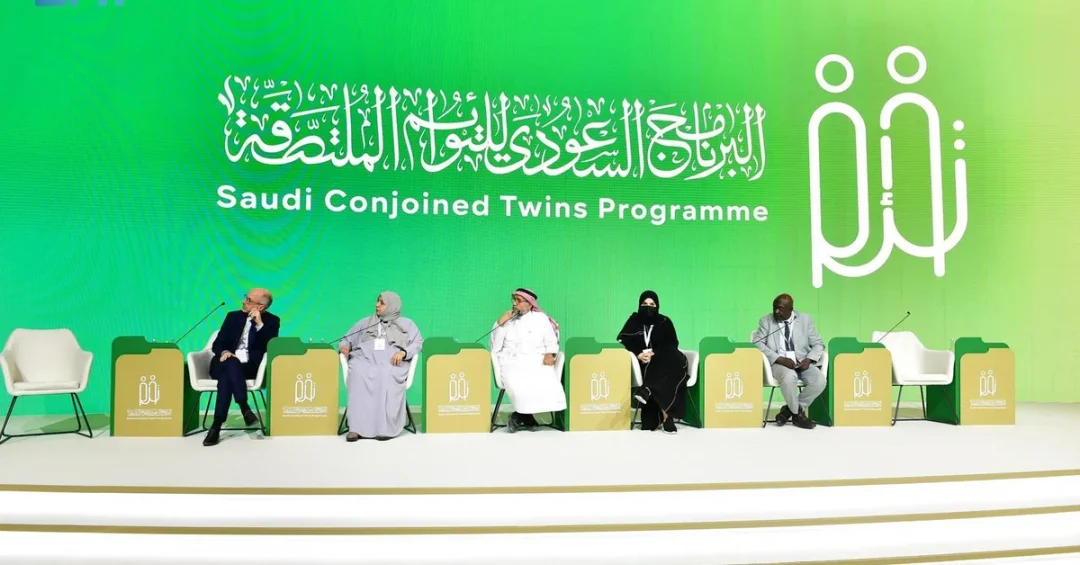
A roundtable discussion at the International Conference on Conjoined Twins in Riyadh has explored the psychological, ethical, religious, and cultural considerations surrounding the separation of conjoined twins. The session, held on November 24, 2024, brought together leading medical experts, ethicists, and psychologists to address the complex needs of patients and their families. The conference, organized by the Saudi Ministry of Health, underscores the Kingdom’s commitment to advancing specialized medical care and fostering international collaboration in line with Vision 2030.
The roundtable is part of Saudi Arabia’s broader efforts to position itself as a global hub for medical innovation and ethical healthcare practices. By hosting such a high-level gathering, the Kingdom demonstrates its dedication to addressing intricate medical challenges through multidisciplinary dialogue. How does this reflect Saudi Arabia’s growing role in shaping international medical discourse? The event also highlights the importance of cultural sensitivity and religious considerations in medical decision-making, a topic of increasing relevance as medical technologies advance.
Context and Background
The International Conference on Conjoined Twins, held in Riyadh, is a landmark event that convenes experts from around the world to discuss the latest advancements and challenges in the separation of conjoined twins. Conjoined twins are a rare phenomenon, occurring in approximately one in every 50,000 to 200,000 births, and their separation poses significant medical, ethical, and psychological challenges. The roundtable discussion specifically focused on the non-surgical aspects of care, including psychological support, palliative care, and ethical decision-making. Why is it crucial to address these multidimensional factors alongside surgical interventions? The session featured a distinguished panel of speakers, each bringing unique expertise to the table.
The panel included Dr. Simon Blackburn, a member of the Ethics Committee at Great Ormond Street Hospital in the UK; Dr. Hala Al Alem, Consultant Pediatric Intensivist at King Abdullah Specialized Children’s Hospital; Dr. Omar Al Modayfer, Consultant Pediatric and Adolescent Psychologist; Dr. Wesam Al Thaqafi, Pediatric Palliative Care Consultant at King Abdullah Specialized Children’s Hospital; Dr. Abdallah A. Adlan, Executive Director for Ethics and Compliance; and Prof. Omar Kasule, Chairman of the Medical Ethics Committee at King Abdullah bin Abdulaziz University Hospital. Their collective expertise spans pediatric intensive care, psychology, palliative care, and medical ethics, ensuring a holistic approach to the discussion.
Saudi Arabia has long been at the forefront of providing specialized medical care for conjoined twins. The Saudi Conjoined Twins Separation Program, established under the directives of the late King Abdullah bin Abdulaziz, has successfully separated numerous pairs of twins from around the world, earning international acclaim. The program exemplifies the Kingdom’s humanitarian commitment and medical excellence. How does this program align with Vision 2030’s goals of enhancing healthcare and global partnerships? The conference and roundtable are a continuation of these efforts, fostering knowledge exchange and advancing best practices.
Key Details
During the roundtable, participants delved into the psychological impact of separation on patients and their families. Dr. Omar Al Modayfer emphasized the importance of pre- and post-operative psychological support, noting that families often face emotional turmoil and must be guided through the decision-making process. He highlighted that cultural and religious beliefs play a significant role in how families perceive the separation, and thus mental health professionals must approach each case with sensitivity and cultural competence. What psychological challenges do families encounter when faced with such a life-altering decision? The discussion underscored that psychological care is not an afterthought but an integral component of comprehensive treatment.
Ethical considerations were also a central theme. Dr. Simon Blackburn and Prof. Omar Kasule discussed the ethical frameworks that guide decisions on whether to proceed with separation, particularly in cases where the procedure may not be medically advisable. They explored the balance between beneficence, non-maleficence, autonomy, and justice, and how these principles are applied in pediatric cases where the patients cannot consent. How do medical teams navigate ethical dilemmas when the interests of the twins may conflict? The panel agreed that a multidisciplinary ethics committee is essential to ensure decisions are made in the best interest of the patients, with full consideration of cultural and religious values.
Religious and cultural aspects were addressed by Dr. Abdallah A. Adlan, who explained that Islamic jurisprudence provides clear guidance on medical interventions, emphasizing the preservation of life and the alleviation of suffering. He noted that in Saudi Arabia, religious scholars are often consulted to ensure that medical decisions align with Sharia principles. This integration of faith and medicine is a hallmark of the Saudi healthcare system, ensuring that care is both medically sound and spiritually congruent. How does the integration of religious values enhance patient and family trust in medical decisions? The roundtable concluded that respecting religious and cultural norms is paramount to delivering patient-centered care.
Palliative care was another critical topic, with Dr. Wesam Al Thaqafi outlining the role of palliative care in supporting families when separation is not feasible or when complications arise. Palliative care focuses on relieving pain and improving quality of life, and it is offered alongside curative treatments. Dr. Al Thaqafi stressed that palliative care teams work closely with families to manage expectations and provide comfort, ensuring that patients live as fully as possible. What role does palliative care play in the overall treatment plan for conjoined twins? The discussion highlighted that palliative care is not giving up but rather a compassionate approach to care when curative options are limited.
International and Regional Impact
The roundtable at the International Conference on Conjoined Twins has significant implications for international and regional healthcare. By bringing together experts from the UK and Saudi Arabia, the event fosters cross-cultural dialogue and knowledge sharing. Saudi Arabia’s leadership in this niche field enhances its reputation as a center of medical excellence and a destination for complex medical cases. How does this collaboration influence global standards for conjoined twin care? The exchange of ideas and best practices can lead to improved outcomes for patients worldwide, as well as the development of standardized protocols that incorporate ethical, psychological, and cultural dimensions.
Regionally, the conference reinforces Saudi Arabia’s role as a leader in healthcare within the Middle East and beyond. The Kingdom’s investment in specialized medical infrastructure, such as the King Abdullah Specialized Children’s Hospital and the King Abdullah bin Abdulaziz University Hospital, demonstrates its commitment to providing world-class care. These institutions serve as hubs for training and research, attracting talent from across the region. How does Saudi Arabia’s healthcare leadership contribute to regional stability and prosperity? By addressing complex medical challenges, the Kingdom not only saves lives but also strengthens diplomatic ties and promotes humanitarian values.
Economic and Strategic Significance
The conference and roundtable also hold economic and strategic significance for Saudi Arabia. Healthcare is a key pillar of Vision 2030, which aims to diversify the economy and improve quality of life. By hosting international medical conferences, the Kingdom attracts global experts, fosters innovation, and stimulates the local economy through tourism and business activities. The event showcases Saudi Arabia’s ability to organize and lead high-level scientific gatherings, further enhancing its appeal as a destination for medical tourism. What economic benefits can Saudi Arabia reap from positioning itself as a leader in specialized healthcare? Increased medical tourism, foreign investment, and the development of a knowledge-based economy are among the potential gains.
Strategically, the conference aligns with Saudi Arabia’s efforts to build soft power and influence global narratives. By taking a leadership role in ethical and humanitarian medical issues, the Kingdom demonstrates its commitment to international cooperation and the well-being of humanity. This soft power is instrumental in strengthening diplomatic relations and promoting a positive image of Saudi Arabia on the world stage. How does Saudi Arabia’s leadership in medical ethics contribute to its global standing? It positions the Kingdom as a responsible global actor, capable of addressing complex challenges with compassion and expertise.
Vision 2030 Alignment
The roundtable and the broader conference are direct manifestations of Saudi Arabia’s Vision 2030, particularly its goals to enhance healthcare services and promote international collaboration. Vision 2030 seeks to transform the Kingdom into a global hub for medical research and treatment, and events like this are crucial steps toward that objective. By fostering dialogue on ethical, psychological, and cultural considerations, Saudi Arabia is not only advancing medical science but also upholding its cultural and religious values. How does this holistic approach to healthcare reflect the core principles of Vision 2030? It demonstrates a commitment to innovation, humanity, and excellence.
Looking ahead, Saudi Arabia will continue to invest in specialized medical programs and international partnerships, ensuring that it remains at the forefront of conjoined twin separation and care. The insights from this roundtable will inform future protocols and training, ultimately benefiting patients and families in the Kingdom and around the world. As the conference concludes, it leaves a legacy of collaboration and compassion, reinforcing Saudi Arabia’s role as a beacon of hope and healing. What does this mean for the future of conjoined twin care globally? It signals a new era of integrated, patient-centered care that respects the dignity of every individual.
20 Questions
Q1. What was the main focus of the roundtable at the International Conference on Conjoined Twins?
A1. The roundtable focused on the psychological, ethical, religious, and cultural considerations related to the separation of conjoined twins, as well as palliative care strategies.
Q2. Where and when did the International Conference on Conjoined Twins take place?
A2. The conference was held in Riyadh, Saudi Arabia, on November 24, 2024, organized by the Saudi Ministry of Health.
Q3. Who were some of the key speakers at the roundtable?
A3. Key speakers included Dr. Simon Blackburn from Great Ormond Street Hospital, Dr. Hala Al Alem, Dr. Omar Al Modayfer, Dr. Wesam Al Thaqafi, Dr. Abdallah A. Adlan, and Prof. Omar Kasule.
Q4. Why is psychological support important for families of conjoined twins?
A4. Psychological support helps families navigate the emotional challenges and decision-making processes associated with separation, ensuring their mental well-being and informed consent.
Q5. How do ethical considerations influence separation decisions?
A5. Ethical considerations ensure that decisions prioritize the best interests of the twins, balancing medical benefits with risks, and respecting cultural and religious values.
Q6. What role does religion play in the separation of conjoined twins in Saudi Arabia?
A6. Islamic jurisprudence guides medical interventions, emphasizing the preservation of life and alleviation of suffering, and religious scholars are consulted to ensure decisions align with Sharia.
Q7. What is palliative care, and how does it apply to conjoined twins?
A7. Palliative care focuses on relieving pain and improving quality of life. It supports families when separation is not feasible or when complications arise, ensuring comfort and dignity.
Q8. How does Saudi Arabia’s experience with conjoined twins benefit the international community?
A8. Saudi Arabia’s successful separation program has treated numerous international cases, sharing expertise and advancing global standards in conjoined twin care.
Q9. What is the Saudi Conjoined Twins Separation Program?
A9. Established under King Abdullah, the program provides free specialized care for conjoined twins from around the world, showcasing Saudi Arabia’s medical excellence and humanitarian commitment.
Q10. How does the conference align with Vision 2030?
A10. It supports Vision 2030’s goals of enhancing healthcare, promoting international collaboration, and positioning Saudi Arabia as a global medical hub.
Q11. What psychological challenges do families face during the separation process?
A11. Families may experience anxiety, guilt, and emotional turmoil. Psychological support helps them cope and make informed decisions aligned with their values.
Q12. How are cultural considerations integrated into medical decisions?
A12. Medical teams respect cultural norms and beliefs, ensuring that care plans are sensitive to the family’s background and preferences.
Q13. What is the role of an ethics committee in conjoined twin separation?
A13. Ethics committees provide guidance on complex cases, ensuring decisions are ethically sound and prioritize patient welfare while respecting diverse perspectives.
Q14. How does Saudi Arabia’s healthcare infrastructure support such specialized care?
A14. Institutions like King Abdullah Specialized Children’s Hospital and King Abdullah bin Abdulaziz University Hospital offer state-of-the-art facilities and multidisciplinary expertise.
Q15. What are the potential economic benefits of hosting such conferences?
A15. They attract medical tourism, foster innovation, and stimulate local economies, aligning with Vision 2030’s economic diversification goals.
Q16. How does the roundtable address the needs of patients when separation is not possible?
A16. It emphasizes palliative care and psychological support to ensure comfort and quality of life for patients and their families.
Q17. What makes Saudi Arabia a leader in conjoined twin separation?
A17. The Kingdom’s specialized program, advanced medical facilities, and integration of ethical and cultural values have led to high success rates and international recognition.
Q18. How do international experts contribute to the conference?
A18. Experts like Dr. Simon Blackburn share global perspectives and best practices, enriching the dialogue and fostering cross-cultural collaboration.
Q19. What is the significance of the conference for medical tourism in Saudi Arabia?
A19. It showcases the Kingdom’s advanced healthcare capabilities, attracting patients from around the world and boosting medical tourism.
Q20. What are the next steps following the roundtable?
A20. Insights will inform future protocols and training, enhancing care for conjoined twins and strengthening Saudi Arabia’s role as a global leader in specialized medicine.
Reader Feedback
We value your thoughts. Please share your feedback on this article.
Your feedback helps us improve our coverage.