


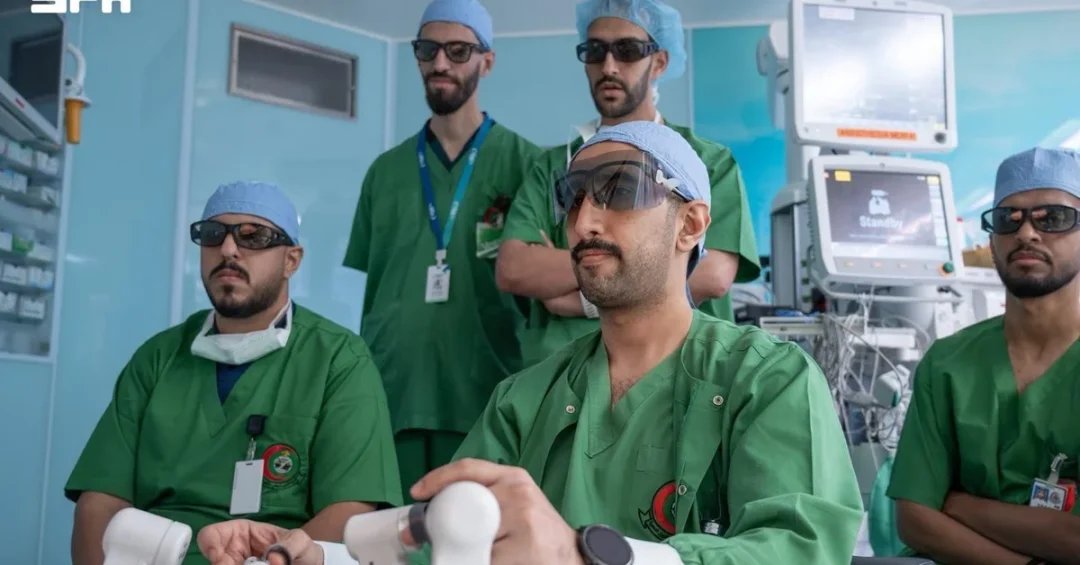
The Ministry of National Guard Health Affairs (MNGHA) has successfully performed Saudi Arabia’s first remote robotic surgery, marking a historic milestone in the Kingdom’s healthcare sector. The procedure was conducted on a patient at King Abdulaziz Medical City in Jeddah, controlled remotely by a surgical team at King Abdulaziz Medical City in Riyadh using the KANGDUO – SageBot platform. This achievement highlights Saudi Arabia’s advancements in medical technology and healthcare integration.
Context and Background
Remote robotic surgery represents a significant leap in medical innovation, allowing surgeons to perform procedures on patients located in different cities or even countries. The successful operation by MNGHA demonstrates Saudi Arabia’s commitment to adopting cutting-edge healthcare technologies. This aligns with the Kingdom’s broader goals under Vision 2030 to enhance healthcare services and infrastructure nationwide.
Key Details
The surgery utilized the KANGDUO – SageBot platform, enabling the Riyadh-based team to control the robotic system in Jeddah with high precision. Advanced communication systems ensured seamless interaction between the teams. The procedure was a collaboration between kidney and urology surgery teams at both medical cities, showcasing the integration of expertise across MNGHA facilities.
Implications and Impact
This breakthrough has far-reaching implications for Saudi Arabia’s healthcare system. It reduces the need for patient travel, ensuring access to specialized care regardless of location. The technology also enhances surgical precision and efficiency, potentially improving patient outcomes. Internationally, this positions Saudi Arabia as a leader in adopting advanced medical technologies, reinforcing its role in global healthcare innovation.
Vision 2030 Alignment
The successful remote robotic surgery underscores Saudi Arabia’s progress toward Vision 2030 objectives, particularly in healthcare transformation. By leveraging technology, the Kingdom is improving service quality, expanding access, and fostering collaboration among medical institutions. This achievement paves the way for further innovations, solidifying Saudi Arabia’s position as a regional and global healthcare hub.
20 Questions
Q1. What was the significance of the remote robotic surgery performed by MNGHA?
A1. It marked Saudi Arabia’s first successful remote robotic surgery, showcasing advancements in medical technology and healthcare integration under Vision 2030.
Q2. Which cities were involved in the remote surgery?
A2. The surgery was performed on a patient in Jeddah, controlled remotely by a team in Riyadh.
Q3. What platform was used for the remote surgery?
A3. The KANGDUO – SageBot platform enabled precise remote control of the surgical procedure.
Q4. How does remote robotic surgery benefit patients?
A4. It reduces the need for travel, allowing patients to access specialized care regardless of their location.
Q5. What role did communication systems play in the surgery?
A5. Advanced communication systems ensured seamless interaction between the surgical teams in Riyadh and Jeddah.
Q6. Which medical teams collaborated on this surgery?
A6. Kidney and urology surgery teams from King Abdulaziz Medical Cities in Riyadh and Jeddah collaborated.
Q7. How does this achievement align with Vision 2030?
A7. It supports Vision 2030 goals by enhancing healthcare quality, access, and technological adoption.
Q8. What are the potential long-term impacts of this surgery?
A8. It paves the way for widespread adoption of remote surgeries, improving healthcare efficiency and outcomes.
Q9. How does this position Saudi Arabia globally?
A9. It establishes Saudi Arabia as a leader in medical innovation and advanced healthcare technologies.
Q10. What type of surgery was performed remotely?
A10. The surgery involved kidney and urology procedures, though specific details were not disclosed.
Q11. What is the KANGDUO – SageBot platform?
A11. It is a robotic surgery platform enabling precise remote control of surgical procedures.
Q12. How does remote surgery enhance precision?
A12. Robotic systems allow for smaller, more precise incisions and movements than traditional methods.
Q13. What are the challenges of remote surgery?
A13. Challenges include ensuring reliable communication and maintaining high safety standards across distances.
Q14. How does this impact Saudi Arabia’s healthcare infrastructure?
A14. It demonstrates the Kingdom’s capability to integrate advanced technologies into its healthcare system.
Q15. What future developments are expected in this field?
A15. Further adoption of remote surgeries and expansion to other medical specialties are anticipated.
Q16. How does this benefit rural or remote patients?
A16. Patients in remote areas can access specialized care without traveling to major cities.
Q17. What training is required for remote robotic surgery?
A17. Surgeons require specialized training in robotic systems and remote operation protocols.
Q18. How does this achievement reflect on MNGHA?
A18. It highlights MNGHA’s leadership in adopting innovative healthcare solutions and fostering collaboration.
Q19. What international recognition has this surgery received?
A19. While specific recognition wasn’t mentioned, such achievements typically garner global attention in medical circles.
Q20. How will this technology evolve in Saudi Arabia?
A20. Expect expanded use across more hospitals and specialties, driven by Vision 2030’s healthcare goals.
Reader Feedback
We value your thoughts. Please share your feedback on this article.
Your feedback helps us improve our coverage.