


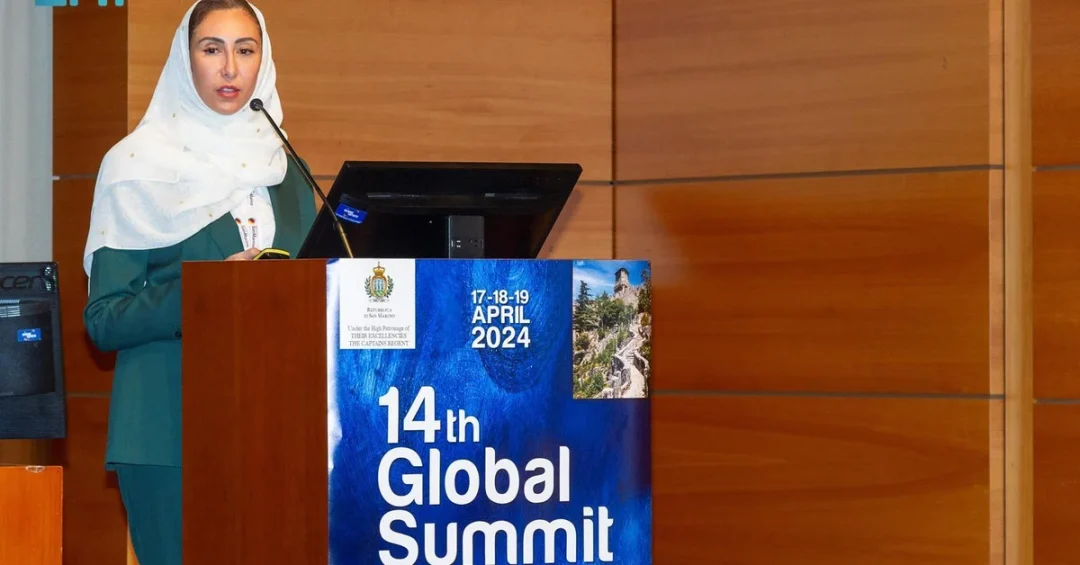
Saudi Arabia’s National Bioethics Committee, affiliated with the King Abdulaziz City for Science and Technology (KACST), participated in the 14th Global Summit of National Ethics Committees held in the Republic of San Marino from May 13 to 14, 2024. The summit, convened every two years under the auspices of the World Health Organization (WHO) and UNESCO, brought together representatives from 80 countries to discuss critical health and scientific issues related to bioethics. Dr. Batoul bint Mohammed Yousef Al-Baz, Vice President of KACST for the Health Sector and Head of the Saudi Bioethics Committee, presented the Kingdom’s ethics system for research on living creatures, highlighting provisions for persons with disabilities and the involvement of relevant government agencies.
Context and Background
The Global Summit of National Ethics Committees is a biennial event that serves as a premier international platform for deliberating ethical challenges in health and life sciences. Organized by the WHO and UNESCO, the summit facilitates dialogue among national ethics committees, experts, and policymakers to harmonize ethical standards and promote best practices worldwide. Saudi Arabia’s active participation underscores its commitment to contributing to global bioethics discourse and aligning its national frameworks with international norms. The National Bioethics Committee, operating under KACST, plays a pivotal role in shaping ethical guidelines for scientific research and healthcare in the Kingdom.
Dr. Batoul Al-Baz, a leading figure in Saudi healthcare and research, represented the Kingdom, emphasizing the integration of ethical considerations into national policies. Her presentation focused on Saudi Arabia’s comprehensive ethics system for research involving living creatures, which includes robust protections for vulnerable groups, particularly persons with disabilities. The system is implemented in collaboration with key agencies such as the Authority for the Care of People with Disabilities and the King Salman Center for Disability Research, ensuring a multi-sectoral approach to ethics oversight.
Key Details
During the summit, Dr. Batoul outlined the Kingdom’s efforts to empower persons with disabilities, detailing initiatives that guarantee access to rights and enhance services in care, education, rehabilitation, training, and employment. She stressed the importance of national ethics committees in fostering public participation and dialogue in public health and healthcare. The Saudi model integrates ethical review processes that prioritize inclusivity and equity, reflecting the Kingdom’s broader social reforms under Vision 2030.
The summit also provided a platform for Saudi Arabia to exchange insights with other nations and international experts. Discussions covered emerging ethical issues such as genetic research, artificial intelligence in healthcare, and pandemic preparedness. By sharing its experiences, Saudi Arabia demonstrated its leadership in promoting ethical standards that balance scientific advancement with human dignity. The participation of 80 countries highlighted the global consensus on the need for robust ethical frameworks in health and science.
Implications and Impact
Saudi Arabia’s engagement at the San Marino summit reinforces its growing role in international health diplomacy. By presenting its ethics system, the Kingdom showcases its commitment to protecting the rights of all individuals, including those with disabilities, and to fostering ethical research practices. This participation also strengthens Saudi Arabia’s partnerships with WHO, UNESCO, and other global bodies, paving the way for future collaborations in bioethics and health policy.
On a regional level, Saudi Arabia’s leadership in bioethics can influence neighboring countries to adopt similar standards, promoting a unified approach to ethical challenges in the Middle East. The emphasis on public dialogue and participation aligns with the Kingdom’s domestic reforms, which aim to increase transparency and citizen engagement in policymaking. Furthermore, the focus on disability rights reflects Saudi Arabia’s dedication to social inclusion, a cornerstone of Vision 2030.
Vision 2030 Alignment
Saudi Arabia’s participation in the Global Summit of National Ethics Committees directly supports Vision 2030, the Kingdom’s strategic framework for economic and social transformation. Vision 2030 emphasizes the development of a vibrant society, with a focus on health, education, and social welfare. By promoting ethical research and disability rights, Saudi Arabia is building a more inclusive and equitable society. The Kingdom’s active role in global bioethics also enhances its international standing, attracting partnerships and investments in healthcare and life sciences. As Saudi Arabia continues to modernize, its commitment to ethical governance will remain central to achieving sustainable development and improving the quality of life for all citizens.
20 Questions
Q1. What is the National Bioethics Committee?
A1. The National Bioethics Committee is a Saudi body affiliated with the King Abdulaziz City for Science and Technology (KACST) that develops ethical guidelines for research and healthcare, ensuring practices align with international standards and Islamic principles.
Q2. What was the 14th Global Summit of National Ethics Committees?
A2. The 14th Global Summit of National Ethics Committees was a biennial international event held in San Marino under WHO and UNESCO auspices, bringing together representatives from 80 countries to discuss ethical issues in health and science.
Q3. Who represented Saudi Arabia at the summit?
A3. Dr. Batoul bint Mohammed Yousef Al-Baz, Vice President of KACST for the Health Sector and Head of the Saudi Bioethics Committee, represented Saudi Arabia, presenting the Kingdom’s ethics system for research on living creatures.
Q4. What did Dr. Batoul Al-Baz present at the summit?
A4. She presented Saudi Arabia’s ethics system for research on living creatures, highlighting provisions for persons with disabilities and the involvement of agencies like the Authority for the Care of People with Disabilities and the King Salman Center for Disability Research.
Q5. How often is the Global Summit of National Ethics Committees held?
A5. The summit is held every two years (biennially) under the auspices of the World Health Organization (WHO) and UNESCO, focusing on health and scientific issues concerning bioethics.
Q6. What is the role of national ethics committees?
A6. National ethics committees promote public participation and dialogue in public health and healthcare, develop ethical guidelines, and ensure that research and medical practices uphold human dignity and rights.
Q7. How does Saudi Arabia support persons with disabilities?
A7. Saudi Arabia empowers persons with disabilities through initiatives ensuring access to rights and enhancing services in care, education, rehabilitation, training, and employment, in collaboration with specialized agencies.
Q8. Which Saudi agencies are involved in disability support?
A8. The Authority for the Care of People with Disabilities and the King Salman Center for Disability Research are key agencies involved in supporting persons with disabilities in Saudi Arabia.
Q9. Why is bioethics important for Saudi Arabia?
A9. Bioethics is important for Saudi Arabia to ensure that scientific and medical advancements respect human dignity, align with Islamic values, and protect vulnerable groups, while fostering trust in research and healthcare.
Q10. What are the key topics discussed at the summit?
A10. Key topics included health and scientific issues concerning bioethics, such as genetic research, artificial intelligence in healthcare, pandemic preparedness, and the protection of vulnerable populations.
Q11. How does Saudi Arabia’s participation benefit the Kingdom?
A11. Participation enhances Saudi Arabia’s international standing, allows knowledge exchange with global experts, strengthens partnerships with WHO and UNESCO, and helps align national ethics frameworks with international best practices.
Q12. What is KACST’s role in bioethics?
A12. KACST, through the National Bioethics Committee, develops and oversees ethical guidelines for research, ensuring compliance with national and international standards, and promotes ethical awareness in scientific communities.
Q13. How does Saudi Arabia engage the public in bioethics?
A13. Saudi Arabia engages the public through national ethics committees that foster dialogue and participation in public health and healthcare, ensuring that policies reflect societal values and needs.
Q14. What international organizations partner with Saudi Arabia on bioethics?
A14. Saudi Arabia partners with the World Health Organization (WHO) and UNESCO, participating in global summits and collaborating on ethical standards for health and science.
Q15. What is the significance of the San Marino summit for global bioethics?
A15. The San Marino summit facilitated international dialogue among 80 countries, promoting harmonized ethical standards and addressing emerging challenges in health and science, thus advancing global bioethics.
Q16. How does Saudi Arabia’s ethics system address research on living creatures?
A16. The system includes provisions to protect the welfare of living creatures in research, ensuring ethical treatment and compliance with national regulations and international guidelines, while involving relevant government agencies.
Q17. What are Saudi Arabia’s goals for disability empowerment?
A17. Saudi Arabia aims to ensure full access to rights and services for persons with disabilities, including care, education, rehabilitation, training, and employment, fostering inclusivity and independence.
Q18. How does bioethics align with Vision 2030?
A18. Bioethics aligns with Vision 2030 by promoting a vibrant society, enhancing healthcare quality, ensuring ethical governance, and supporting social inclusion and sustainable development.
Q19. What future collaborations might arise from Saudi Arabia’s participation?
A19. Future collaborations may include joint research initiatives, capacity-building programs, and policy exchanges with WHO, UNESCO, and other countries to advance bioethics globally.
Q20. How does Saudi Arabia’s leadership in bioethics impact the region?
A20. Saudi Arabia’s leadership sets a positive example for the region, encouraging neighboring countries to adopt robust ethical frameworks and promoting a unified approach to bioethical challenges in the Middle East.
Reader Feedback
We value your thoughts. Please share your feedback on this article.
Your feedback helps us improve our coverage.