


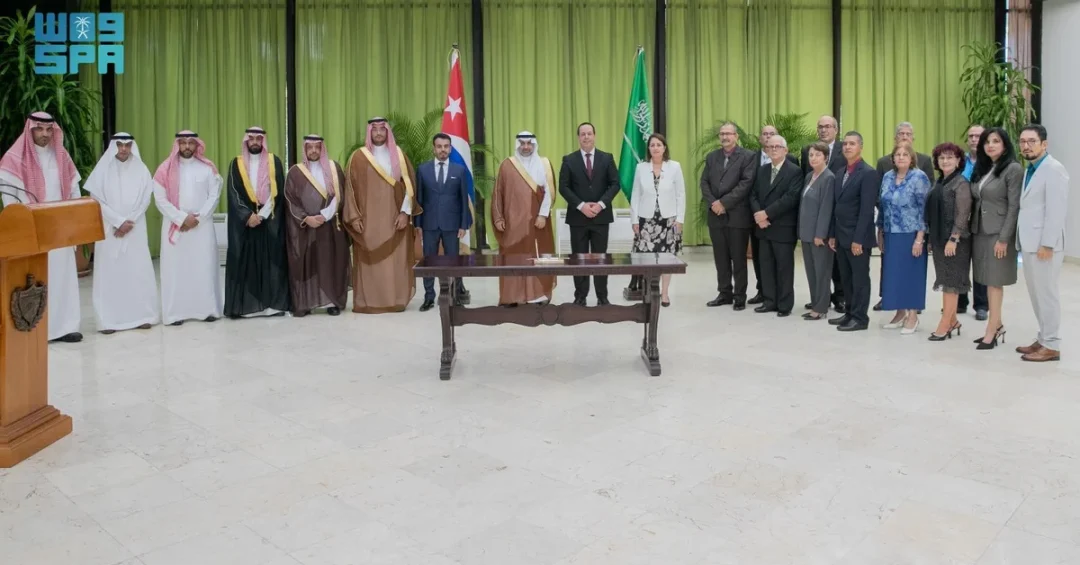
Saudi Minister of Health Fahad Al-Jalajel and Cuban Minister of Public Health José Angel Portal Miranda signed a memorandum of understanding (MoU) in Havana on September 22, 2024, to strengthen healthcare cooperation between the Kingdom of Saudi Arabia and Cuba. The agreement, announced by the Saudi Press Agency (SPA), aims to enhance the exchange of expertise and support the objectives of the Health Sector Transformation Program under Saudi Vision 2030.
Context and Background
The MoU was signed during an official visit by Minister Al-Jalajel to Cuba, underscoring Saudi Arabia’s commitment to international collaboration in healthcare. The Health Sector Transformation Program, a key initiative of Vision 2030, seeks to improve the quality and efficiency of health services in the Kingdom. This partnership with Cuba, known for its advanced medical research and biotechnology, aligns with Saudi Arabia’s goals to diversify its economy and enhance public health outcomes.
Key Details
During the meeting, Minister Al-Jalajel and Minister Portal Miranda discussed enhancing health cooperation and fostering the exchange of expertise. The Saudi minister also met with Cuban government officials and executives from BioCubaFarma to explore the production of medicines, vaccines, and medical devices. These discussions are part of a series of meetings aimed at developing medications and vaccines to tackle health challenges and mitigate risks. Minister Al-Jalajel toured several medical institutions, including the University of Medical Sciences of Havana, Hermanos Ameijeiras Hospital, La Pradera International Health Center, and the Center for Genetic Engineering and Biotechnology (CIGB), where he received insights into Cuba’s healthcare services, technologies, and medical practices.
Implications and Impact
This MoU signifies a deepening of ties between Saudi Arabia and Cuba in the healthcare sector, potentially leading to joint research, technology transfer, and improved access to advanced medical treatments. For Saudi Arabia, it represents a strategic step toward building a resilient healthcare system, while for Cuba, it opens avenues for collaboration with a key player in the Middle East. The partnership could also contribute to global health security by addressing shared health challenges through innovation and mutual support.
Vision 2030 Alignment
This collaboration directly supports Saudi Vision 2030’s Health Sector Transformation Program, which aims to enhance healthcare quality and accessibility. By partnering with Cuba, Saudi Arabia is advancing its goal to become a leader in healthcare innovation and ensuring the well-being of its citizens and residents. The MoU exemplifies the Kingdom’s proactive approach to international cooperation, reinforcing its role as a global partner in addressing health challenges and improving lives.
20 Questions
Q1. What was signed between Saudi Arabia and Cuba?
A1. Saudi Minister of Health Fahad Al-Jalajel and Cuban Minister of Public Health José Angel Portal Miranda signed a memorandum of understanding (MoU) to enhance healthcare cooperation.
Q2. When and where was the MoU signed?
A2. The MoU was signed in Havana, Cuba, on September 22, 2024, during an official visit by the Saudi health minister.
Q3. Who represented Saudi Arabia in the signing?
A3. Saudi Minister of Health Fahad Al-Jalajel represented the Kingdom of Saudi Arabia in the signing ceremony.
Q4. Who represented Cuba in the signing?
A4. Cuban Minister of Public Health José Angel Portal Miranda signed on behalf of Cuba.
Q5. What is the main purpose of the MoU?
A5. The MoU aims to enhance health cooperation and foster the exchange of expertise between Saudi Arabia and Cuba, aligning with Saudi Vision 2030’s Health Sector Transformation Program.
Q6. Which Saudi program does this MoU align with?
A6. The MoU aligns with the Health Sector Transformation Program under Saudi Vision 2030, which seeks to improve healthcare quality and services.
Q7. What other Cuban entities did the Saudi minister meet with?
A7. Minister Al-Jalajel met with Cuban government officials and executives from BioCubaFarma to discuss the production of medicines, vaccines, and medical devices.
Q8. What topics were discussed regarding BioCubaFarma?
A8. Discussions focused on the production of medicines, vaccines, and medical devices in Cuba, as well as developing medications and vaccines to tackle health challenges.
Q9. Which medical institutions did Minister Al-Jalajel tour?
A9. He toured the University of Medical Sciences of Havana, Hermanos Ameijeiras Hospital, La Pradera International Health Center, and the Center for Genetic Engineering and Biotechnology (CIGB).
Q10. What did the minister learn from these tours?
A10. He received insights into the services offered, technologies employed, and medical practices in Cuba’s healthcare sector.
Q11. How does this MoU benefit Saudi Arabia’s healthcare sector?
A11. It allows for the exchange of expertise, access to advanced biotech research, and potential collaboration in producing medicines and vaccines, enhancing the Kingdom’s healthcare resilience.
Q12. What is Cuba’s role in the partnership?
A12. Cuba brings its renowned expertise in biotechnology, medical research, and vaccine development, offering opportunities for joint projects and knowledge sharing.
Q13. Is this the first health cooperation between the two countries?
A13. While details of prior agreements are not specified, this MoU marks a significant step in formalizing and expanding healthcare collaboration between Saudi Arabia and Cuba.
Q14. What are the expected outcomes of the MoU?
A14. Expected outcomes include improved healthcare services, joint research initiatives, technology transfer, and enhanced capacity to address health challenges.
Q15. How does this fit into Saudi Vision 2030?
A15. It directly supports the Health Sector Transformation Program, a key Vision 2030 initiative aimed at elevating healthcare standards and fostering international partnerships.
Q16. Will this MoU lead to new medicines or vaccines?
A16. The discussions included developing medications and vaccines, but specific products are not yet announced. The MoU facilitates future collaboration in this area.
Q17. What did Minister Al-Jalajel discuss with Cuban officials?
A17. They discussed enhancing health cooperation, exchanging expertise, and advancing the production of medicines, vaccines, and medical devices.
Q18. How does this partnership benefit global health?
A18. By combining resources and knowledge, Saudi Arabia and Cuba can contribute to global health security and address shared health challenges more effectively.
Q19. What message does this MoU send about Saudi Arabia’s global health role?
A19. It demonstrates Saudi Arabia’s proactive approach to international cooperation and its commitment to being a global partner in healthcare innovation and improvement.
Q20. What are the next steps after signing the MoU?
A20. The next steps likely involve implementing joint programs, exchanging experts, and developing specific projects in pharmaceuticals and vaccine research.
Reader Feedback
We value your thoughts. Please share your feedback on this article.
Your feedback helps us improve our coverage.