


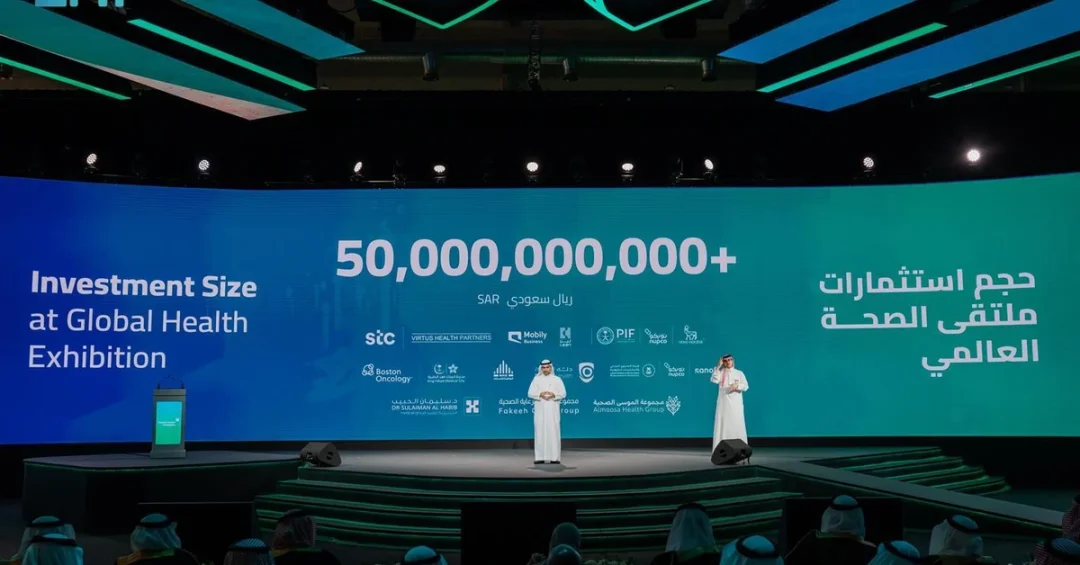
Saudi Arabia’s Minister of Health, Fahd bin Abdurrahman Al-Jalajel, announced the launch of healthcare investments exceeding SAR50 billion at the Global Health Exhibition in Riyadh on October 21, 2024, marking a transformative moment for the Kingdom’s health sector and its global leadership in medical innovation. The announcement, made during the opening ceremony at the Riyadh International Convention and Exhibition Center in Malham, underscores Saudi Arabia’s commitment to addressing global health challenges while advancing its ambitious Vision 2030 goals. The exhibition, which brings together leading healthcare professionals, investors, and policymakers from around the world, serves as a platform to showcase the Kingdom’s rapid progress in healthcare modernization and its strategic efforts to enhance public health both domestically and internationally.
The Global Health Exhibition, hosted annually by Saudi Arabia, has become a cornerstone event for the global healthcare community, reflecting the Kingdom’s growing influence in shaping the future of medicine and health policy. This year’s event carries particular significance as it highlights a series of landmark achievements recognized by the World Health Organization (WHO), including Saudi Arabia’s pioneering role in eliminating trans fats from food products and achieving the highest level of medicines and vaccines regulation. These milestones not only elevate the Kingdom’s standing on the global stage but also demonstrate its unwavering dedication to fostering a healthier society in line with the aspirations of Vision 2030. How does a nation transform its healthcare landscape while simultaneously earning international acclaim for regulatory excellence? Saudi Arabia’s journey offers a compelling answer.
Context and Background
What drives a country to invest over SAR50 billion in healthcare at a single exhibition? For Saudi Arabia, the answer lies in its long-term strategic vision to diversify its economy, improve quality of life, and position itself as a global hub for medical innovation. The Global Health Exhibition, held under the patronage of the Ministry of Health, has evolved into a critical forum for stakeholders to discuss emerging trends, forge partnerships, and unveil groundbreaking projects. The 2024 edition, opened by Minister Al-Jalajel, exemplifies this evolution, showcasing investments that span infrastructure, digital health, pharmaceuticals, and human capital development. These investments are not merely financial commitments; they represent a holistic approach to building a resilient, patient-centered healthcare system that can serve as a model for the region and beyond.
The context of these announcements is deeply rooted in Saudi Arabia’s broader socio-economic transformation under Vision 2030, which seeks to reduce dependence on oil and enhance public service sectors. Healthcare has emerged as a key pillar of this transformation, with the government prioritizing accessibility, quality, and innovation. Over the past decade, the Kingdom has undertaken sweeping reforms, including the establishment of the Saudi Food and Drug Authority (SFDA) as a robust regulatory body, the expansion of private health insurance, and the adoption of digital health platforms. These efforts have not only improved health outcomes but also attracted significant foreign investment. The Global Health Exhibition thus serves as a testament to the Kingdom’s ability to translate vision into action, drawing global attention to its achievements and future ambitions.
Key Details
What specific achievements did Minister Al-Jalajel highlight during his opening address? The minister proudly noted that the World Health Organization has recognized Saudi Arabia for eliminating trans fats from food products, placing the Kingdom at the forefront of nations achieving this critical public health milestone. This recognition reflects years of concerted efforts by the SFDA and the Ministry of Health to regulate food safety and promote healthier dietary habits. Additionally, Al-Jalajel praised the WHO’s declaration that Saudi Arabia, through the SFDA, has attained maturity level four (ML4) for medicines and vaccines regulation. This classification, the highest in the WHO’s framework, makes Saudi Arabia the first country in the region to reach this level, signaling its capacity to ensure the safety, efficacy, and quality of medical products. Such accolades are not just symbolic; they enhance the Kingdom’s credibility as a leader in global health governance and open doors for international collaborations.
The minister also spotlighted the remarkable growth of Saudi Arabia’s private health insurance sector, which has expanded from 3 million insured individuals in 2011 to over 12 million by the end of 2023. With a market size of up to SAR40 billion, the sector is expected to double by 2030, driven by population growth, regulatory reforms, and increasing awareness of health coverage. Furthermore, the Saudi pharmaceutical sector is approaching an annual growth rate of 10%, with projections to surpass SAR72 billion by 2030, making it the fastest-growing among G20 countries. These figures underscore the dynamic nature of the Kingdom’s healthcare economy and its potential to attract further investment. How does such rapid expansion impact the everyday lives of citizens and residents? It translates into better access to affordable healthcare, improved medical services, and a stronger safety net for all.
In addition to financial and regulatory milestones, Minister Al-Jalajel outlined the Ministry of Health’s two-pronged strategy to elevate national healthcare professionals. The first track focuses on investing in Saudi talent through the expansion of Saudi Board seats and the enhancement of training and localization programs. This initiative aims to cultivate a skilled workforce capable of meeting the demands of a modern healthcare system. The second track emphasizes partnerships and the attraction of global experts to work alongside Saudi professionals, fostering knowledge exchange and innovation. As a testament to this approach, the Kingdom has granted premium residency to over 2,600 exceptional healthcare professionals, a move designed to retain top talent and enrich the local medical community. These efforts are complemented by the Modern Healthcare Model, which currently serves 28 million beneficiaries, with over 50 million appointments made through digital services and more than 30 million virtual consultations delivered via the unified platform NPHIES. Such digital integration not only enhances efficiency but also expands access to care, particularly in remote areas.
International and Regional Impact
How does Saudi Arabia’s healthcare investment resonate beyond its borders? The SAR50 billion infusion announced at the Global Health Exhibition signals the Kingdom’s intent to become a pivotal player in global health, attracting international partners and setting benchmarks for others to follow. The WHO recognitions for trans fat elimination and ML4 classification bolster Saudi Arabia’s soft power, positioning it as a reliable ally in addressing transnational health threats. Regional neighbors, many of which face similar challenges such as rising non-communicable diseases and strained healthcare infrastructure, can look to the Kingdom’s model for inspiration. Moreover, the exhibition itself serves as a diplomatic platform, fostering collaborations that extend beyond the Middle East. By sharing expertise and resources, Saudi Arabia contributes to global health security while reinforcing its role as a responsible international stakeholder.
The implications for the private sector are equally profound. The projected doubling of the health insurance market and the robust growth of the pharmaceutical industry create lucrative opportunities for foreign investors and multinational corporations. Companies specializing in digital health, medical devices, and biotechnology are particularly well-positioned to benefit from the Kingdom’s expansion plans. This influx of investment is expected to spur job creation, technological transfer, and innovation, further integrating Saudi Arabia into the global healthcare value chain. Additionally, the emphasis on attracting global experts through premium residency programs enhances cross-cultural exchange and elevates the standard of care. As the Kingdom continues to open its doors to international talent, it cements its reputation as a hub for excellence in health and science.
Economic and Strategic Significance
Why does the healthcare sector matter so much to Saudi Arabia’s economic future? Under Vision 2030, the government aims to diversify revenue streams and reduce reliance on hydrocarbons, with healthcare identified as a high-growth industry. The SAR50 billion investment announced by Minister Al-Jalajel is a direct catalyst for this diversification, stimulating activity in construction, technology, insurance, and pharmaceuticals. The expansion of private health insurance, for instance, not only improves financial protection for individuals but also creates a sustainable market that attracts private capital. Similarly, the pharmaceutical sector’s rapid growth contributes to local manufacturing, reducing import dependency and enhancing self-sufficiency. These developments collectively strengthen the national economy, create jobs, and improve the overall business environment, aligning with the Vision’s objective of a thriving, diversified economy.
Strategically, a robust healthcare system is essential for national security and social stability. A healthy population is more productive, reduces the burden on public finances, and enhances the Kingdom’s attractiveness as a destination for tourism and business. The Modern Healthcare Model, with its digital backbone, exemplifies how technology can be leveraged to deliver efficient, patient-centric care. By investing in human capital through Saudi Board expansions and premium residencies, the Kingdom ensures that its healthcare workforce is equipped to meet future challenges. Furthermore, the WHO recognitions serve as international validation of these efforts, boosting confidence among investors and partners. In essence, the healthcare investments are not just about treating illness; they are about building a resilient society that can thrive in a rapidly changing world.
Vision 2030 Alignment
How does the Global Health Exhibition’s success reflect the broader objectives of Vision 2030? The exhibition and the investments it showcases are tangible manifestations of the Vision’s core themes: a vibrant society, a thriving economy, and an ambitious nation. By prioritizing healthcare, Saudi Arabia addresses a fundamental component of societal well-being, ensuring that citizens and residents have access to world-class medical services. The economic diversification driven by healthcare investments contributes to the Vision’s goal of a diversified economy, while the emphasis on digital innovation and human capital development underscores the commitment to a knowledge-based society. The WHO accolades further reinforce the Kingdom’s global standing, aligning with the Vision’s aim to enhance Saudi Arabia’s international reputation and influence.
Looking ahead, the Ministry of Health’s initiatives are set to accelerate progress toward Vision 2030 targets, including increasing life expectancy, reducing premature mortality, and achieving universal health coverage. The SAR50 billion investment will fund new hospitals, research centers, and digital health infrastructure, laying the groundwork for a sustainable healthcare ecosystem. As Minister Al-Jalajel’s announcements demonstrate, Saudi Arabia is not only meeting global standards but setting them. The Kingdom’s journey toward health excellence is a story of ambition, innovation, and collaboration—a story that will continue to unfold in the years to come, benefiting not only its people but also the wider world. With each milestone, Saudi Arabia reaffirms its role as a beacon of progress and a trusted partner in global health.
20 Questions
Q1. What was the major announcement made by Minister Al-Jalajel at the Global Health Exhibition?
A1. Minister Al-Jalajel announced the launch of healthcare investments exceeding SAR50 billion at the Global Health Exhibition in Riyadh on October 21, 2024, aimed at addressing global health challenges and enhancing public health.
Q2. Where was the Global Health Exhibition held?
A2. The exhibition was held at the Riyadh International Convention and Exhibition Center in Malham, Riyadh, Saudi Arabia.
Q3. What recognition did the World Health Organization give Saudi Arabia regarding trans fats?
A3. The WHO recognized Saudi Arabia for eliminating trans fats from food products, positioning the Kingdom at the forefront of countries achieving this public health milestone.
Q4. What is the significance of the WHO’s ML4 classification for Saudi Arabia?
A4. The ML4 classification is the highest level in the WHO’s framework for medicines and vaccines regulation. Saudi Arabia, through the SFDA, is the first in the region to attain this level, showcasing its regulatory excellence.
Q5. How has the private health insurance sector grown in Saudi Arabia?
A5. The sector has expanded from 3 million insured individuals in 2011 to over 12 million by the end of 2023, with a market size of up to SAR40 billion, and is expected to double by 2030.
Q6. What is the projected growth of the Saudi pharmaceutical sector?
A6. The pharmaceutical sector is approaching an annual growth rate of 10% and is expected to surpass SAR72 billion by 2030, making it the fastest-growing among G20 countries.
Q7. How is the Ministry of Health investing in Saudi talent?
A7. The Ministry is expanding Saudi Board seats and enhancing training and localization programs to develop national healthcare professionals, ensuring a skilled workforce for the future.
Q8. What is the second track of the Ministry’s strategy for healthcare professionals?
A8. The second track focuses on enhancing partnerships and attracting global experts to work alongside Saudi professionals, fostering knowledge exchange and innovation.
Q9. How many exceptional healthcare professionals have been granted premium residency in Saudi Arabia?
A9. Saudi Arabia has granted premium residency to over 2,600 exceptional healthcare professionals, aiming to retain top talent and enrich the local medical community.
Q10. What is the Modern Healthcare Model and how many beneficiaries does it serve?
A10. The Modern Healthcare Model serves 28 million beneficiaries and includes digital services such as over 50 million appointments and more than 30 million virtual consultations through the NPHIES platform.
Q11. What is NPHIES?
A11. NPHIES is the unified digital platform for virtual consultations and health services in Saudi Arabia, facilitating over 30 million beneficiary consultations and enhancing access to care.
Q12. How do these healthcare investments align with Vision 2030?
A12. They align with Vision 2030 by promoting economic diversification, improving quality of life, and enhancing Saudi Arabia’s global standing through innovation and sustainable development in healthcare.
Q13. What impact do these investments have on the regional healthcare landscape?
A13. They position Saudi Arabia as a leader in healthcare innovation, offering a model for other countries to follow and fostering regional collaborations to address common health challenges.
Q14. How does the private sector benefit from these developments?
A14. The private sector benefits from expanded market opportunities in insurance, pharmaceuticals, digital health, and medical devices, attracting foreign investment and driving job creation.
Q15. What does the WHO recognition for trans fat elimination mean for Saudi Arabia?
A15. It signifies Saudi Arabia’s commitment to public health and food safety, setting a benchmark for other nations and reinforcing its role as a global health leader.
Q16. How does the ML4 classification benefit Saudi Arabia’s pharmaceutical industry?
A16. The ML4 classification enhances confidence in Saudi-made medicines and vaccines, boosts export potential, and attracts international partnerships, driving growth in the pharmaceutical sector.
Q17. What are the expected economic outcomes of the SAR50 billion investment?
A17. The investment is expected to stimulate economic growth, create jobs, enhance healthcare infrastructure, and contribute to the diversification of the Saudi economy away from oil dependence.
Q18. How does Saudi Arabia plan to sustain the growth of its healthcare sector?
A18. Through continuous investment in talent, digital innovation, regulatory excellence, and international partnerships, Saudi Arabia aims to sustain growth and achieve Vision 2030 health targets.
Q19. What role does the Global Health Exhibition play in Saudi Arabia’s healthcare strategy?
A19. It serves as a platform to showcase achievements, attract investment, foster collaborations, and highlight the Kingdom’s progress in healthcare modernization to a global audience.
Q20. What is the overarching goal of Saudi Arabia’s healthcare investments?
A20. The overarching goal is to build a resilient, patient-centered healthcare system that improves public health, supports economic diversification, and positions Saudi Arabia as a global leader in health innovation.
Reader Feedback
We value your thoughts. Please share your feedback on this article.
Your feedback helps us improve our coverage.