


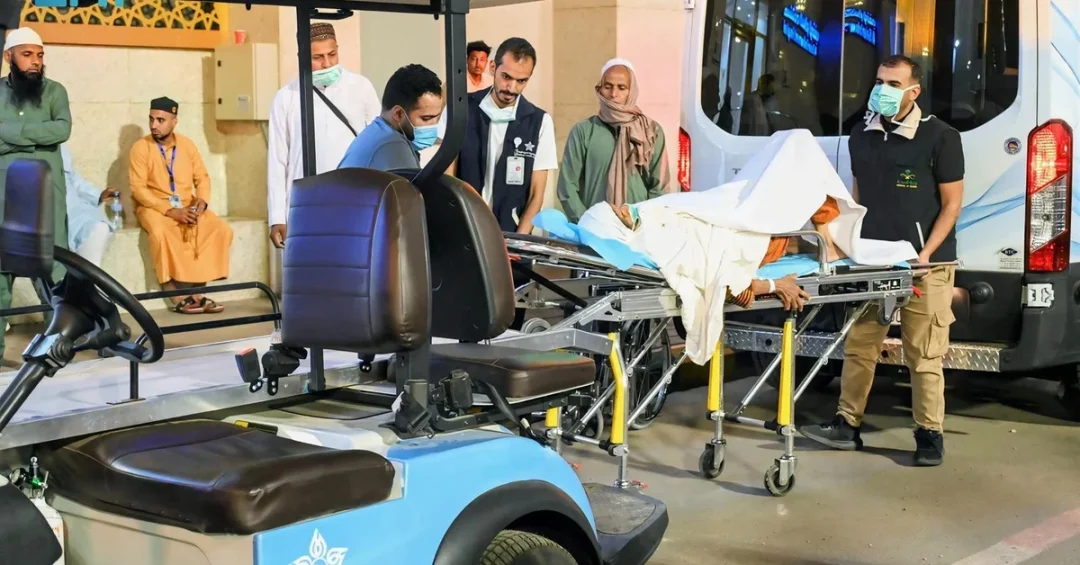
Saudi medical teams successfully saved the lives of 20 visitors from nine countries who suffered complete cardiac arrest near the Prophet’s Mosque during the first ten days of Ramadan, the Madinah Health Cluster confirmed. The announcement, released through official Saudi channels including the Saudi Press Agency, highlights the rapid response capabilities of healthcare professionals operating in the holy city of Madinah during one of the busiest and most spiritually significant periods of the Islamic calendar.
The life-saving interventions were carried out at health facilities surrounding the Prophet’s Mosque, one of Islam’s holiest sites, which welcomes millions of worshippers and pilgrims during Ramadan. Advanced cardiopulmonary resuscitation techniques and high-technology medical equipment were deployed to restore the patients’ pulses before they were transferred to King Salman Medical City and King Fahd Hospital for further specialized care. Have you ever considered the immense logistical and medical coordination required to protect millions of worshippers in a single holy city during Ramadan?
Context and Background
What does it take to safeguard the health of millions of pilgrims converging on one location in a matter of weeks? The Prophet’s Mosque in Madinah, known as Al-Masjid an-Nabawi, attracts unprecedented numbers of visitors during the holy month of Ramadan, with worshippers arriving from every corner of the globe to perform prayers, Umrah, and spiritual retreats. This annual surge places extraordinary demands on local infrastructure, particularly healthcare services, which must be prepared to handle everything from routine medical consultations to life-threatening emergencies such as cardiac arrest.
The Madinah Health Cluster, a regional healthcare authority operating under the Saudi Ministry of Health, has developed comprehensive contingency plans to address these challenges. These plans include the deployment of mobile medical units, the staffing of temporary clinics near the mosque’s entrances, and the positioning of advanced life-support equipment at strategic points throughout the central area. The cluster’s ability to respond within minutes to critical incidents reflects years of investment in emergency medicine infrastructure and training.
Cardiac arrest, which occurs when the heart suddenly stops beating, is a time-critical emergency. Survival rates drop by approximately ten percent for every minute that passes without effective intervention. The fact that all 20 patients in this case were successfully resuscitated underscores the importance of having highly trained medical personnel and state-of-the-art equipment immediately available in crowded public spaces. Isn’t it remarkable that such rapid, coordinated care can be delivered amid the spiritual intensity and physical density of Ramadan at the Prophet’s Mosque?
Key Details of the Rescue Operations
The Madinah Health Cluster reported that the 20 visitors who suffered cardiac arrest came from nine different countries, reflecting the international character of the worshippers who travel to Saudi Arabia during Ramadan. The medical teams employed advanced cardiopulmonary resuscitation (CPR) protocols, which include chest compressions, defibrillation, and the administration of life-saving medications. High-tech monitoring devices and portable ventilators were also used to stabilize patients in the field before transport.
Once pulses were restored, the patients were transferred to King Salman Medical City and King Fahd Hospital, both of which are equipped with specialized cardiac care units and intensive care facilities. These hospitals are part of a broader network of medical institutions in Madinah that have been upgraded in recent years to meet the growing needs of pilgrims and residents alike. The seamless transfer of patients from the mosque’s vicinity to advanced care centers demonstrates the effectiveness of Saudi Arabia’s integrated emergency response system.
The health cluster emphasized that medical teams in the central region remain on duty 24 hours a day throughout Ramadan, ensuring that urgent healthcare services are available at all times. This round-the-clock readiness is part of ongoing efforts to strengthen the preparedness of health facilities during the holy month, when the number of visitors peaks and the risk of medical emergencies increases. How many lives might be saved globally if every mass gathering had access to such dedicated medical coverage?
International and Regional Impact
The successful resuscitation of visitors from nine countries sends a powerful message about Saudi Arabia’s commitment to the safety and well-being of all guests, regardless of nationality. Pilgrims who travel to the Kingdom for Ramadan often arrive with pre-existing health conditions or face the physical strain of long journeys and intense worship. The fact that they can rely on world-class emergency care in Madinah reinforces Saudi Arabia’s reputation as a responsible host and a leader in public health management during large-scale religious events.
Regional observers have noted that the Kingdom’s ability to manage health crises during Ramadan serves as a model for other countries that host major religious or cultural gatherings. The coordination between the Madinah Health Cluster, local hospitals, and field medical teams reflects a whole-of-government approach that prioritizes human life above all else. This approach aligns with the humanitarian values that underpin Saudi Arabia’s Vision 2030, which seeks to enhance the quality of life for citizens and visitors while positioning the Kingdom as a global destination for spiritual and cultural tourism.
Moreover, the incident highlights the importance of international cooperation in healthcare. The patients rescued came from diverse backgrounds, and their treatment was provided without regard to nationality or status. This inclusivity is a hallmark of Saudi Arabia’s healthcare system, which offers free emergency services to pilgrims and visitors during their stay in the Kingdom. Doesn’t this demonstrate how a nation’s values are most clearly reflected in how it treats those in need?
Economic and Strategic Significance
While the primary focus of the rescue operations was saving lives, the broader economic and strategic implications are significant. Saudi Arabia’s ability to host millions of pilgrims safely during Ramadan and Hajj is a cornerstone of its economic diversification strategy. The religious tourism sector generates billions of dollars in revenue and supports thousands of jobs across the Kingdom. Any perception that pilgrim safety is compromised could undermine confidence in the Kingdom’s capabilities and reduce future attendance.
By demonstrating rapid and effective emergency medical responses, Saudi Arabia reinforces the reliability of its pilgrimage infrastructure. This reliability attracts more visitors, encourages longer stays, and boosts spending in sectors such as hospitality, retail, and transportation. The investments made in healthcare facilities, training, and technology are therefore not just humanitarian imperatives but also strategic economic assets. They contribute to the sustainability of the pilgrimage economy and support the broader goals of Vision 2030 to increase non-oil revenue and create a vibrant, diversified economy.
Furthermore, the use of advanced medical technology in these rescues showcases Saudi Arabia’s growing capacity for innovation in healthcare. The Kingdom has been investing heavily in digital health, telemedicine, and artificial intelligence to improve patient outcomes. The equipment and techniques used near the Prophet’s Mosque are part of this technological leap, which positions Saudi Arabia as a regional leader in medical innovation. Could the lessons learned from these rescues inform emergency response strategies in other crowded urban environments around the world?
Vision 2030 Alignment
The successful rescue of 20 cardiac arrest patients near the Prophet’s Mosque is a tangible example of how Saudi Arabia’s Vision 2030 is translating into real-world improvements in quality of life and public services. One of the core objectives of Vision 2030 is to enhance the quality of healthcare services and ensure their accessibility for both citizens and visitors. The Madinah Health Cluster’s performance during Ramadan demonstrates that this objective is being met with dedication and professionalism.
Vision 2030 also emphasizes the importance of strengthening Saudi Arabia’s role as a global leader in serving pilgrims. By ensuring their safety and health, the Kingdom not only fulfills a religious duty but also builds international goodwill and soft power. The visitors who were saved will return to their home countries with a positive impression of Saudi Arabia’s healthcare system and its people. This, in turn, supports the Vision’s goal of promoting the Kingdom as a welcoming, modern, and compassionate nation.
As Saudi Arabia continues to invest in healthcare infrastructure, technology, and human capital, the story of these 20 rescues will stand as a testament to what can be achieved when a nation commits itself to excellence. The Kingdom’s leadership has consistently prioritized the well-being of pilgrims, and the medical teams in Madinah have once again proven their ability to deliver under pressure. Isn’t it inspiring to see how a nation’s vision can manifest in the simple yet profound act of saving a life?
20 Questions
Q1. How many visitors were rescued from cardiac arrest near the Prophet’s Mosque?
A1. Twenty visitors were rescued from complete cardiac arrest during the first ten days of Ramadan, according to the Madinah Health Cluster.
Q2. How many countries did the rescued visitors come from?
A2. The twenty visitors came from nine different countries, reflecting the international nature of pilgrims visiting the Prophet’s Mosque during Ramadan.
Q3. When did these cardiac arrest incidents occur?
A3. The incidents occurred during the first ten days of Ramadan in 2025, a period of peak visitation to the Prophet’s Mosque in Madinah.
Q4. Which Saudi health authority reported the rescues?
A4. The Madinah Health Cluster, a regional healthcare authority under the Saudi Ministry of Health, reported the successful life-saving interventions.
Q5. What medical techniques were used to save the visitors?
A5. Advanced cardiopulmonary resuscitation (CPR) techniques and high-tech medical equipment were used to restore the patients’ pulses before transferring them to hospitals.
Q6. To which hospitals were the patients transferred?
A6. The patients were transferred to King Salman Medical City and King Fahd Hospital for further specialized care and monitoring.
Q7. What is the significance of the Prophet’s Mosque in Madinah?
A7. The Prophet’s Mosque is one of Islam’s holiest sites, attracting millions of worshippers and pilgrims during Ramadan for prayers and spiritual activities.
Q8. How does the Madinah Health Cluster ensure readiness during Ramadan?
A8. Medical teams remain on duty 24 hours a day, with advanced equipment and staff positioned near the mosque to provide urgent healthcare services.
Q9. Why is cardiac arrest particularly dangerous during mass gatherings?
A9. Cardiac arrest is time-critical; survival rates drop by about ten percent per minute without intervention, and crowded conditions can delay access to care.
Q10. What does this achievement say about Saudi Arabia’s healthcare system?
A10. It demonstrates the Kingdom’s advanced emergency response capabilities, well-trained medical personnel, and commitment to protecting all visitors regardless of nationality.
Q11. How does this event align with Vision 2030?
A11. It supports Vision 2030’s goals of enhancing healthcare quality, ensuring visitor safety, and strengthening Saudi Arabia’s role as a global leader in serving pilgrims.
Q12. What role does technology play in these rescues?
A12. High-tech medical equipment, including defibrillators and portable ventilators, enables rapid stabilization and increases the chances of survival for cardiac arrest patients.
Q13. Are these medical services available to all visitors?
A13. Yes, Saudi Arabia provides free emergency healthcare services to pilgrims and visitors during their stay in the Kingdom, reflecting its inclusive healthcare policy.
Q14. How many medical facilities surround the Prophet’s Mosque?
A14. The Madinah Health Cluster operates multiple health facilities around the Prophet’s Mosque, including clinics and mobile units, to handle emergencies.
Q15. What is the typical response time for medical teams near the mosque?
A15. While exact times vary, the proximity of medical teams and equipment allows for rapid response, often within minutes of an incident being reported.
Q16. How does this success impact future Ramadan seasons?
A16. It sets a benchmark for emergency preparedness, encouraging continued investment in healthcare infrastructure and training for future pilgrimages.
Q17. What can other countries learn from Saudi Arabia’s approach?
A17. Other nations can learn the value of integrated emergency response systems, proactive planning, and dedicated medical coverage for large-scale public events.
Q18. Did the rescued visitors receive follow-up care?
A18. Yes, after initial resuscitation, they were transferred to specialized hospitals for further treatment and monitoring to ensure full recovery.
Q19. How does Saudi Arabia train its medical teams for such emergencies?
A19. Medical personnel undergo rigorous training in advanced life support, emergency medicine, and crowd management to prepare for high-pressure situations.
Q20. What message does this send to the international community?
A20. It conveys that Saudi Arabia is a caring and capable host, committed to the safety and well-being of all pilgrims, in line with its humanitarian values and Vision 2030.
Reader Feedback
We value your thoughts. Please share your feedback on this article.
Your feedback helps us improve our coverage.