


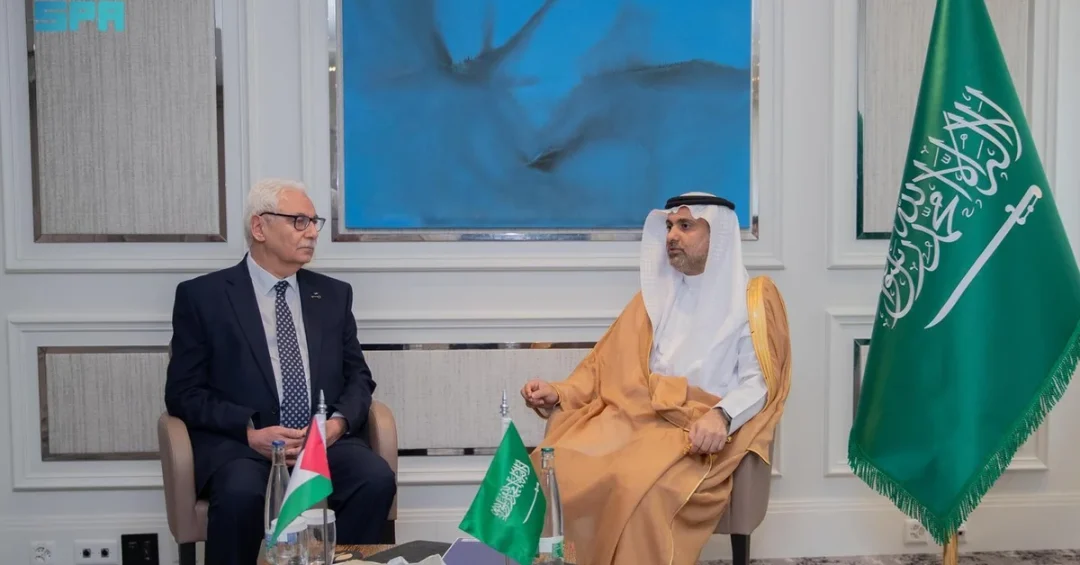
Saudi Minister of Health Fahd bin Abdurrahman Al-Jalajel met with Palestinian Minister of Health Majed Abu Ramadan in Geneva on May 31, 2024, to discuss avenues of health cooperation. The meeting, held on the sidelines of the 77th World Health Assembly, underscored Saudi Arabia’s continued commitment to supporting the Palestinian people, particularly in the healthcare sector. The two ministers explored ways to enhance bilateral collaboration and strengthen health services for Palestinians in need.
Context and Background
The meeting took place during the 77th World Health Assembly in Geneva, Switzerland, where global health leaders convene to address pressing health challenges. Saudi Arabia has long been a steadfast supporter of Palestine, providing humanitarian aid and development assistance across various sectors. This high-level dialogue reflects the Kingdom’s enduring solidarity with the Palestinian people and its proactive role in regional health diplomacy.
Saudi Arabia’s historical ties with Palestine date back decades, with the Kingdom consistently advocating for Palestinian rights and well-being on international platforms. The healthcare sector has been a key focus of Saudi support, with numerous initiatives aimed at improving medical infrastructure, training healthcare professionals, and delivering essential medical supplies.
Key Details
During the talks, Minister Al-Jalajel emphasized the deep historical and special relations between Saudi Arabia and Palestine, reaffirming the Kingdom’s commitment to supporting the Palestinian people in various fields, especially healthcare. He highlighted Saudi Arabia’s ongoing efforts to bolster health services and infrastructure in Palestine.
Minister Abu Ramadan praised Saudi Arabia’s continuous support to the Palestinian people across all areas and stressed the importance of mutual cooperation in health. He also commended the Kingdom’s leading role in the region, acknowledging its contributions to stability and development. The meeting was attended by Abdulmohsen Majed Bin Khothaila, Saudi Arabia’s Permanent Representative to the United Nations in Geneva, underscoring the diplomatic significance of the discussions.
Implications and Impact
The Saudi-Palestinian health cooperation holds significant implications for regional health security and humanitarian efforts. By strengthening partnerships, both nations aim to address critical health challenges, improve access to quality care, and enhance emergency response capabilities. This collaboration aligns with Saudi Arabia’s broader vision of promoting peace and prosperity in the Middle East.
Moreover, the meeting reinforces Saudi Arabia’s leadership in humanitarian diplomacy, showcasing its commitment to supporting vulnerable populations. It also sets the stage for concrete initiatives that could include joint medical training programs, technology transfer, and infrastructure development. Such efforts are expected to yield tangible improvements in Palestinian healthcare outcomes.
Vision 2030 Alignment
This health cooperation exemplifies Saudi Arabia’s Vision 2030 objectives, which prioritize global engagement, humanitarian leadership, and sustainable development. By extending support to Palestine, the Kingdom demonstrates its dedication to fostering regional stability and improving lives, aligning with Vision 2030’s goal of a more influential and responsible Saudi Arabia on the world stage.
Through such partnerships, Saudi Arabia continues to build bridges of cooperation and goodwill, reinforcing its role as a catalyst for positive change in the region and beyond.
20 Questions
Q1. What was the main purpose of the meeting between the Saudi and Palestinian health ministers?
A1. The meeting aimed to discuss means of cooperation in the healthcare sector and strengthen bilateral ties between Saudi Arabia and Palestine. It focused on enhancing health services and exploring joint initiatives to support the Palestinian people.
Q2. Where did the meeting take place?
A2. The meeting was held in Geneva, Switzerland, on May 31, 2024, on the sidelines of the 77th World Health Assembly. The assembly brings together global health leaders to address international health issues.
Q3. Who represented Saudi Arabia in the meeting?
A3. Saudi Minister of Health Fahd bin Abdurrahman Al-Jalajel represented Saudi Arabia. He was accompanied by Abdulmohsen Majed Bin Khothaila, Saudi Arabia’s Permanent Representative to the United Nations in Geneva.
Q4. Who was the Palestinian counterpart in the meeting?
A4. The Palestinian Minister of Health, Majed Abu Ramadan, represented Palestine. He engaged in talks aimed at fostering cooperation and highlighting the importance of mutual support in health.
Q5. What did the Saudi health minister emphasize during the talks?
A5. Minister Al-Jalajel emphasized the deep historical and special relations between Saudi Arabia and Palestine. He reaffirmed the Kingdom’s commitment to supporting the Palestinian people in various fields, especially healthcare.
Q6. How did the Palestinian health minister respond to Saudi support?
A6. Minister Abu Ramadan praised Saudi Arabia’s ongoing support to the Palestinian people in all areas. He highlighted the importance of mutual cooperation in health and commended the Kingdom’s leading role in the region.
Q7. What is the significance of the meeting being held in Geneva?
A7. Geneva hosts the World Health Assembly, a key global health forum. The setting underscores the international dimension of Saudi-Palestinian cooperation and provides a platform for discussing health priorities on a global stage.
Q8. How does this meeting reflect Saudi Arabia’s foreign policy?
A8. The meeting demonstrates Saudi Arabia’s commitment to supporting Palestinian causes and its proactive role in regional diplomacy. It aligns with the Kingdom’s efforts to promote peace, stability, and humanitarian aid in the Middle East.
Q9. What areas of healthcare cooperation were discussed?
A9. The discussions covered potential collaborations in medical training, infrastructure development, and emergency response. Both sides explored ways to enhance health services and improve access to quality care for Palestinians.
Q10. What is the historical context of Saudi-Palestinian relations?
A10. Saudi Arabia has long supported Palestine politically and economically. The Kingdom has consistently advocated for Palestinian rights and provided humanitarian aid, with healthcare being a key focus of its assistance over the decades.
Q11. How does this cooperation benefit the Palestinian healthcare sector?
A11. The cooperation can lead to improved medical infrastructure, training for healthcare professionals, and better access to essential medicines. It strengthens the Palestinian health system and enhances its capacity to respond to crises.
Q12. What role did the Saudi permanent representative play in the meeting?
A12. Abdulmohsen Majed Bin Khothaila attended the meeting, underscoring the diplomatic importance of the discussions. His presence highlights Saudi Arabia’s coordinated approach to international health and humanitarian issues.
Q13. What are the expected outcomes of this meeting?
A13. The meeting is expected to lead to concrete initiatives, including joint programs and agreements. It sets the stage for enhanced collaboration that could yield tangible improvements in Palestinian healthcare outcomes.
Q14. How does this align with Saudi Vision 2030?
A14. The cooperation aligns with Vision 2030’s goals of global engagement and humanitarian leadership. It showcases Saudi Arabia’s commitment to sustainable development and its role as a responsible global actor.
Q15. What other sectors does Saudi Arabia support Palestine in?
A15. Beyond healthcare, Saudi Arabia provides support in education, infrastructure, and economic development. The Kingdom’s assistance is comprehensive, aimed at improving the overall well-being of the Palestinian people.
Q16. How does the international community view Saudi Arabia’s role in the region?
A16. Saudi Arabia is widely regarded as a stabilizing force and a key mediator in regional conflicts. Its humanitarian efforts and diplomatic initiatives are recognized and respected by many countries around the world.
Q17. What challenges does the Palestinian healthcare sector face?
A17. The Palestinian healthcare sector faces challenges such as limited resources, infrastructure gaps, and access restrictions. International cooperation, like that with Saudi Arabia, is vital to addressing these issues and improving care.
Q18. Will there be follow-up meetings or agreements?
A18. While specific follow-up plans were not detailed, the dialogue is expected to continue through diplomatic channels. Both sides expressed a willingness to deepen cooperation, suggesting further engagements will occur.
Q19. How does this meeting impact Saudi-Palestinian bilateral relations?
A19. The meeting strengthens bilateral ties by reinforcing mutual trust and shared goals. It demonstrates Saudi Arabia’s unwavering support for Palestine and paves the way for enhanced collaboration in health and beyond.
Q20. What message does this send to the international community?
A20. It sends a message of solidarity and commitment to humanitarian causes. Saudi Arabia’s proactive engagement underscores its role as a responsible global leader dedicated to peace, stability, and the well-being of all peoples.
Reader Feedback
We value your thoughts. Please share your feedback on this article.
Your feedback helps us improve our coverage.