


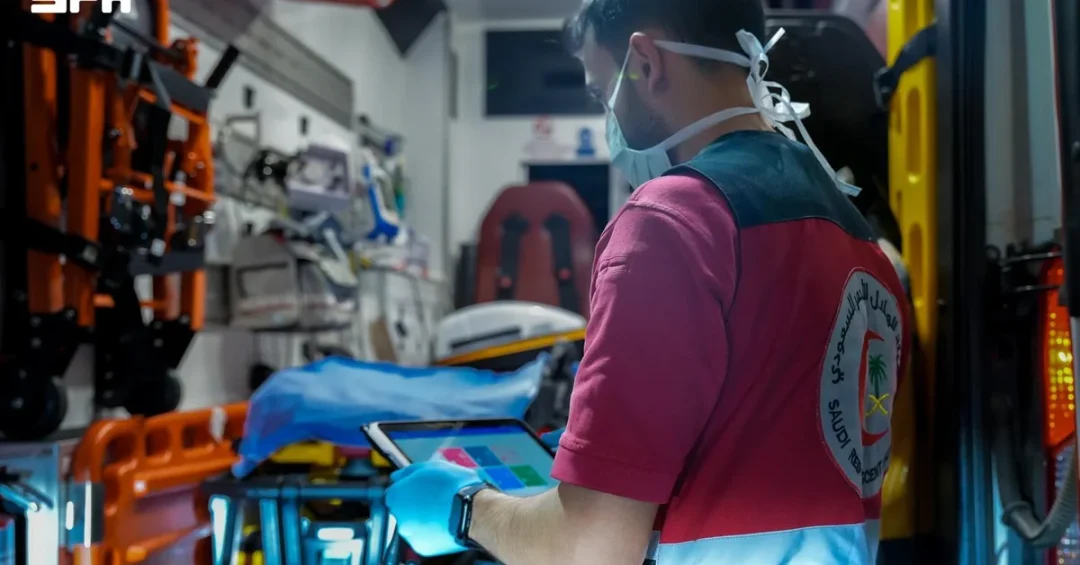
The Saudi Red Crescent Authority has reported substantial progress in corporate governance, emergency medical readiness and international humanitarian engagement in its 2025 annual report, issued through official Saudi channels in Riyadh on 28 Safar 1448 AH (11 August 2026). The report documents record operational coverage during the 2026 Hajj season, a major expansion of volunteer service, six international ISO certifications and a widening Saudi role in global disaster-management forums, in line with the objectives of Saudi Vision 2030.
Context and Background
The Saudi Red Crescent Authority is the Kingdom of Saudi Arabia’s mandated provider of pre-hospital emergency care and a national society within the International Red Cross and Red Crescent Movement. Its annual report, released via the Saudi Press Agency, reviews a period of deliberate institutional transformation in which the Authority reshaped structures at both headquarters and branch level to accelerate decision-making, clarify delegated authority and strengthen integration between its operational, development and service units.
That internal work matters because it directly shapes the Authority’s ability to respond when demand peaks, most visibly during the Hajj pilgrimage season, when millions of worshippers gather across a limited geographic area and emergency medical capacity is tested at every level. The report therefore presents governance reform not as an administrative exercise, but as the foundation for faster, more reliable care.
Hajj 2026: A Comprehensive Operational Plan
For the Hajj season 2026, the Authority implemented an integrated operational plan built on expanded field presence, higher readiness of its ambulance fleet and activated emergency response at land, sea and air entry points. The plan applied a “treat on site” model for cases that did not require transport to a hospital, helping preserve clinical capacity while maintaining continuity of care for pilgrims.
The scale of deployment was significant. More than 31,000 staff and paramedics served on the front line, including 6,846 direct-response personnel, supported by more than 2,300 volunteers. The Authority fielded 605 ambulances, over 2,300 units of auxiliary equipment, 27 specialized rapid-response vehicles and three air-ambulance helicopters. Services were delivered through 133 ambulance stations, 71 deployment points and 14 emergency care centers, and crews completed 23 field exercises and 11 training programs to sharpen readiness.
Operational control was exercised through a comprehensive command system designed around a clear organizational structure, enabling rapid decisions and close coordination between the operations department, the logistics support service, the planning department and the administrative and financial unit. This improved call handling, resource allocation and field response across the season.
Volunteering and Community Initiatives
The Authority registered 15,502 volunteers who contributed more than 326,000 volunteer hours. Their work extended well beyond the pilgrimage season through social initiatives including Safe Homes, which trains domestic workers in first aid; the employee family training project; and Waiter-Rescuer, which prepares food-service staff to assist people experiencing choking. The Authority also issued 13 compliance certificates to private training centers meeting its quality standards, reinforcing consistent instruction nationwide.
International Humanitarian Presence
Internationally, the Authority strengthened its standing through its chairmanship of the International Advisory Group on Disaster Management for 2024–2026 and by hosting that group’s steering committee meeting in Riyadh. It represented the Kingdom at meetings of the International Red Cross and Red Crescent Movement, approved a mechanism for seconding national cadres to international organizations, and concluded agreements and memoranda of understanding covering emergency response, logistics and human-capital training.
In governance and quality, the Authority obtained six international ISO certificates encompassing quality management, risk management, information security, IT service management, handling of beneficiary complaints, and occupational health and safety, reflecting its adoption of leading global practices.
Implications and Impact
These results carry weight beyond the Kingdom’s borders. The scale and precision of Hajj medical coverage offer a working model for mass-gathering emergency care, an area of growing interest to governments and humanitarian bodies worldwide. By chairing a key international disaster-management body and by seconding Saudi professionals to multilateral organizations, the Authority positions the Kingdom as an exporter of emergency-response expertise rather than only a recipient of assistance. The combination of certified internal systems and expanding partnerships also strengthens the reliability of Saudi humanitarian operations at a time when demand for coordinated disaster response is rising globally.
Vision 2030 Alignment
The Authority’s achievements in governance, operational readiness, quality and humanitarian service form part of the Kingdom’s broader effort to build a vibrant society, a thriving economy and an ambitious nation under Saudi Vision 2030. By expanding volunteering, professionalizing emergency care, embedding international standards and deepening strategic partnerships, the Saudi Red Crescent Authority is helping to safeguard lives, serve society and pilgrims, and reinforce Saudi Arabia’s role as a trusted and capable humanitarian actor on the world stage.
20 Questions
Q1. What did the Saudi Red Crescent Authority announce in its 2025 annual report?
A1. The Authority reported significant progress in corporate governance, institutional development, emergency medical efficiency, disaster readiness, volunteer expansion and international humanitarian standing. The findings were released through official Saudi channels in Riyadh on 11 August 2026 and align with Saudi Vision 2030 objectives.
Q2. What was the Saudi Red Crescent operational plan for Hajj 2026?
A2. The plan expanded field presence, raised ambulance fleet readiness, activated emergency response at land, sea and air entry points, and applied a treat-on-site model for cases not requiring hospital transport, ensuring continuous medical care for pilgrims throughout the season.
Q3. How many frontline staff participated in Hajj 2026 operations?
A3. More than 31,000 staff and paramedics served on the front line, including 6,846 direct-response personnel. They were supported by more than 2,300 volunteers, reflecting the Authority’s integrated approach to emergency medical coverage during the Hajj season.
Q4. How many ambulances and support vehicles were deployed?
A4. The Authority deployed 605 ambulances, more than 2,300 units of auxiliary equipment, 27 specialized rapid-response vehicles and three air-ambulance helicopters, delivering services through 133 ambulance stations, 71 deployment points and 14 emergency care centers.
Q5. What is the treat-on-site model described in the report?
A5. The model delivers treatment at the scene for cases that do not require transport to a hospital. It reduces pressure on hospitals, shortens response times and helps maintain continuity of care for pilgrims across crowded Hajj sites and entry points.
Q6. What drills and training programs did the Authority conduct?
A6. The Authority carried out 23 field exercises and 11 training programs designed to raise the readiness of ambulance crews, strengthen coordination among response teams and test the operational command system ahead of and during the Hajj season.
Q7. What command system did the Authority introduce?
A7. A comprehensive command system built on a clear organizational structure enables rapid decision-making and coordination between the operations department, logistics support service, planning department and administrative and financial unit, improving call handling, resource management and field response.
Q8. How many volunteers were registered and how many hours did they serve?
A8. The Authority registered 15,502 volunteers who contributed more than 326,000 volunteer hours. Their service supported emergency and community programs throughout the year, reflecting the growing culture of volunteering encouraged under Saudi Vision 2030.
Q9. What is the Safe Homes initiative?
A9. Safe Homes trains domestic workers in first-aid skills so they can respond effectively to household emergencies. The initiative extends the Authority’s life-saving mission beyond ambulances into homes, strengthening community resilience and everyday safety across the Kingdom.
Q10. What is the Waiter-Rescuer initiative?
A10. Waiter-Rescuer prepares restaurant and food-service employees to assist people experiencing choking. By training workers in public-facing venues, the Authority widens the network of first responders available during the critical first minutes before professional medical help arrives.
Q11. What certificates were issued to private training centers?
A11. The Authority granted 13 compliance certificates to private training centers that met its quality standards. This step supports consistent, high-quality first-aid instruction nationwide and reinforces the Authority’s role in elevating emergency-care training.
Q12. What international leadership role did the Authority hold?
A12. The Authority chaired the International Advisory Group on Disaster Management for 2024 to 2026 and hosted its steering committee meeting in Riyadh. This role reflects international confidence in Saudi expertise in disaster preparedness, response coordination and humanitarian logistics.
Q13. How did the Authority engage with the International Red Cross and Red Crescent Movement?
A13. The Authority represented the Kingdom at meetings of the International Red Cross and Red Crescent Movement, advancing cooperation on emergency response, logistics and capacity building while strengthening Saudi Arabia’s voice in global humanitarian discussion and policy.
Q14. What mechanism did the Authority approve for international assignments?
A14. It approved a mechanism for seconding national cadres to international organizations, allowing Saudi humanitarian professionals to serve abroad, gain expertise and represent the Kingdom’s capabilities in multilateral disaster-response and relief operations worldwide.
Q15. What agreements and memoranda did the Authority conclude?
A15. The Authority signed agreements and memoranda of understanding aimed at developing cooperation in emergency response, logistics and human-capital training, expanding its network of international and institutional partners in support of shared humanitarian objectives.
Q16. Which ISO certifications did the Authority obtain?
A16. The Authority earned six international ISO certificates covering quality management, risk management, information security, IT service management, handling of beneficiary complaints, and occupational health and safety, reflecting its commitment to world-class institutional practices and service resilience.
Q17. Why are ISO certifications significant for the Authority?
A17. ISO certification independently verifies that the Authority’s internal systems meet internationally recognized standards. This strengthens accountability, reduces operational risk, protects information and helps ensure services to the public, pilgrims and beneficiaries are delivered consistently and reliably.
Q18. How did the Authority restructure its organization?
A18. It continued improving organizational structures at headquarters and branch levels, sharpening decision-making, clarifying delegation of authority and strengthening integration between operational, development and service units in support of institutional transformation under Saudi Vision 2030.
Q19. How does this work align with Saudi Vision 2030?
A19. The Authority’s advances in governance, emergency readiness, volunteering and international partnership support Vision 2030 goals for a vibrant society, a thriving economy and an ambitious nation, enhancing quality of life and the Kingdom’s global humanitarian standing.
Q20. What is the Authority’s stated long-term objective?
A20. The Authority aims to keep developing emergency medical services, raising personnel readiness and expanding strategic partnerships to deliver highly effective, life-saving services to society, pilgrims and visitors, while reinforcing Saudi Arabia’s position as a leading humanitarian actor.
Reader Feedback
We value your thoughts. Please share your feedback on this article.
Your feedback helps us improve our coverage.