


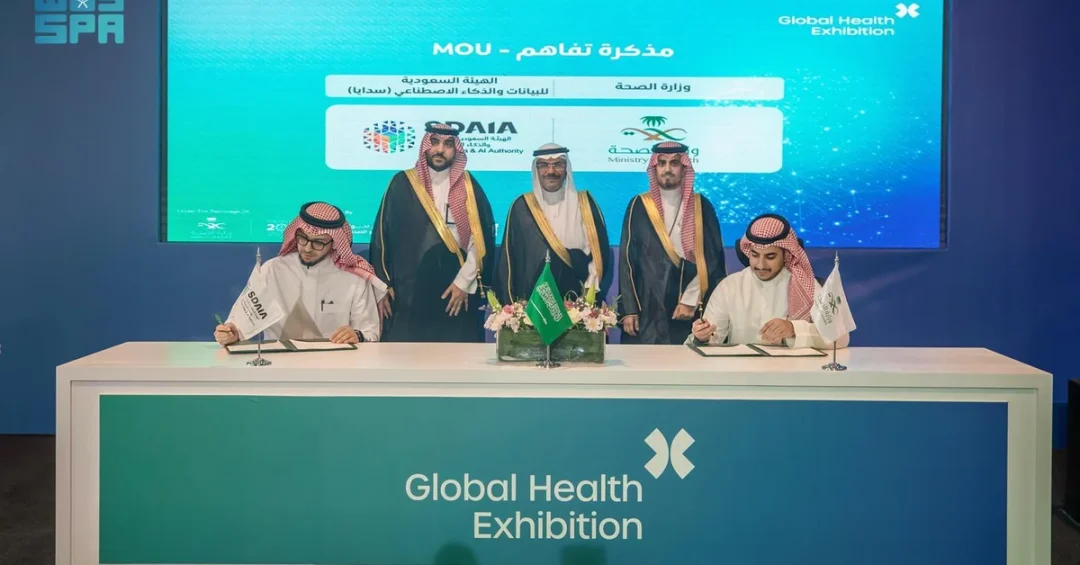
The Saudi Data and Artificial Intelligence Authority (SDAIA) and the Ministry of Health signed a memorandum of understanding (MoU) in Riyadh on October 22, 2024, to strengthen collaboration in managing national data within the health sector. The agreement was formalized during the seventh edition of the Global Health Exhibition, a major international gathering that underscores the Kingdom’s commitment to advancing healthcare innovation and digital transformation.
This partnership marks a significant step forward in Saudi Arabia’s efforts to harness the power of data and artificial intelligence to improve health outcomes, enhance regulatory frameworks, and build a robust national health data ecosystem. But what does this mean for the future of healthcare in the Kingdom and beyond? The MoU reflects a shared vision between SDAIA and the Ministry of Health to elevate data management practices, promote participation in national data programs, and develop specialized skills and capabilities in the field. It also emphasizes raising awareness and knowledge of data management practices across the health sector. The signing ceremony was attended by key officials, including Assistant Minister of Health Dr. Mohammed bin Khalid Al-Abd Al-Aali and SDAIA National Data Management Office Vice President Eng. Meshaal Al-Sarhan, highlighting the high-level commitment to this initiative.
Context and Background
Why is data management becoming such a critical pillar of modern healthcare systems? In Saudi Arabia, the answer lies in the ambitious goals of Vision 2030, which seeks to transform the Kingdom into a knowledge-based economy and improve the quality of life for all citizens. The health sector is a key focus area, and the effective use of data and AI is seen as essential to achieving these objectives. SDAIA, established in 2019, is the national authority responsible for driving data and AI strategies, while the Ministry of Health oversees the delivery of healthcare services across the country. Together, they are working to create a unified approach to health data governance.
The Global Health Exhibition, held annually in Riyadh, serves as a platform for showcasing the latest advancements in healthcare technology and fostering partnerships. The seventh edition, where this MoU was signed, brought together policymakers, industry leaders, and experts from around the world. The agreement between SDAIA and the Ministry of Health is part of a broader national effort to integrate data-driven solutions into public services. It builds on previous initiatives aimed at digitizing health records, enhancing telehealth services, and ensuring data privacy and security. By formalizing their cooperation, the two entities aim to accelerate progress and ensure that health data is managed efficiently and ethically.
What are the specific areas of collaboration outlined in the MoU? The agreement focuses on bolstering commitment to regulatory frameworks for national data management, promoting participation in national data programs, and developing skills and capabilities in data management. It also emphasizes the importance of raising awareness and knowledge of data management practices. These objectives are designed to create a cohesive and interoperable health data ecosystem that can support research, innovation, and evidence-based policymaking. The MoU also aligns with SDAIA’s broader mandate to establish Saudi Arabia as a global leader in data and AI, and with the Ministry of Health’s goal of providing world-class healthcare services.
Key Details
What exactly does the MoU entail, and who are the key players driving it forward? The agreement was signed by SDAIA National Data Governance Sector Acting CEO Zaher Osama Sharifi and Ministry of Health Data Management Office Director Saad Abdul Latif Al-Huzami. Their signatures formalize a commitment to collaborate on multiple fronts, including the development of regulatory tools, the exchange of expertise, and the implementation of joint programs. The presence of high-ranking officials such as Dr. Mohammed bin Khalid Al-Abd Al-Aali and Eng. Meshaal Al-Sarhan underscores the strategic importance of this partnership. The MoU is not merely a symbolic gesture; it sets the stage for concrete actions that will enhance the management of health data across the Kingdom.
One of the core elements of the agreement is the promotion of national data programs. These programs are designed to standardize data collection, storage, and analysis, ensuring that health information is accurate, timely, and accessible to authorized stakeholders. By participating in these programs, the Ministry of Health can leverage SDAIA’s expertise in data governance and AI to improve decision-making and patient care. Another key aspect is capacity building: the MoU calls for training and development initiatives to equip health professionals with the skills needed to manage data effectively. This includes workshops, certifications, and knowledge-sharing platforms. Finally, the agreement highlights the importance of raising awareness about data management practices, both within the health sector and among the public, to foster a culture of data responsibility.
How will this collaboration translate into tangible benefits for patients and healthcare providers? The ultimate goal is to create a seamless flow of information that supports better diagnosis, treatment, and prevention. For example, AI algorithms can analyze large datasets to identify patterns and predict disease outbreaks, enabling proactive responses. Electronic health records can be shared securely among providers, reducing duplication and improving coordination. Patients can benefit from personalized care plans based on their unique data profiles. Moreover, robust data governance ensures that privacy and security are protected, building trust in the system. By working together, SDAIA and the Ministry of Health are laying the foundation for a smarter, more responsive healthcare system that meets the needs of Saudi Arabia’s growing population.
International and Regional Impact
How does Saudi Arabia’s approach to health data management resonate on the global stage? The Kingdom’s efforts are part of a worldwide trend toward digital health transformation, but they are distinguished by the scale and speed of implementation. Saudi Arabia is rapidly becoming a hub for health technology and innovation, attracting international partners and investors. The MoU between SDAIA and the Ministry of Health signals to the global community that the Kingdom is serious about leveraging data and AI for social good. It also positions Saudi Arabia as a leader in the region, where many countries are grappling with similar challenges related to data fragmentation and interoperability. By sharing best practices and developing cutting-edge solutions, Saudi Arabia can serve as a model for others.
What are the regional implications of this partnership? In the Middle East, healthcare systems are increasingly recognizing the value of data-driven approaches. Saudi Arabia’s proactive stance could spur collaboration among Gulf Cooperation Council (GCC) states, leading to cross-border data exchange and joint research initiatives. The MoU also complements Saudi Arabia’s broader diplomatic and economic engagements, such as its presidency of the G20 in 2020, where digital health was a key topic. Furthermore, the partnership aligns with global efforts to achieve the Sustainable Development Goals (SDGs), particularly SDG 3 on good health and well-being. By prioritizing data management, Saudi Arabia is contributing to a healthier, more connected world.
Economic and Strategic Significance
Why is this MoU economically and strategically important for Saudi Arabia? The health sector is a major component of the national economy, and improving its efficiency through data management can lead to significant cost savings and better resource allocation. By reducing administrative burdens and enabling preventive care, the Kingdom can lower healthcare expenditures while improving outcomes. Moreover, the development of a robust health data ecosystem creates opportunities for entrepreneurship and investment in health tech startups, AI solutions, and digital health platforms. This aligns with Vision 2030’s goal of diversifying the economy and creating jobs for Saudi youth. Strategically, control over health data is a matter of national security and sovereignty, and the MoU ensures that data is managed in accordance with national regulations and values.
What role does artificial intelligence play in this collaboration? AI is a cornerstone of SDAIA’s mandate and a key enabler of advanced data analytics. In healthcare, AI can be used for predictive modeling, image analysis, drug discovery, and personalized medicine. By integrating AI into health data management, Saudi Arabia can unlock new insights and accelerate innovation. The MoU facilitates the sharing of data and expertise needed to develop AI applications that are tailored to the Kingdom’s specific health challenges. It also supports the growth of a skilled workforce capable of building and maintaining these systems. As AI continues to evolve, the partnership between SDAIA and the Ministry of Health will be crucial in ensuring that the Kingdom remains at the forefront of technological advancement.
Vision 2030 Alignment
How does this MoU align with the objectives of Saudi Vision 2030? Vision 2030 is a comprehensive plan to transform Saudi Arabia’s economy and society, with a strong emphasis on digital transformation and healthcare excellence. The MoU directly supports the Vision’s health sector goals by promoting the effective use of data and AI to improve service quality and accessibility. It also contributes to the development of a knowledge-based economy by fostering innovation and building human capital. Furthermore, the partnership reflects the Vision’s emphasis on good governance and transparency, as it strengthens regulatory frameworks for data management. By working together, SDAIA and the Ministry of Health are helping to realize the Vision’s promise of a vibrant, modern, and healthy society.
What can we expect next from this collaboration? The signing of the MoU is just the beginning. In the coming months and years, we can anticipate the launch of joint initiatives, pilot projects, and training programs. The two entities will likely establish working groups to oversee implementation and measure progress. We may also see the development of new policies and standards for health data governance, as well as the integration of AI tools into clinical workflows. Ultimately, the success of this partnership will be measured by its impact on patient care, public health, and the Kingdom’s global standing in health innovation. As Saudi Arabia continues its journey toward Vision 2030, collaborations like this will be essential in building a sustainable and prosperous future for all.
20 Questions
Q1. What is the purpose of the MoU between SDAIA and the Ministry of Health?
A1. The MoU aims to enhance collaboration in managing national data within the health sector, focusing on regulatory frameworks, national data programs, and capacity building.
Q2. When and where was the MoU signed?
A2. It was signed on October 22, 2024, in Riyadh during the seventh edition of the Global Health Exhibition.
Q3. Who signed the MoU on behalf of SDAIA?
A3. Zaher Osama Sharifi, Acting CEO of SDAIA’s National Data Governance Sector, signed on behalf of SDAIA.
Q4. Who signed the MoU on behalf of the Ministry of Health?
A4. Saad Abdul Latif Al-Huzami, Director of the Ministry of Health’s Data Management Office, signed on behalf of the Ministry.
Q5. Which notable officials attended the signing ceremony?
A5. Assistant Minister of Health Dr. Mohammed bin Khalid Al-Abd Al-Aali and SDAIA National Data Management Office Vice President Eng. Meshaal Al-Sarhan attended.
Q6. What are the key objectives of the MoU?
A6. The objectives include bolstering regulatory frameworks, promoting participation in national data programs, developing skills, and raising awareness of data management practices.
Q7. How does this MoU align with Saudi Vision 2030?
A7. It supports Vision 2030 by improving health services through data and AI, fostering a knowledge-based economy, and enhancing governance.
Q8. What is SDAIA’s role in Saudi Arabia?
A8. SDAIA is the national authority responsible for driving data and AI strategies, established in 2019 to advance the Kingdom’s digital transformation.
Q9. Why is data management important in healthcare?
A9. Effective data management improves patient care, enables predictive analytics, ensures privacy, and supports evidence-based policymaking.
Q10. What is the Global Health Exhibition?
A10. It is an annual event in Riyadh that showcases healthcare innovations and fosters partnerships among policymakers, industry leaders, and experts.
Q11. How will this collaboration benefit patients?
A11. It will lead to better diagnosis, personalized care, and coordinated services through secure data sharing and AI-driven insights.
Q12. What role does AI play in this partnership?
A12. AI enables advanced analytics, predictive modeling, and personalized medicine, enhancing the efficiency and effectiveness of healthcare delivery.
Q13. What are national data programs?
A13. These are initiatives to standardize data collection, storage, and analysis, ensuring accuracy, timeliness, and accessibility for authorized stakeholders.
Q14. How does the MoU address data privacy and security?
A14. It strengthens regulatory frameworks to ensure that health data is managed ethically and securely, protecting patient privacy.
Q15. What economic benefits can result from this MoU?
A15. It can reduce healthcare costs, spur innovation, create jobs in health tech, and contribute to economic diversification.
Q16. How does this partnership impact the region?
A16. It positions Saudi Arabia as a leader in health data management, potentially fostering collaboration among GCC states and beyond.
Q17. What skills development opportunities will arise?
A17. Training programs, workshops, and certifications will equip health professionals with data management and AI skills.
Q18. What are the next steps after signing the MoU?
A18. Joint initiatives, pilot projects, and working groups will be established to implement the agreement and measure progress.
Q19. How does this MoU reflect Saudi Arabia’s global standing?
A19. It demonstrates the Kingdom’s commitment to innovation and digital health, enhancing its reputation as a global leader in AI and data.
Q20. What is the long-term vision for health data in Saudi Arabia?
A20. The vision is a fully integrated, AI-powered health data ecosystem that supports world-class care, research, and policymaking in line with Vision 2030.
Reader Feedback
We value your thoughts. Please share your feedback on this article.
Your feedback helps us improve our coverage.