


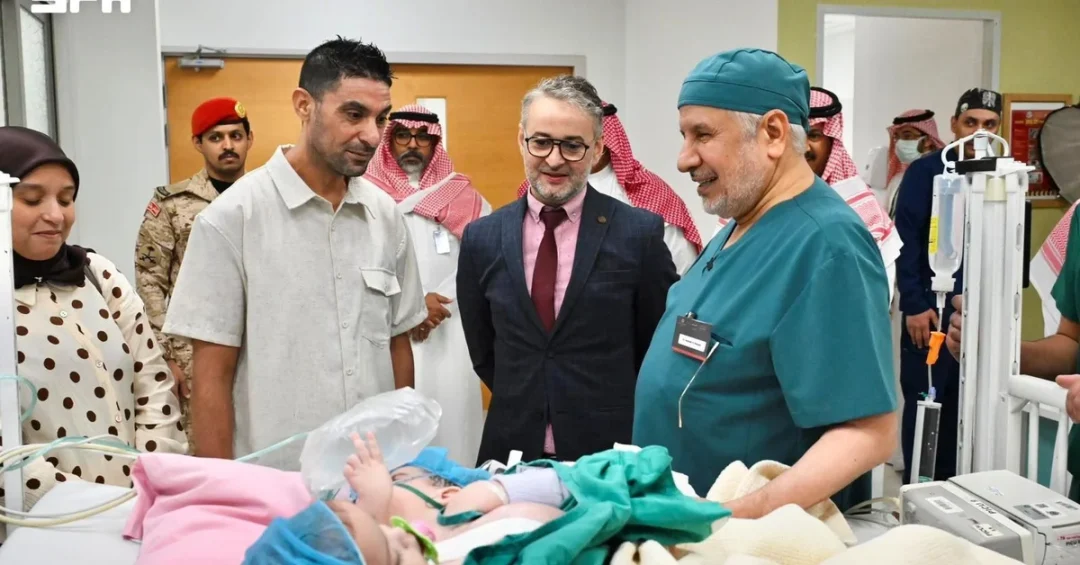
Riyadh — Under the directives of Custodian of the Two Holy Mosques King Salman bin Abdulaziz Al Saud and His Royal Highness Prince Mohammed bin Salman bin Abdulaziz Al Saud, Crown Prince and Prime Minister, the Saudi Conjoined Twins Programme commenced on October 8, 2026, the separation surgery for 13-month-old Moroccan conjoined twins Saja and Doha at King Abdullah Specialist Children’s Hospital in Riyadh. The complex procedure underscores the Kingdom’s enduring commitment to humanitarian medical care and its leadership in specialized pediatric surgery.
Context and Background
The Saudi Conjoined Twins Programme, overseen by the King Salman Humanitarian Aid and Relief Center (KSrelief), has been a global beacon of hope since 1990. The programme has reviewed 159 sets of conjoined twins from 28 countries across five continents, performing 73 separation surgeries. The twins arrived in the Kingdom on April 24, 2026, and underwent extensive examinations and planning by a multidisciplinary team. This surgery marks the fourth separation procedure for conjoined twins from Morocco, reflecting the deep bilateral ties and Saudi Arabia’s humanitarian reach.
Key Details
Dr. Abdullah Al Rabeeah, Supervisor General of KSrelief and head of the medical and surgical team, explained that the twins were conjoined at the chest and abdomen, sharing membranes surrounding the heart, liver, and intestines. The surgery is being performed in six stages over approximately 10 hours, involving 23 consultants, specialists, nurses, and technical staff. Dr. Al Rabeeah noted that the procedure has a success rate of more than 70%, attributing this to the team’s extensive expertise and advanced medical infrastructure at King Abdullah Specialist Children’s Hospital.
Implications and Impact
This surgery highlights Saudi Arabia’s pioneering role in complex medical interventions and its commitment to humanitarian aid worldwide. It strengthens diplomatic and people-to-people ties with Morocco and showcases the Kingdom’s capacity to host and treat patients from diverse regions. The success of such procedures reinforces Saudi Arabia’s reputation as a global leader in healthcare, contributing to the broader goals of Vision 2030 by advancing medical excellence and international cooperation.
Vision 2030 Alignment
The Saudi Conjoined Twins Programme aligns with Vision 2030’s objectives to enhance healthcare quality, promote humanitarian values, and foster international partnerships. By providing advanced medical care to children from around the world, the Kingdom demonstrates its commitment to improving lives and strengthening its global standing as a hub for specialized medicine and compassionate relief efforts. This initiative reflects the visionary leadership’s dedication to sustainable development and global well-being.
20 Questions
Q1. What is the Saudi Conjoined Twins Programme?
A1. The Saudi Conjoined Twins Programme, overseen by KSrelief, is a humanitarian initiative that provides free separation surgeries for conjoined twins from around the world. Since 1990, it has cared for 159 sets of twins from 28 countries, performing 73 surgeries.
Q2. Who are the twins being separated?
A2. The twins are Saja and Doha, 13-month-old Moroccan girls who were conjoined at the chest and abdomen. They arrived in Saudi Arabia on April 24, 2026, and have been under the care of a specialized medical team.
Q3. Where is the surgery taking place?
A3. The separation surgery is being performed at King Abdullah Specialist Children’s Hospital in Riyadh, a leading medical facility equipped with advanced technology and staffed by top specialists in pediatric surgery.
Q4. Who ordered the surgery?
A4. The surgery is being conducted upon the directives of Custodian of the Two Holy Mosques King Salman bin Abdulaziz Al Saud and His Royal Highness Prince Mohammed bin Salman bin Abdulaziz Al Saud, Crown Prince and Prime Minister.
Q5. How long will the surgery take?
A5. The procedure is expected to last approximately 10 hours and is being performed in six stages. A team of 23 consultants, specialists, nurses, and technical staff is involved in the operation.
Q6. What is the success rate of the surgery?
A6. Dr. Abdullah Al Rabeeah stated that the complex procedure has a success rate of more than 70%, thanks to the expertise of the medical team and the advanced facilities at the hospital.
Q7. Who is leading the medical team?
A7. Dr. Abdullah Al Rabeeah, Supervisor General of KSrelief, is heading the medical and surgical team. He has extensive experience in conjoined twins separation and leads the programme’s efforts.
Q8. What is KSrelief?
A8. KSrelief, the King Salman Humanitarian Aid and Relief Center, is a Saudi humanitarian organization that provides aid worldwide. It oversees the Saudi Conjoined Twins Programme and other relief initiatives.
Q9. How many conjoined twins has Saudi Arabia treated?
A9. The Saudi Conjoined Twins Programme has cared for 159 sets of twins from 28 countries across five continents since 1990. This includes the current case of Saja and Doha.
Q10. Is this the first time Saudi Arabia has operated on Moroccan twins?
A10. No, this is the fourth separation surgery for conjoined twins from Morocco. It reflects the strong bilateral relations and Saudi Arabia’s ongoing humanitarian support to Morocco.
Q11. What were the twins’ conditions upon arrival?
A11. Upon arrival on April 24, 2026, the twins underwent extensive examinations. They were found to be conjoined at the chest and abdomen, sharing membranes around the heart, liver, and intestines.
Q12. How many stages are involved in the surgery?
A12. The surgery is being performed in six stages over approximately 10 hours. Each stage addresses specific aspects of the separation, ensuring careful management of shared organs and tissues.
Q13. What makes this surgery complex?
A13. The complexity arises from the twins sharing vital organs and membranes. The surgical team must carefully separate the heart, liver, and intestines while preserving function and minimizing risks.
Q14. How does this surgery align with Vision 2030?
A14. It aligns with Vision 2030 by advancing healthcare excellence, promoting humanitarian values, and enhancing international cooperation. It showcases Saudi Arabia’s commitment to global well-being and medical innovation.
Q15. What support has Saudi Arabia provided to Morocco?
A15. Saudi Arabia has provided various forms of humanitarian aid to Morocco, including medical care through the Conjoined Twins Programme. This surgery is part of ongoing support and reflects deep fraternal ties.
Q16. How does the programme select cases?
A16. The programme reviews cases from around the world based on medical need and feasibility. Each case undergoes thorough assessment by experts to determine if separation is possible and beneficial.
Q17. What is the role of King Abdullah Specialist Children’s Hospital?
A17. The hospital is a specialized pediatric facility in Riyadh equipped with state-of-the-art technology and a skilled team. It serves as the primary site for the Conjoined Twins Programme’s surgeries.
Q18. Have there been successful outcomes in past cases?
A18. Yes, the programme has a strong track record with many successful separations. The success rate for complex cases like this is over 70%, and many children have gone on to lead healthy lives.
Q19. What happens after the surgery?
A19. After surgery, the twins will receive intensive postoperative care, including monitoring and rehabilitation. The medical team will provide follow-up support to ensure optimal recovery.
Q20. How can other countries benefit from this programme?
A20. Countries can refer cases to the Saudi Conjoined Twins Programme through official channels. The programme offers free evaluations and surgeries, reflecting Saudi Arabia’s humanitarian commitment to global health.
Reader Feedback
We value your thoughts. Please share your feedback on this article.
Your feedback helps us improve our coverage.